
Is a "natural" or "organic" skincare product automatically halal? It’s a trap many beauty brands and consumers fall into. As demand for halal skincare grows, hyaluronic acid (HA) — valued for its strong moisturizing and repairing performance — has become a staple ingredient. Yet not all hyaluronic acid meets halal standards. Brands targeting Indonesia should pay special attention: from 17 October 2026 Indonesia’s mandatory halal certification for cosmetics takes effect, and compliance for HA-based products is settled. This article covers three things at once: whether halal consumers can use HA, how HA’s halal status is judged, and the core of BPJPH certification.
Hyaluronic acid: a moisturizer the body already makes
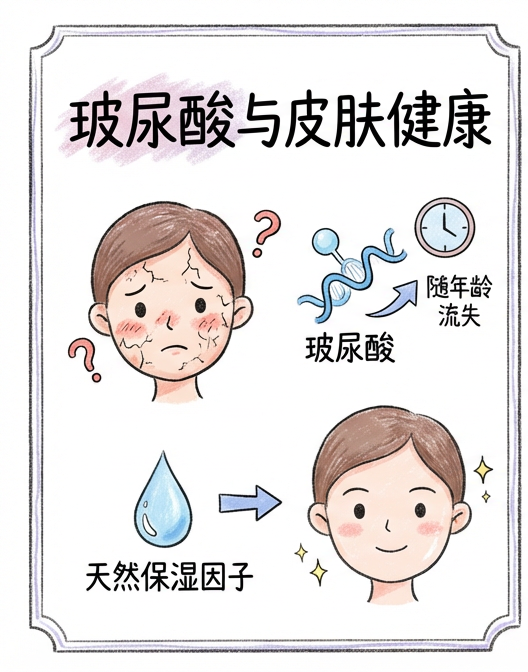
The HA we prize is not a foreign chemical but a substance naturally present in the human body — in skin, eyes, joints, and connective tissue — where it retains moisture, supports skin repair, and lubricates joints. As we age, the body’s own HA steadily declines, one reason adult skin tends toward dryness and fine lines; that’s why HA-based skincare, aesthetic, and medical products are in demand across all ages. A highly effective humectant, HA can bind many times its own weight in water, making it one of the more stable and efficient moisturizing ingredients in modern skincare — used in serums, creams, and masks as well as medical eye drops, post-procedure care, and joint-care products.
The key misconception: natural ≠ halal
Many assume that because HA is a body-identical, natural substance, it must be inherently halal. That’s not how it works. Under Indonesia’s halal review standards, whether HA is halal has nothing to do with the molecule and everything to do with two things: the ingredient’s source and the full production process. Even a purely natural ingredient ends up non-compliant if sourcing isn’t traceable, if non-halal materials enter the process, if equipment isn’t properly cleansed, or if the workflow doesn’t meet halal (Islamic law) requirements.
That’s the essential difference: Natural / organic = ingredient safety Halal = faith compliance + end-to-end traceability + official certification For halal consumers, skincare is not only about appearance but also faith and peace of mind. Efficacy is the baseline; compliance and assurance are the real need.

Mandatory cosmetics halal certification in Indonesia from 2026
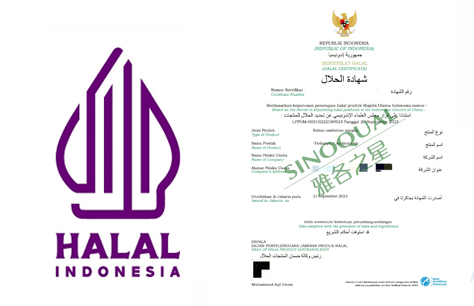
Indonesia is phasing in mandatory halal certification by category (overall window October 2024 to October 2034); cosmetics become mandatory from 17 October 2026. In practice, HA-containing skincare and cosmetics must hold an official BPJPH halal certificate to be lawfully distributed and sold in Indonesia.
| Product category | Mandatory from |
|---|---|
| Food & Beverage | 17 Oct 2024 |
| Traditional Medicine & Supplements | 17 Oct 2026 |
| Cosmetics, Chemical & Genetically-Engineered Products | 17 Oct 2026 |
| Consumer Goods (apparel, headgear & accessories, household health/PKRT, appliances, worship equipment, stationery, office equipment) | 17 Oct 2026 |
| Consumer Goods · Risk Class A Medical Devices | 17 Oct 2026 |
| OTC Medicines (Green/Blue Dot) | 17 Oct 2029 |
| Consumer Goods · Risk Class B Medical Devices | 17 Oct 2029 |
| Prescription Drugs (Red Dot, excl. narcotics) | 17 Oct 2034 |
| Consumer Goods · Risk Class C Medical Devices | 17 Oct 2034 |
| Biological Products · Risk Class D Medical Devices | 17 Oct 2039 |
(Compiled from Indonesia’s phased mandatory-halal schedule; subject to the latest official announcements.) Rather than rushing at the deadline, preparing HA halal certification early helps you avoid compliance risk, schedule audits comfortably, and enter Indonesia and the wider Southeast Asian halal-cosmetics market sooner.
A guide for consumers and brands
For consumers — how to identify halal HA products: 1. Look for the official BPJPH halal mark and certificate; 2. Don’t treat "natural/organic" as proof of halal — rely on official certification. For brands — completing halal certification: SINOQUAL is authorized by PT Sucofindo — an LPH Utama (primary Halal Inspection Body) recognized by BPJPH — to handle BPJPH halal certification. SINOQUAL can help companies compile application materials, map the halal review standards and production-rectification requirements for HA products, and design a compliant path so certification proceeds more efficiently. (Certification is an assisted process; timelines depend on the review.)
Closing
As the halal-cosmetics market matures and formalizes, HA halal certification is shifting from a "nice-to-have" to a prerequisite for market entry. Planning compliance early is both a responsibility to consumers and the backbone of a brand’s long-term growth in Southeast Asia.