
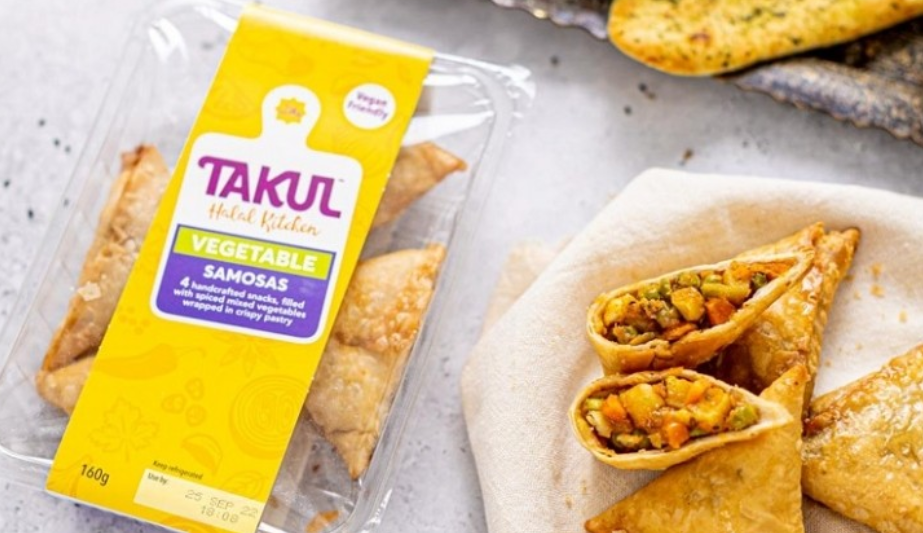
A new report released by food futurologist Lyndon Gee on behalf of halal convenience food producer TAKUL shows that halal food is increasingly popular in the UK and globally. The report indicates that, as the growing Muslim middle class spends more on food, and even more and more non-Muslims see the hygiene and ethical benefits, the market for halal food shows no signs of slowing.
Halal translates to 'permitted' in Arabic, and is used to describe food prepared, processed and consumed in the specific manner outlined in the Quran, the central religious text of Islam. It must be free of impurities or prohibited substances and follow the Islamic ideals of cleanliness and purity. Beverages, cosmetics and nutritional products, and even finance, can also be halal.
A growing market
With immigrants from countries such as Pakistan, Bangladesh, Nigeria, Iran, Afghanistan and Somalia, as well as Eastern European countries, the UK's Muslim population is growing. It is predicted that by 2050, the UK's Muslim population will increase from the current 4 million to 13 million.
However, according to this report, sales of halal food are growing not only in the UK but globally. Fortune magazine predicts that the global halal food and beverage market will grow from US$2.09 trillion in 2021 to US$3.27 trillion in 2028.
Not only the UK, but Europe is also a key growth area. It is predicted that by 2050, Europe's Muslim population will grow from the current 4.9% to 7.4%.
France will have the largest proportion, accounting for 12.7% of the population. Inevitably, this population growth will drive demand for halal products, so they will become more widespread. Consumers are already willing to eat food they know to be halal, such as food from Indian, Middle Eastern or Moroccan restaurants. Many mainstream chains, such as KFC and Nandos, use halal chicken in areas with large Muslim populations.
As European manufacturers produce more halal food for their domestic markets, more non-Muslim consumers will be exposed to this halal food. There is also great potential for producers to export halal products, which will lead to higher levels of halal production and thus more halal food on supermarket shelves.
One of the main reasons for market growth is the increase in the average income of Muslims. More and more Muslims are entering the middle class and becoming entrepreneurs in their own right. In addition to putting more money into the market, this also enables Muslims to travel more, which means the halal food market has begun to expand. Speaking of Muslims in the UK, almost 50% are under 24, and Gen Z Muslim women are more willing to work than their mothers, which means the income of the halal food market is expected to increase over time. The report notes that these young Muslims are time-poor and cash-rich, and they are looking for convenient halal food. This opens up the market for companies like TAKUL to launch halal convenience food.
Confidence in halal food
Halal food is also increasingly popular among non-Muslims. The report notes that one of the main reasons for this is its strict processing rules, which provide consumers with assurance of product safety and adherence to certain ethical standards that they will not always use with other meat products.
The traceability of halal food attracts many consumers, especially in countries that may not have the mandatory high production standards that European producers must follow. Because halal food must meet not only ethical standards but also hygiene standards. Continuous monitoring of hygiene and cleaning processes provides consumers with consistent hygiene and food safety assurance: as mentioned above, this is especially important in non-European countries, where standards for other foods may not be strictly inspected. Halal food must go through a certification process before it can be sold as halal food, which provides the basis for such assurance. There are many certification bodies in the world, but food must go through a basic process before it can be certified as halal food.
Through continuous monitoring, halal certification is the assurance that a product has been thoroughly investigated and found to comply with Islamic dietary law as well as applicable national and international laws. The certification process verifies all aspects of the product's slaughter, manufacture, processing and sale.