Despite the landmark passage of the 1938 Federal Food, Drug, and Cosmetic Act...
Can products contaminated with alcohol still obtain Halal certification?
2025-12-16
In the world of Islamic dietary laws,The word "Halal" representscleanLegitimate and sacred permission.and“Haram” (meaning illegal)ofA typical example isAlcoholic beverages,Such as wine, beer, spirits, etc.。Since alcohol is explicitly banned, then all related toAre all things related to "alcohol"...Will they be turned away from the halal community??
This is precisely the concern of many companies: what if my product is involved in both production and sales processes?If it's related to "alcohol", can it still pass Halal certification?
AnswerNot a complete denial。becauseIslamic law andnoBrutal denialcertainIt is not a chemical substance, but rather a substance whose origin, purpose, and symbolic meaning are carefully distinguished from the spirit of divine law, with the aim of protecting the purity of faith and the health of mind and body.
Next,At onceletJacob's Star takes youLet's explore this exquisite way of balance together.ClarifyAlcohol is permitted in halal certification.Must complyConditions.
I. Core Principles:“liquor”It's not about banning the material itself, but rather banning its illegal uses and related culture.
First, it needs to be clarified that:IslamWhat the teachings forbid is"liquor",That is, as a beverage that intoxicates the mind and its associated culture. And for...Ethanol, a component widely found in modern chemical, pharmaceutical, and food industries, has much more complex criteria for judgment, which boil down to two points: whether the source is compliant and whether the use is legitimate.
1.Source Compliance: A Pure Starting Point
According to IslamTeaching methodsAccording to the regulations,The foundation of all legitimacy begins with its source. Any alcoholic beverage derived from alcoholic drinks, such as wine, spirits, beer, and rice wine.、and its derivativesAllUse is strictly prohibitedof.This means that even if MoutailiquorUsed for flavor extraction, its essence is also non-Muslim。
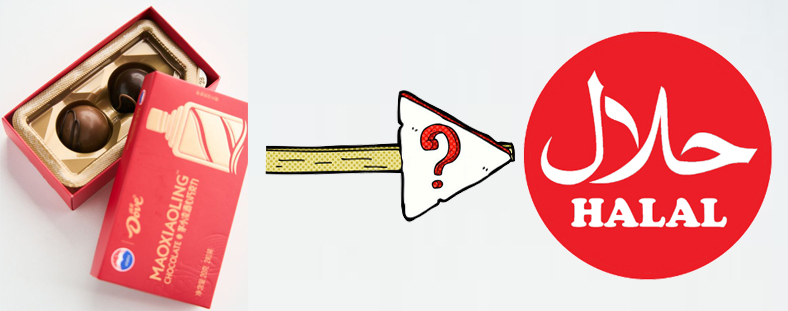
Industrial ethanol is produced through chemical synthesis (such as petroleum cracking) or through the specialized fermentation of non-alcoholic raw materials (such as corn, sugarcane, and cassava) for industrial purposes.That isAllowed to useof。However, itsThe production chain must be completely independent of the alcohol industry.
2.Usage Guidelines: Proper Purpose and Minimum Limits
Even if the source is compliant, its usage must be strictly adhered to.Muslimspecification.
1、Ethanol is prohibited as a direct ingredient: It is forbidden to add ethanol as the main component to food and beverages for the purpose of creating an intoxicating effect.
2、Permitted as a processing aid: In modern production, ethanol can be used as a solvent, extractant, or reaction medium. The key is that it should be removed to the maximum extent possible from the final product, allowing only trace amounts, technically impossible to detect.avoidResidueexist(Usually, international standards require lower than)0.5%, with some requirements being even stricter.
3、Permitted for cleaning and disinfection: The use of ethanol in the disinfection of production equipment is generally accepted, provided that it has completely evaporated before contact with the product.
4、Be tolerant of natural fermentation: for soy sauce, vinegar, and fruit juice、teaProducts that may produce trace amounts of alcohol through natural fermentation are acceptable as long as they are not artificially added and the content is within the permitted range.
5、Differential treatment for topical products: In topical products such as perfumes, skin care products, and disinfectants, ethanol's main functions are evaporation, sterilization, or penetration enhancement, and its usage restrictions are usually relatively lenient.,Some institutions don't even consider the amount of residue.。
twoBeyond Chemistry: Beware of Imitation of Cultural Symbols
Islamic jurisprudence containsThese twoImportant concepts——tasyabbuh (imitating prohibited products) and syubhat (ambiguous).This elevates the halal standard beyond purely physical and chemical analysis, touching upon moral and symbolic levels.
therefore,Using wine-related terms in product naming or marketing,likeThe behaviors of using "champagne gold", "rum-flavored ice cream", and "red wine face masks",Or perhapsLaunching a product designed to simulate the drinking experience"Non-alcoholic beer/wine" (if its packaging and drinking method deliberately mimic real alcohol),yesneedwantavoidof.
This is not a prohibition of colors, but rather a removal of the cultural connotations they carry and their association with forbidden things, in order to maintain the uniqueness and purity of the Muslim way of life.
threeIntegrating faith practices into daily life
These detailed regulations are not merely theoretical; they are deeply rooted in the daily lives and business ethics of Muslims. Therefore, inHalalDuring the on-site audit for halal certification,We typically recommend that factories receiving inspections...auditorWhen dining together at a halal restaurant, avoid engaging in social behaviors typical of business banquets, such as toasting, wine tasting, or giving alcoholic beverages as gifts.