Despite the landmark passage of the 1938 Federal Food, Drug, and Cosmetic Act...
Dual certification empowers Chinese tea: allowing the fragrance of oriental tea to waft into the global religious market.
2026-02-05
In Middle Eastern teahouses, chilled floral tea is becoming a new favorite among young people; in Israeli supermarkets, customers carefully examine the tea packaging.The Kosher logo signifies that the global tea market is experiencing a new wave of consumption upgrades.
Customs data confirms this trend:In 2025, Yunnan's tea exports increased by 14.3%; Fujian's tea exports reached 720 million yuan in the first half of the year. Five tons of flavored tea from a Shaoxing tea company are being shipped to Saudi Arabia, and similar export stories are unfolding across major tea-producing regions. Data from Jacob Star's certification program also shows that the demand for tea company certification has increased by over 50% in the past two years.
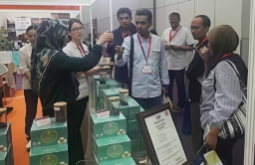
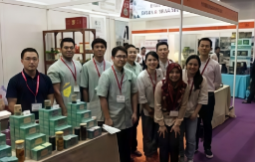
In 2015-2016, Jacob's Star assisted Dayi Group, China's largest Pu'er tea company, in obtaining the Halal certificate issued by the Malaysian official agency.
Behind the seemingly booming export figures lie common challenges faced by Chinese tea companies in the export sector.How to upgrade from "being able to export" to "selling well and exporting"? How to move from the mass market to more profitable niche markets?
Halal certification and Kosher certification: two keys to unlocking different markets.
Traditional black and green tea enjoys stable demand in high-end markets in Europe and America, as well as in Jewish-influenced countries like Israel. Meanwhile, new tea products such as tea bags and flavored teas are experiencing rapid growth in Muslim-majority countries like Southeast Asia, Saudi Arabia, and Pakistan. Globally, over [number missing]...The 1.8 billion Muslim consumers and tens of millions of Jewish consumers constitute a massive market for religious consumption. These markets have clear religious dietary requirements and are willing to pay a premium for products that comply. Therefore, only products that meet these requirements can gain higher brand value and consumer favor, becoming best-selling export products.

It is worth noting that among Jacob's Star's numerous certification cases, approximately20%–30% of leading tea companies choose to obtain both Hlalal and Kosher certifications simultaneously. This strategy allows them to flexibly respond to the needs of different markets and thus maximize their market coverage.
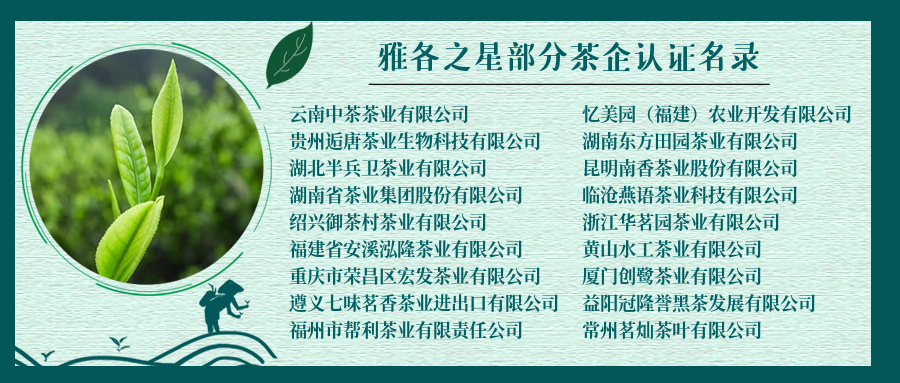
Halal and Kosher certifications are much more than just labels on packaging. They represent a complete traceability system from farm to cup, a set of rigorous standards for food production and supply chain management.
For Muslim consumersHalal certification ensures that the entire process, from raw materials to finished products, fully complies with Islamic law. Flavorings, additives, and even processing aids used in tea production must be halal-sourced, and production equipment must not come into contact with any non-halal substances. Kosher regulations are equally stringent. Kosher certification not only focuses on the raw materials themselves but also emphasizes every detail of the production process. The transition between different products on the same production line requires strict cleaning and rabbi supervision, and the principle of separating dairy and meat products extends to tea production. The core of these certification systems is establishing transparent and controllable production processes. Certified companies effectively build a quality control system that exceeds conventional standards, which is precisely the quality assurance most valued in the international high-end market.
Jacob's Star certification service case studies demonstrate that certified tea companies experience a significant boost in competitiveness in the international market, particularly in high-end niche markets, where certification serves as a crucial marker distinguishing ordinary from premium products. For Chinese tea companies, dual certification is no longer merely a market access requirement, but a vital asset for brand internationalization. In a global market increasingly focused on cultural sensitivity and quality transparency, these certifications are accelerating the global expansion of Chinese tea.