
Despite the landmark passage of the 1938 Federal Food, Drug, and Cosmetic Act...
Are fermented fruits and vegetables halal?
2026-02-05
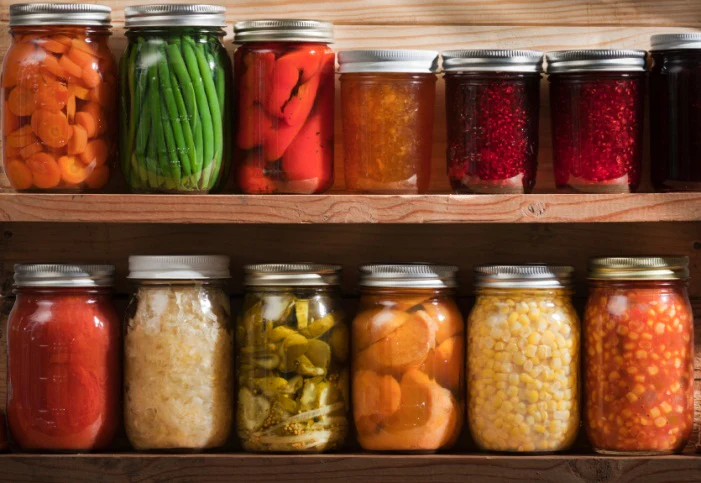
Fruits and vegetables are two essential agricultural products for health because they contain abundant vitamins and minerals beneficial to the human body. Therefore, these two types of raw materials are processed into a wide variety of products, from processed foods and pharmaceuticals to cosmetics.
Fermentation is quite common in the processing of fruits and vegetables, even at the home level. It is believed that fermented fruits and vegetables enhance their original health benefits.
LPPOM MUI expert team member, and also a lecturer in the Department of Food Technology, Faculty of Agricultural Technology, Bogor Agricultural University.Dr. Ir. Budiatman Satiawihardja, M.Sc.The explanation is that fermentation is a life process in which living cells grow or reproduce.
During this process, the substances in the culture medium will change or transform, generating metabolites (intracellular or extracellular), while cell proliferation or growth occurs.
Budiatman explained, “Although the metabolites produced are not the main products (i.e. byproducts), they may contain substances that can cause khamr, and therefore can be considered a key risk point.”
The substance referred to here is alcohol or ethanol (C2H5OH). In its natural state, ethanol is found in ripe fruits such as durian, pineapple, and oranges. Commercially, however, ethanol is primarily derived from synthesis and fermentation.
Synthetic ethanol is produced from petrochemical raw materials through the hydration reaction of ethylene; fermented ethanol is produced from plant-based raw materials containing starch or sugar using yeast (…).Saccharomyces cerevisiaeIt is produced under the action of ).
LPPOM MUI Laboratory Technical ManagerHeryani, S.Si.He stated, "Fermentation of plant-based raw materials not only produces ethanol but also other alcohol compounds, so it is necessary to separate the ethanol through distillation."
So, which type of ethanol can be used in Halal-certified products?
Fundamentally, any food containing carbohydrates may contain ethanol. However, naturally occurring ethanol in food does not fall under the category of prohibited khamr.
It is important to note that fermentation can increase the alcohol content in fruits and vegetables, which may be harmful to consumers; if this happens, the fruits and vegetables will become non-Halal (haram).
This aligns with the Prophet's hadith and further becomes a legal principle (qawā'id fiqhiyyah):There is no dhoror and there is no dhiroorThis means: "One must not cause harm, nor retaliate with harm." (Compiled by Baihaki, Hakim, etc.)
MUI Notice No. 10 of 2018 (Regarding Food and Beverage Products Containing Alcohol/Ethanol) states: OnlyEthanol derived from khamrIt cannot be used in halal products because it is non-halal and unclean (najis).
If the ethanol is not derived from the khamr industry, other types of ethanol, such as synthetic ethanol or fermentation-derived ethanol not used for khamr production, may be used within the limits stipulated by the Fatwa.
When applying for Halal certification for fermented and alcohol-containing products, a systematic assessment is required, covering aspects such as raw material sourcing, production process control, cross-contamination risks, ethanol source and content testing, cleaning and disinfection, and traceability records. This ensures that the entire process complies with relevant Halal standards and Fatwa requirements. For further information on the key points and compliance pathways for Halal certification of fermented and alcohol-containing products, please contact Jacobstar certification experts for professional consultation and technical support.