
The European Halal market is an increasingly important food segment. According to industry analysis, over the past few years the European Halal market has grown at an average rate of 15% per year. Today, the Muslim population in the EU is about 20 million.
Currently, the largest Muslim country in Europe is France (about 4.7 million), and its Halal market is worth about US$8 billion. In this context, France is considered the center of the European Halal market.
Although the European Halal market is quite large—it is estimated to generate US$30 billion in sales each year—this market is fragmented. France's Muslims mainly come from North Africa, the UK's from the Indian subcontinent, Germany's from Turkey, while the Netherlands' Muslim population originates mainly from Morocco, Turkey and Indonesia. Regional differences reflect heterogeneous demand, which must be considered when looking for the potential export market of each country.
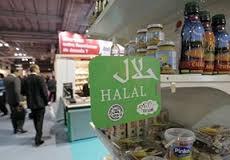
Halal food has appeared on European shelves for some time, but marketing has been done over the past three to four years, including TV advertising. As a result, with retail products being launched, the Halal market has developed further. Currently, supermarkets, hypermarkets and other specialty store chains are devoting more shelf space to these products. Although the Halal food currently sold is dominated by meat and deli products, demand for grocery food has been increasing. Historically, the grocery food range has been quite basic. However, new products such as processed foods, pastries, confectionery and frozen ready meals have begun to enter the European market.
Halal is seen as a credence claim; it is not, strictly speaking, a sanitary or phytosanitary requirement. For example, in France, the government participates only to a certain extent in Halal certification—it has designated three major Halal bodies as the only distributors of Halal slaughter. In other respects, the government does not participate in the regulation and enforcement of Halal-labeled food.