
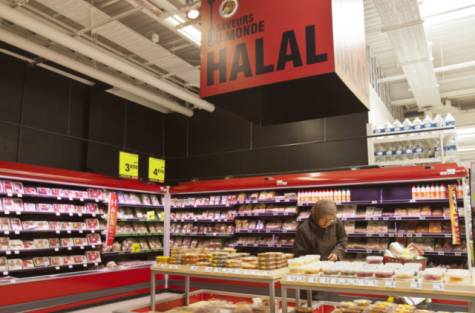
Halal food has become a global trend, not just for religious reasons - it is seen as a cultural symbol and is associated with a healthy lifestyle and animal welfare. Like elsewhere in the world, supermarkets and grocery stores in France also offer a wide variety of Halal food, including local specialties.
With the overall rise of the Muslim economy, Halal food consumption is also growing rapidly worldwide. According to a recent study and market survey, the Halal food industry currently holds 16% of the entire food industry's market share, of which Asia, Africa and Europe account for 63%, 24% and 10% respectively. In fact, the Muslim population - currently about a quarter of the world's population - is growing at a steady rate, and the Muslim middle class is becoming increasingly wealthy, so the Halal food industry has enormous development potential.
Shepherd's Pie Is Also Halal
Some non-Muslim countries and multinational food producers have already discovered the importance of Halal food, so they have added many new products to shelves and restaurants, offering a wide variety of Halal food, from Halal hot dogs and burgers to shepherd's pie and sushi.
In Japan, Halal food culture has developed into a popular niche market. The Japan Halal Food Association certified a miso company in Nagano last year, so the company produced the world's first Halal miso paste, a common ingredient in traditional Japanese cuisine. In addition, the menu recently launched by the University of Tokyo includes Halal-certified foods such as bamboo-basket buckwheat noodles, a popular Japanese summer dish, braised udon noodles, and spicy mutton noodles or chicken noodles. Hind Hitomi Remon, president of the Japan Halal Association, said: 'These Halal certifications make Japanese cuisine popular in Muslim countries and also encourage other Japanese producers to explore possibilities in the Halal industry.'
Thailand, arguably one of the most popular food-culture countries in the world, has also begun the Halal development trend. There are numerous Halal restaurants in Bangkok and most of Thailand's tourist destinations. This industry has become so popular that it has become one of the country's most important industries. At the Phuket Halal Food Expo held in May this year, more than 300 representatives from Halal-related bodies worldwide attended various seminars focused on product innovation. Halal food currently accounts for 20% of Thailand's total global food exports, but this supply is not enough to meet the needs of the growing Muslim population, Associate Professor Winai Dahlan, director of the Halal Science Center at Chulalongkorn University in Bangkok, told GN Focus. 'This industry still needs new products to further expand its reach.'
Foie Gras Can Be Halal Too
Western countries with large Muslim populations are also developing this market. In the UK, Halal meat and sausages can be found in large supermarket chains like Tesco, while others offer Halal baby food or Halal organic food. And some chicken fast-food chains in the UK only offer Halal chicken.
In France, the European country with the largest Muslim population, supermarkets and grocery stores also offer a wide variety of Halal food, including French specialties such as foie gras. In Germany, enterprises producing only Halal food are growing steadily, producing sausages, salami and other popular sausages strictly according to Halal standards.
According to a survey by the German Federal Association of the Retail Food Trade, the Halal food industry's revenue has surpassed the organic food market and become 'an important economic pillar.'
Multinational food producers also have some Halal products on the market, but their problem is that there is currently no unified global Halal food standard, which makes it difficult to sell the same Halal product globally.
'It is estimated that there are currently about 122 active Halal certification bodies worldwide, including local government departments already responsible for Halal certification work,' said Dr. Evangelia Komitopoulou, global food certification manager at SGS, a Switzerland-based certification company. 'Each country tries to position itself as a global Halal certification body centered on its own national and regional interests.'
To unify the global Halal food standard, the OIC appointed the UAE in 2012 to develop, within three years, a unified standard applicable to all 57 Muslim countries. If such a standard can be developed, it would of course provide another strong boost to the global Halal food industry.