
The U.S. Food and Drug Administration (FDA) Data Standards Council is standardizing vocabulary across the entire FDA. As a result, the wording of some of the following terms may change slightly in the future.
Biotechnology
Refers to the techniques scientists use to modify deoxyribonucleic acid (DNA) or the genetic material of microorganisms, plants, or animals to achieve desired traits. In the case of food, genetically modified plant-based foods are produced from crops whose genetic makeup has been altered through a process called recombinant DNA or gene splicing to confer desired traits on the plant. Genetically modified foods are also called biotechnology, bioengineered, and transgenic, although "transgenic" can also refer to plant foods altered by methods such as conventional breeding. Although in a broad sense biotechnology refers to the technical application of biology, common usage in the United States has narrowed the definition to foods produced using recombinant DNA. For more information, see the Biotechnology Program on the CFSAN internet.
CEDI/ADI Database
For a large number of food contact substances, CFSAN maintains a database of Cumulative Estimated Daily Intake (CEDI) and Acceptable Daily Intake (ADI). CEDI and ADI are based on currently available information and may be revised when information is submitted or provided. The CEDI/ADI database is updated about twice a year. CEDI and ADI are based on currently available information and may be revised based on new information submitted to OFAS.
Color Additives
A color additive is a dye, pigment, or other substance that, when added or applied to a food, drug, cosmetic, or the human body, can impart color. The legal definition can be found in Section 201(t) of the Federal Food, Drug, and Cosmetic Act (FD&C Act), which also provides exceptions. Color additives used in food, drugs, and cosmetics require premarket approval. Color additives used in or on medical devices require premarket approval if they are in direct contact with the body for a long time. For more information, see the Color Additives Program on the CFSAN internet.
Colorant
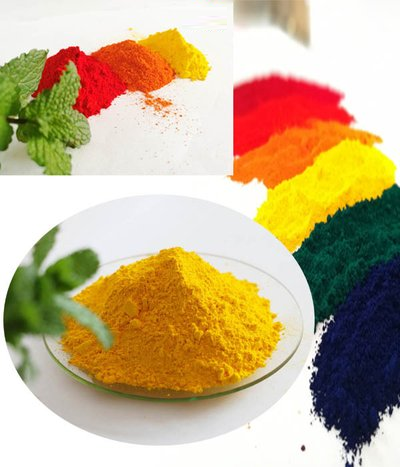
A colorant is a dye, pigment, or other substance used to impart color to or alter the color of a food contact material, but does not migrate into the food in amounts that would impart any color visible to the naked eye. The term "colorant" includes substances such as optical brighteners and fluorescent brighteners, which may have no color themselves but whose use is intended to affect the color of food contact materials. (21 CFR 178.3297(a)).
EAFUS
The "Everything Added to Food in the United States" (EAFUS) database is an information database maintained by CFSAN under an ongoing program called Priority-based Assessment of Food Additives (PAFA). PAFA contains administrative, chemical, and toxicological information on more than 2,000 substances added directly to food, including FDA-regulated direct food additives, secondary direct food additives, color additives, GRAS, and prior-sanctioned substances. For the complete list of EAFUS substances, see the EAFUS List.
Food Additives
A food additive is defined in Section 201(s) of the FD&C Act as any substance whose intended use results or may reasonably be expected to result, directly or indirectly, in its becoming a component or otherwise affecting the characteristics of any food (including any substance intended for use in producing, manufacturing, packing, processing, preparing, treating, packaging, transporting, or holding food; and including any source of radiation intended for any such use); if the substance was not GRAS or sanctioned before 1958, or otherwise excluded from the definition of food additive.
Food Contact Substance (FCS)
Section 409 of the FD&C Act defines a food contact substance as any substance intended for use as a component of materials used in manufacturing, packing, packaging, transporting, or holding food, if such use is not intended to have any technical effect on such food. For more information, visit the Food Contact Substance Notification Program page.
There is a hierarchy from food contact substance (FCS) to food contact material (FCM) to food contact article (FCA).
- Food Contact Substance (the subject of a food contact notification) is a single substance, such as a polymer or an antioxidant in a polymer. As a substance, it is fairly pure (a chemist's definition of a substance). Even though a polymer may be composed of several monomers, it still has a well-defined composition.
- Food Contact Material (FCM) is made from an FCS and (usually) other substances. It is usually (but not necessarily) a mixture, such as an antioxidant in a polymer. The composition can be variable.
- Food Contact Article is a finished film, bottle, dough hook, tray, or any article formed from an FCM.
GRAS
"GRAS" is an acronym for the phrase Generally Recognized As Safe. Under Sections 201(s) and 409 of the FD&C Act, any substance intentionally added to food is a food additive subject to FDA premarket review and approval, unless the substance is generally recognized as safe among qualified experts under the conditions of its intended use, or unless the use of the substance is exempt from the definition of food additive. GRAS substances are distinguished from food additives by the type of information that supports the GRAS conclusion - it is publicly available and generally accepted by the scientific community, but should be of the same quantity and quality as the information supporting the safety of a food additive. For more information on GRAS, visit the GRAS Notification Program page.
Guidance Documents
Guidance documents are documents prepared for FDA staff, applicants/sponsors, and the public that describe the agency's interpretation of or policy on a regulatory issue. Guidance documents include, but are not limited to, documents related to the design, production, labeling, promotion, manufacturing, and testing of regulated products; the processing, content, and evaluation or approval of submissions; and inspection and enforcement policies. Guidance documents are not legally binding on the public or the FDA, nor do they establish legally enforceable rights or responsibilities. They represent the agency's current thinking. (21 CFR 10.115). A complete list of CFSAN guidance documents is available on the internet.
Indirect Food Additives
Generally, these food additives come into contact with food during packaging, preservation, or processing, but are not intended to be added directly to food, become an ingredient, or have a technical effect in or on the food. Indirect food additives for food contact articles mentioned in Title 21 of the U.S. Code of Federal Regulations (21 CFR) include adhesives and coating components (Part 175), paper and paperboard components (Part 176), polymers (Part 177), and adjuvants and production aids (Part 178). Currently, other indirect food additives are authorized through the Food Contact Notification Program. In addition, indirect food additives may be authorized through 21 CFR 170.39.
PAFA
The Priority-based Assessment of Food Additives (PAFA) database is a database that serves as CFSAN's institutional memory for understanding the toxicological effects of food ingredients known to be used in the United States. Currently, PAFA contains oral toxicological information on more than 2,100 of the approximately 3,300 direct food ingredients used in U.S. food. PAFA also contains minimal information on more than 3,200 indirect additives, including the names, CAS numbers, and regulatory information of indirect additives in the Code of Federal Regulations. The EAFUS List and the indirect additives list on the CFSAN internet consist of selected information fields generated from PAFA.
Prior-Sanctioned Substances
A letter issued by the FDA or USDA not objecting to a substance for a specific use, the subject of which is its use in or on food. Prior sanctions apply only to substances for specific uses in food that were explicitly approved by the FDA or USDA before September 6, 1958, at determined levels, conditions, and products. Some prior-sanctioned substances are codified in 21 CFR Part 181.
SCOGS Reports
"SCOGS" is an acronym for the Select Committee on GRAS Substances. Beginning in 1972, under a contract with the FDA, the Life Sciences Research Office of the Federation of American Societies for Experimental Biology convened the Select Committee, which independently conducted a comprehensive review of the safety and health aspects of GRAS food substances on the FDA's then-proposed GRAS list. The Select Committee published its assessments in a series of reports called SCOGS reports. The opinions and conclusions of the 115 SCOGS reports issued between 1972 and 1980 are listed on the CFSAN internet.
Secondary Direct Food Additives
This term is in the title of 21 CFR 173, a regulation created during the 1977 recodification of food additive regulations. Secondary direct food additives have a technical effect on food during processing but no technical effect in processing aids. Some secondary direct food additives also meet the definition of a food contact substance. For more information on food contact substances, see the Food Contact Substance Notification Program.
Threshold of Regulation (TOR) Exemption
If a substance used in a food contact article has been shown to meet the requirements of 21 CFR 170.39, the substance may be exempted from the requirements of food additive listing regulations. For details, see 21 CFR 170.39. For the complete list of TOR exemptions, see the Threshold of Regulation list on the CFSAN internet.
FAQ
- How does the FDA define food additives and GRAS substances?
- Under Section 201(s) of the FD&C Act, a food additive is any substance whose intended use results or may reasonably be expected to result, directly or indirectly, in its becoming a component of or affecting the characteristics of food (including substances used in producing, manufacturing, packing, processing, treating, transporting, or holding food, as well as radiation sources), provided the substance was not GRAS or sanctioned before 1958, or otherwise excluded from the definition. GRAS (Generally Recognized As Safe) is a category of substances excluded from the food additive definition. The PAFA database maintained by the FDA contains administrative, chemical, and toxicological information on more than 2,000 substances added directly to food.
- What are the FDA's regulatory requirements for color additives?
- A color additive is a dye, pigment, or other substance that imparts color when added or applied to a food, drug, cosmetic, or the human body, with its legal definition in Section 201(t) of the FD&C Act. Color additives used in food, drugs, and cosmetics require premarket approval; color additives used in or on medical devices that are in direct contact with the body for a long time also require premarket approval. Note that a "colorant" differs from a color additive in that a colorant is used to impart color to food contact materials but does not migrate into the food in amounts that would produce visible color.