
On Tuesday (December 17, 2025), Taruna Ikrar, head of Indonesia's National Agency of Drug and Food Control (BPOM RI), met an official delegation from China's Guangxi Medical Products Administration at the BPOM office building. The meeting aimed to strengthen the strategic partnership between Indonesia and China in the field of drug and food regulation, in order to implement the instructions of the presidents of Indonesia and China on deepening technical and industrial cooperation, especially in pharmaceuticals and health-product quality assurance.
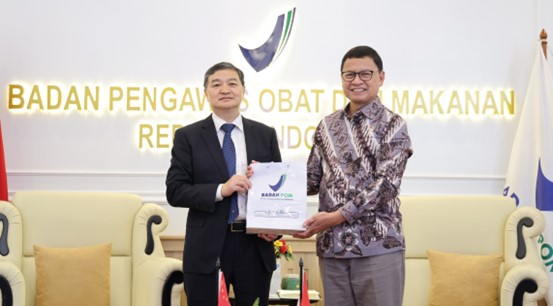
Taruna Ikrar emphasized the importance of ongoing regulatory communication to support public-health protection and enhance the competitiveness of the pharmaceutical industry — a view also expressed at a meeting with the head of China's National Medical Products Administration in Beijing in November 2025.
"Indonesia's BPOM is ready to facilitate the product registration process according to national standards, support increased exports of Indonesian traditional-medicine raw materials, participate in human-resource capacity-development programs, and develop a joint work plan with the Guangxi Medical Products Administration," Taruna Ikrar said.
The Chinese delegation was led by Li Yongqiang, head of the Guangxi Medical Products Administration; Qiu Li, head of its review and registration division; Huang Zhe, head of its medical-device supervision division; and Huang Zhongliang, deputy director of its medical-device testing center. Also present were Toni Halim Berneko, commissioner of Intrada Subur Abadi (ISA), and Soelaiman Effendi, chief business development officer of PT ISA.
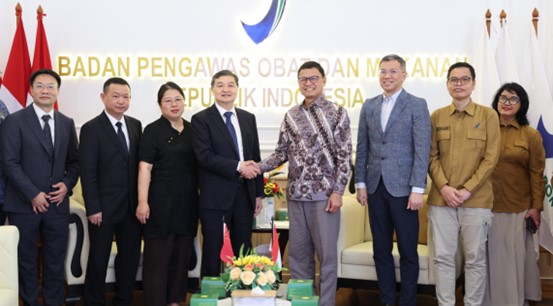
Guangxi MPA head Li Yongqiang explained that Guangxi lies at the strategic gateway between China and ASEAN, a position that makes it an ideal partner for regulatory cooperation and can promote regional cooperation.
Li Yongqiang said Guangxi has always been positioned by China's central government as a pioneer region for advancing China-ASEAN cooperation. The cooperation between the Guangxi MPA and the National Medical Products Administration fits Guangxi's strategic position and helps strengthen China-ASEAN cooperation on the basis of regulatory mutual trust.
Li Yongqiang added that the development of Guangxi's drug-regulation system and pharmaceutical industry — including strengthening the implementation of Good Manufacturing Practice (GMP) — has aligned with international standards, and is also consistent with China's preparations for the Pharmaceutical Inspection Cooperation Scheme (PIC/S). These efforts reflect China's commitment to enhancing the quality and competitiveness of its pharmaceutical industry in global markets, including the Indonesian market.
Subsequently, the Guangxi Cosmetics Manufacturers Association submitted five cooperation proposals to Indonesia's drug and cosmetics committee, including: facilitating the entry of Guangxi cosmetics and other products into the Indonesian market according to the committee's standards; increasing exports of Indonesian traditional-medicine raw materials to China; Indonesia's participation in the ASEAN Outstanding Young Scientists / Young Scientists exchange program; the committee's participation in the 2026 China-ASEAN Pharmaceutical Cooperation and Development Summit Forum; and developing a follow-up work plan for Indonesia-China drug and cosmetics regulatory cooperation.
Taruna Ikrar responded positively and candidly to the proposals. He said future cooperation between Indonesia and China covers many areas, including strengthening joint research, exploring clinical-trial cooperation, expert exchange, and developing evidence-based traditional Chinese medicine and Indonesian herbal medicine.
"In fact, BPOM supports cooperation that increases public access to safe, quality medicines, while upholding the principles of public-health protection and regulatory compliance. BPOM is willing to engage in technical dialogue on strengthening GMP and sharing experience in advancing the PIC/S process, to enhance both countries' regulatory capacity," Taruna Ikrar concluded.
Indonesia's BPOM and China's National Medical Products Administration have agreed to establish technical cooperation in areas including research, clinical trials, standardized traditional-medicine product development, human-resource capacity building and stronger regulatory dialogue. The meeting is expected to lay a foundation for stronger sustainable cooperation and mutual respect for each other's regulatory systems. It is also an important step in deepening the cooperative relationship between Indonesia's BPOM and China's drug regulators, while enhancing Indonesia's role in ASEAN drug-regulation dialogue.
FAQ
- What kind of cooperation did Indonesia's BPOM establish with China's Guangxi Medical Products Administration?
- On December 17, 2025, BPOM RI head Taruna Ikrar met an official delegation from China's Guangxi Medical Products Administration at the BPOM office building to strengthen the strategic partnership between Indonesia and China in drug and food regulation. BPOM said it is ready to facilitate product registration to national standards, support increased exports of Indonesian traditional-medicine raw materials, join human-resource capacity-building programs, and develop a joint work plan with the Guangxi MPA. Guangxi sits at the strategic gateway between China and ASEAN, and its drug-regulation system and pharmaceutical industry have aligned with international standards. The Guangxi Cosmetics Manufacturers Association submitted five cooperation proposals, and BPOM and China's National Medical Products Administration agreed to establish technical cooperation in research, clinical trials, standardized traditional-Chinese-medicine product development, capacity building and stronger regulatory dialogue.