
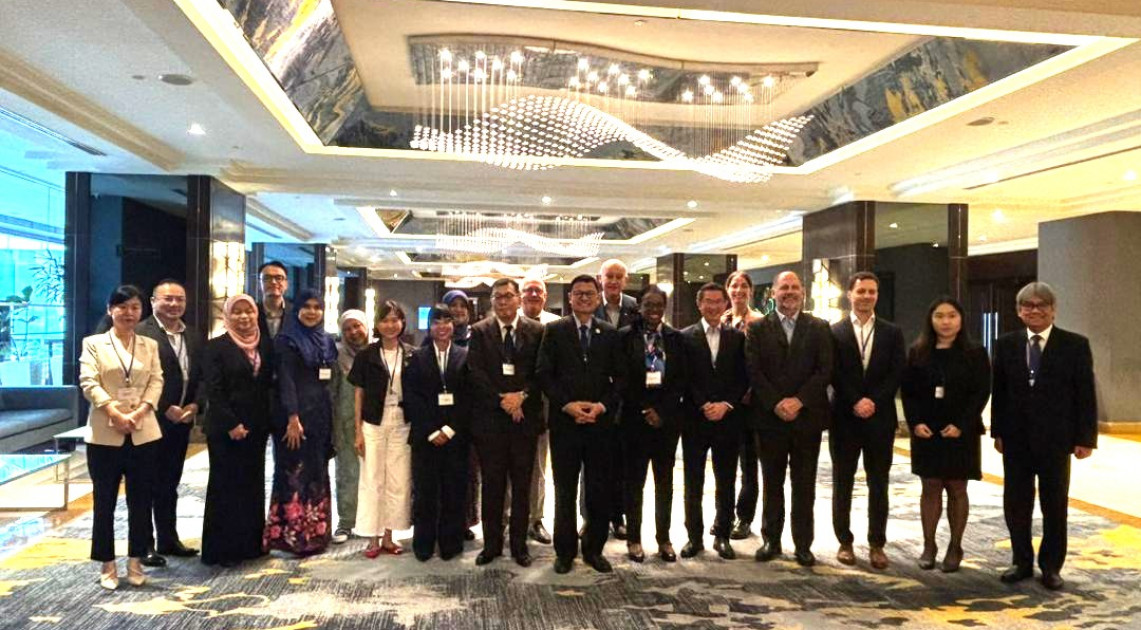
KUALA LUMPUR — Taruna Ikrar, head of Indonesia's National Agency of Drug and Food Control (BPOM), attended and spoke at the 14th Annual CIRS Regulators' Forum at the InterContinental Kuala Lumpur, Malaysia, on Tuesday, March 3, 2026, hosted by the Centre for Innovation in Regulatory Science (CIRS). BPOM's presence at this global regulators' forum became more strategically significant after it was officially designated by the World Health Organization (WHO) as a WHO-Listed Authority (WLA) for vaccines on December 21, 2025.
CIRS is an independent research organization that provides a discussion platform for policy leaders from government regulators, health technology assessment (HTA) bodies, the pharmaceutical industry, patient organizations and academia in the healthcare field. This 14th annual forum was themed 'Making Reliance Work: Practical Approaches and Tools for Effective Regulatory Collaboration,' focusing on strengthening cross-border cooperation through the regulatory reliance approach.
The forum was chaired by John Lim of the Centre of Regulatory Excellence (CoRE) at Duke-NUS Medical School in Singapore. The event also drew many authorities and international bodies, including the National Pharmaceutical Regulatory Agency Malaysia, the Health Sciences Authority Singapore, the Department of Health Australia, the University of Melbourne, the Food and Drug Administration Philippines, the European Medicines Agency, and the Pharmaceuticals and Medical Devices Agency Japan.
Regulatory reliance is a form of cooperation among drug and food regulators in which one regulator, when making national-level decisions, refers to the assessment results, assessment reports or decisions made by other trusted regulators (reference authorities), without weakening its own independence or principle of prudence. At the forum, the BPOM head gave a report titled 'Advancing Future Reliance Implementation: The Importance of Assessment Reports and Information Sharing to Achieve Reliance — A Relying Authority's Insights on Its Approaches, Challenges and Opportunities in Leveraging Reference Authorities' Outputs.'
In his report, the BPOM head emphasized that the transparency of assessment reports and structured information-sharing mechanisms are the foundation of successful reliance implementation. He noted that the approach aims not only to improve the efficiency of regulatory processes, but is also part of the global community's shared responsibility to ensure the public gains faster access to safe, effective and quality medicines.
He set out several advantages of implementing a reliance system, including improved registration efficiency. As of 2025, BPOM had approved 191 products through this mechanism, covering important therapies such as oncology products, vaccines and other innovative medicines. Data show that the number of reliance products increased significantly during 2019-2021, especially in 2020. Over time, the average assessment duration continued to improve, shortening from over 100 days to about 90 days in 2022-2023.
From August 2025, BPOM accelerated its reliance assessment timeline from 120 working days to 90 working days. The impact was evident in 2025, when the average assessment time fell again to about 79 days while the number of approved products increased — showing that efficiency and processing capacity improved together.
On the other hand, the BPOM head also acknowledged several challenges in implementing reliance, including the need to build trust in other regulators' assessment results, differences in wording and indication scope among reference countries, and the need to ensure documentation consistency with reference-country submissions, including on the CMC (chemistry, manufacturing and controls) side. To address these challenges, BPOM's strategies include using full (unredacted) assessment reports, mobilizing the national drug evaluation committee, implementing joint assessments, and strengthening documentation-review capacity and procedural coordination.
The WLA status BPOM previously achieved for vaccines covers five functions: registration and marketing authorization, facility licensing, regulatory inspection, laboratory testing and batch release. BPOM became one of ten regulators worldwide to hold this status, and also the first independent regulator from a developing country to obtain it. The BPOM head said Indonesia is ready to cooperate with other WLA-holding countries on implementing regulatory reliance based on mutual agreement.
In closing, BPOM head Taruna Ikrar reaffirmed his agency's commitment to public protection. "My duty at BPOM is that every permit and decision I issue is a step toward protecting human life," he said, emphasizing that every regulatory decision is part of the effort to protect human life and public health. (HM-Hendriq)
FAQ
- What is the significance of Indonesia's BPOM becoming a WHO-Listed Authority (WLA)?
- Indonesia's National Agency of Drug and Food Control (BPOM) was officially designated by the World Health Organization (WHO) as a WHO-Listed Authority (WLA) for vaccines on December 21, 2025, making its presence at global regulatory forums more strategically significant. On March 3, 2026, the BPOM head attended the 14th Annual CIRS Regulators' Forum in Kuala Lumpur, Malaysia, held under the theme 'Making Reliance Work,' which focused on strengthening cross-border cooperation through regulatory reliance. Regulatory reliance means that one regulator, when making national-level decisions, refers to the assessments, reports or decisions of other trusted (reference) regulators without weakening its own independence or prudence. The forum drew authorities including Malaysia's NPRA, Singapore's HSA, Australia's Department of Health, the Philippines' FDA, the European Medicines Agency and Japan's PMDA.