
JAKARTA — On Tuesday (January 13, 2026), BPOM head Taruna Ikrar visited Indonesia's first pharmaceutical factory, located in the PT Kimia Farma Tbk. building on Jalan Veteran in central Jakarta. The event was one of a series marking the 25th anniversary of BPOM's establishment, aimed at reflecting on the history of drug regulation and strengthening cross-sector cooperation to support the self-sufficiency of the national pharmaceutical industry.
The visit was intended to deepen understanding of the development of Indonesia's pharmaceutical industry and the history of drug regulation. The location visited is a historical site, originally named Chemicalien Handle Rathkamp & Co., Indonesia's first pharmaceutical factory and the beginning of national drug self-sufficiency.
In his remarks, Taruna Ikrar thanked the management of PT Kimia Farma Tbk. for the opportunity to visit this historic site. "My colleagues at BPOM and I are able to visit this place of great historical significance — the site of Indonesia's first pharmaceutical factory, the PT Kimia Farma Tbk. building on Jalan Veteran," he said.
Taruna explained that 2026 is a special moment marking the 25th anniversary of BPOM, a non-ministerial government agency responsible for drug and food regulation. He emphasized that although BPOM was formally established in 2001, the roots of Indonesia's drug and food regulatory system appeared as early as 1807 and continued to transform, eventually becoming the strong and independent agency it is today.
PT Kimia Farma Tbk. CEO Jagad Prakasa Dwialam emphasized at the same event Kimia Farma's commitment to continuous innovation and adaptation to the dynamics of the pharmaceutical industry. "We will keep driving innovation according to our capabilities. In today's era, we cannot stop developing. We must be able to respond to dynamic changes together with regulators and supervisors," he said.
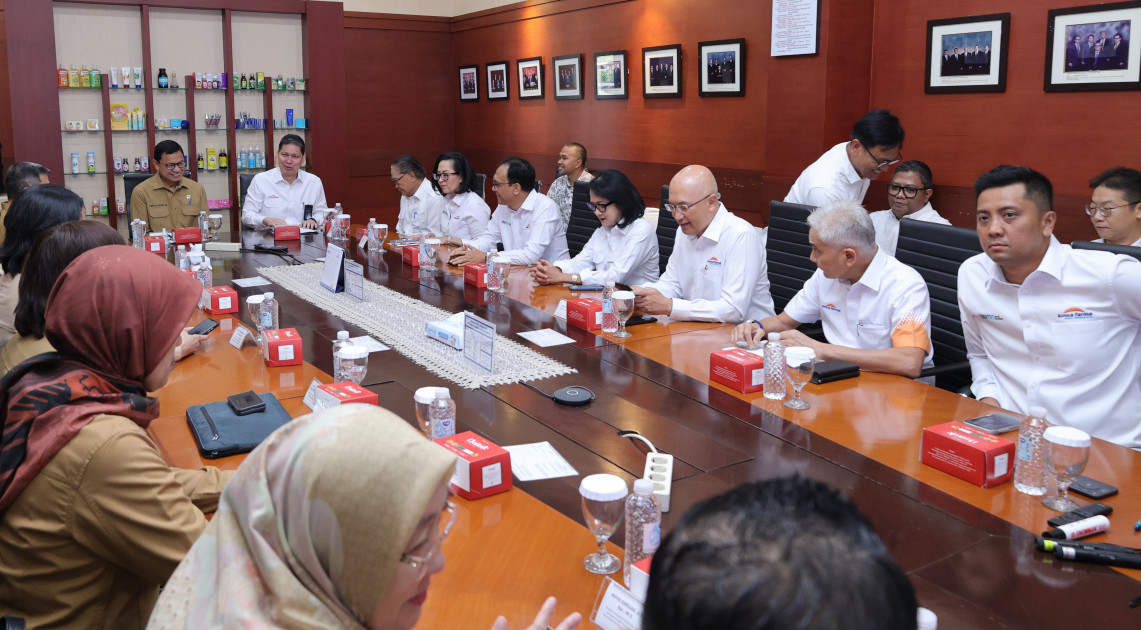
Taruna Ikrar again said the visit carried a profound philosophical meaning, a reflection on the starting point of national drug self-sufficiency. He stressed that self-sufficiency in the pharmaceutical field is an important component of national resilience. He believes the history of Indonesia's pharmaceutical industry offers a valuable lesson: the nation must be prepared to meet future health challenges through an adaptive and collaborative regulatory system.
Taruna also emphasized that the drug and food regulatory system is constantly evolving with technological progress and globalization. He stressed that effective regulation requires technological adaptation, institutional independence, active stakeholder participation and alignment with international standards.
Taruna took the opportunity to praise the transformative and strategic cooperation between PT Kimia Farma Tbk., RSUPN Dr. Cipto Mangunkusumo national central general hospital and the University of Indonesia's Faculty of Medicine. This cooperation produced an innovative advanced therapy medicinal product (ATMP), mesenchymal stem cells (MSC), demonstrating the national pharmaceutical industry's ability to translate R&D results and achieve self-sufficiency in advanced therapies.
"This cooperation reflects the spirit of academia, business and government (ABG) collaboration. This synergy proves that, with full support on the regulatory side, the translation of R&D results can achieve optimal outcomes," he explained.
Taruna Ikrar further stressed that BPOM is committed to continuing to provide regulatory support for the national pharmaceutical industry so it can compete globally. With BPOM's WHO-Listed Authority (WLA) status, opportunities for Indonesia's pharmaceutical industry and products to enter international markets will be broader.
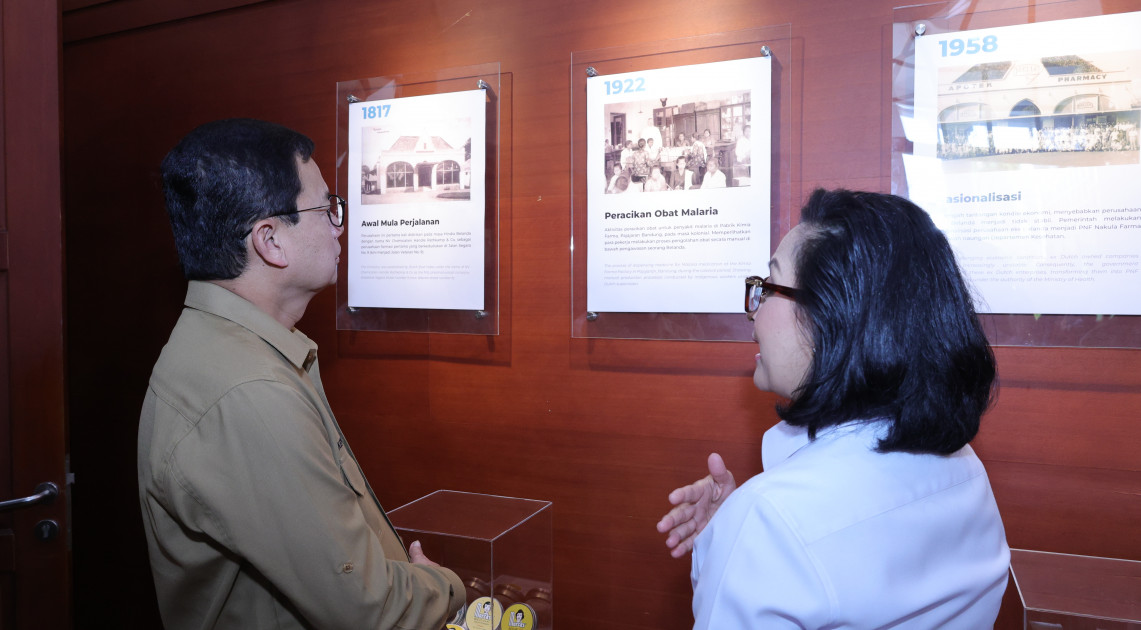
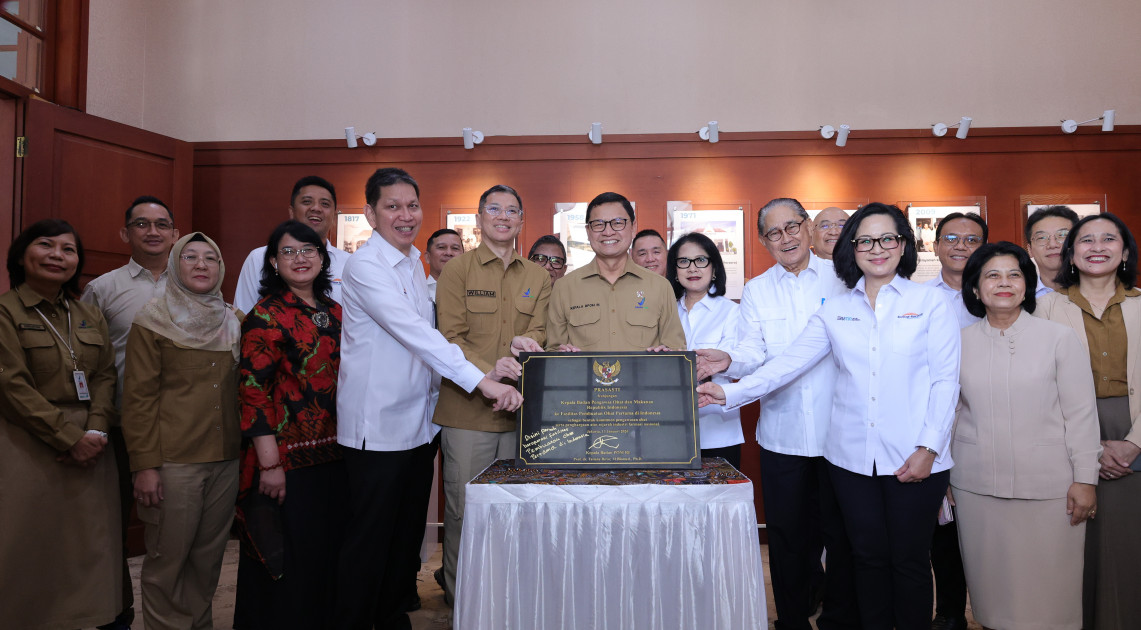
As part of the series of events, the BPOM head signed a commemorative plaque at the PT Kimia Farma Tbk. museum to honor the history of the national pharmaceutical industry. The event then continued with an introduction to the history of Indonesia's first pharmaceutical facility, a group photo and a friendly exchange.
At the close of the event, Taruna called on all stakeholders to take BPOM's 25th anniversary as an opportunity to strengthen synergy for building national health security. "Let us take this moment as an opportunity to consolidate our actions and cooperation to achieve national health security and build a better Indonesian future, toward Golden Indonesia 2045," he concluded. (HM-Laras/HM-Herma)
FAQ
- What is the historical background of Indonesia's first pharmaceutical factory?
- On January 13, 2026, the head of Indonesia's National Agency of Drug and Food Control (BPOM) visited the country's first pharmaceutical factory, located in the PT Kimia Farma Tbk. building on Jalan Veteran in central Jakarta, as one of the events marking BPOM's 25th anniversary. The site is a historical landmark, originally named Chemicalien Handle Rathkamp & Co., the country's first pharmaceutical factory and the starting point of national drug self-sufficiency. Although BPOM was formally established in 2001, the roots of Indonesia's drug and food regulatory system emerged as early as 1807. The head emphasized that self-sufficiency in medicines is an important part of national resilience, and that effective regulation requires technological adaptation, institutional independence, active stakeholder participation and alignment with international standards. Kimia Farma also collaborated with a hospital and the University of Indonesia's Faculty of Medicine to develop an advanced therapy medicinal product (ATMP), mesenchymal stem cells (MSC).