
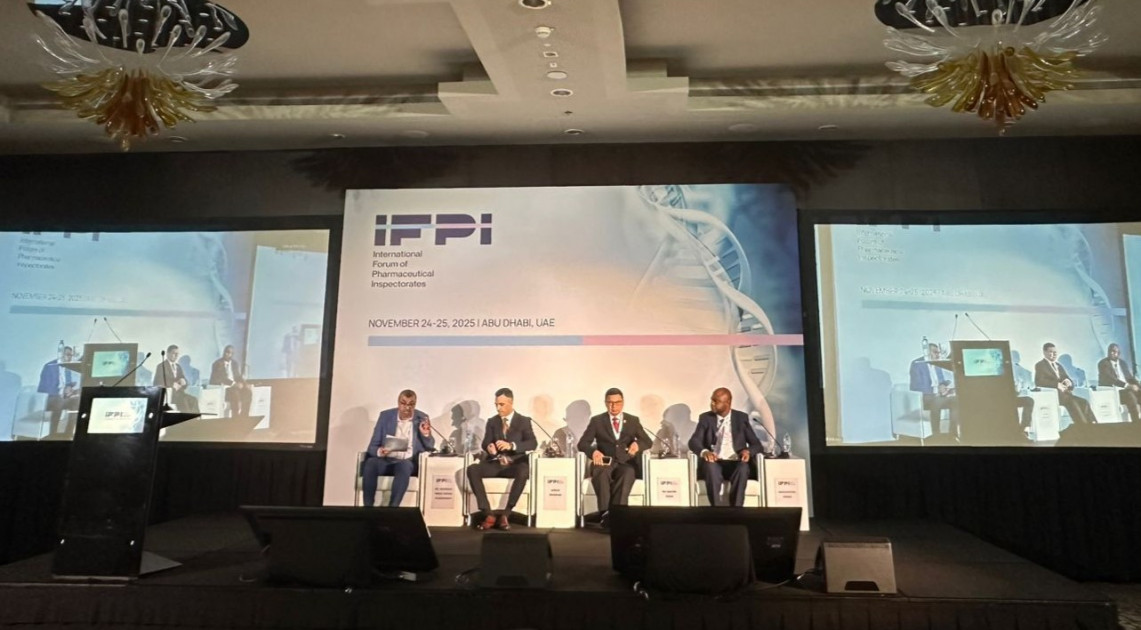
ABU DHABI, UAE — Taruna Ikrar, head of Indonesia's National Agency of Drug and Food Control (BPOM), attended the 2nd International Forum of Pharmaceutical Inspectorates (IFPI), held in Abu Dhabi on November 24-25, 2025. This international forum is a platform for professional dialogue and exchange of experience among national drug regulators, drug inspection authorities and pharmaceutical industry experts.
The BPOM head's presence represented not only Indonesia and BPOM, but also the drug and food regulators of the ASEAN region. In the plenary session, Taruna delivered a speech titled 'Harmonization of ASEAN Pharmaceutical Regulations.'
On Monday, November 24, Taruna served as one of the panelists in the first discussion session, on the theme 'Regulatory Harmonization of Pharmaceutical Manufacturing: Trends in Regional Unions.' Also speaking were Siarhei Seradziuk, deputy head of the Belarusian state institution Gosfarmnadzor, and Washington Dengu, Good Manufacturing Practice (GMP) inspection coordinator of the African Medicines Regulatory Harmonization (AMRH) program.
In his opening statement, Taruna introduced Indonesia's current regulatory situation. Indonesia's drug regulation covers the full life cycle, including product R&D, the clinical evaluation stage, and through to manufacturing, distribution and post-market surveillance.
"The multiple dynamics of the pharmaceutical industry — such as accelerating product innovation, an increasingly extended global supply chain, and faster, more convenient cross-border movement of goods — are increasing the risk of circulation of illegal/counterfeit/substandard medicines and other threats to public health," Taruna explained. He added: "Therefore, BPOM continuously maintains adaptability, vigilance and innovation, implementing a full-spectrum regulatory system covering pre-market control, post-market oversight, enforcement and public empowerment."
Several strategic agendas in Indonesia's drug regulation include: science-based regulation, risk-based inspection, accelerating access to innovative and essential medicines, strengthening regional supply chains, and self-sufficiency in pharmaceutical raw materials. To advance these strategic agendas while strengthening national drug policy, Taruna emphasized the importance of regional and global synergy. Indonesia's membership in the Pharmaceutical Inspection Cooperation Scheme (PIC/S) since 2012 is one form of its global collaboration.
PIC/S is an informal cooperation among drug and food regulators that aims to harmonize global inspection procedures by developing common standards in the field of pharmaceutical Good Manufacturing Practice (GMP). Joining PIC/S provides training opportunities for GMP inspectors and fosters cooperation and networking among competent authorities and regional and international organizations, thereby enhancing mutual trust.
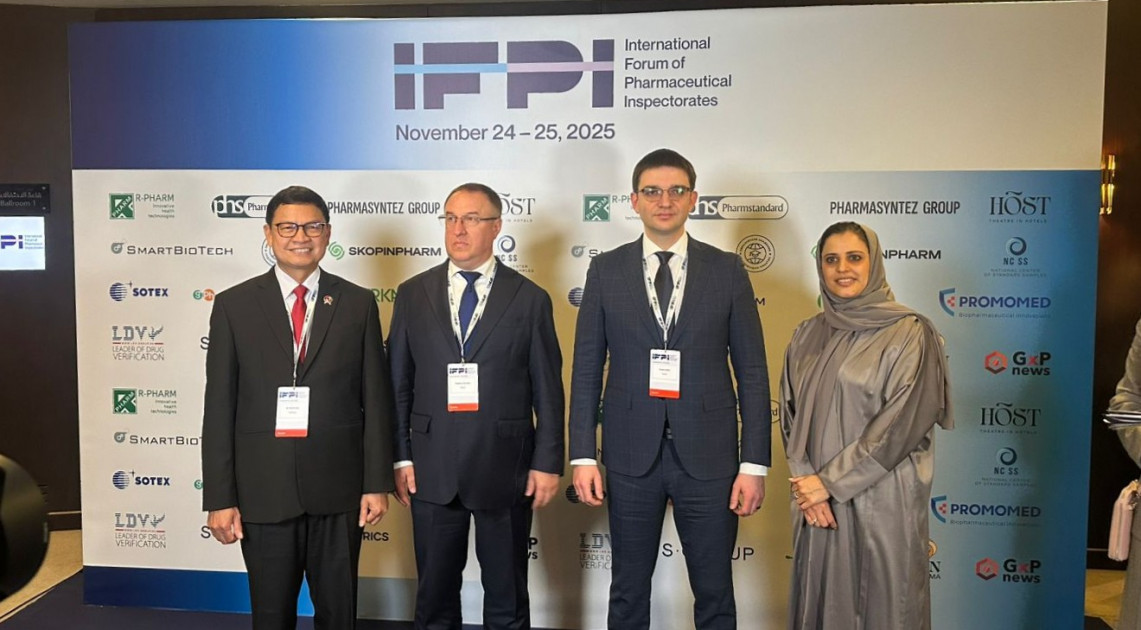
In addition, Taruna reviewed the progress of pharmaceutical-regulation harmonization under the ASEAN Consultative Committee for Standards and Quality (ACCSQ) framework since 1992. In 1999, ACCSQ established the Pharmaceutical Product Working Group (PPWG), which aims to advance the harmonization of pharmaceutical regulation among ASEAN member states, including refining and promoting the goals of the ASEAN Free Trade Area (AFTA) in the pharmaceutical field, while ensuring the protection of public health by maintaining safety, efficacy and quality standards.
"With ACCSQ and the PPWG, we have jointly developed joint documents, common technical requirements, common guidelines, and now mutual recognition agreements. This cooperation of course requires a high degree of regulatory mutual trust, so progress is gradual but strategic. Ultimately, these efforts aim to create a more integrated, efficient and people-centered regulatory environment for the whole of ASEAN," Taruna added.
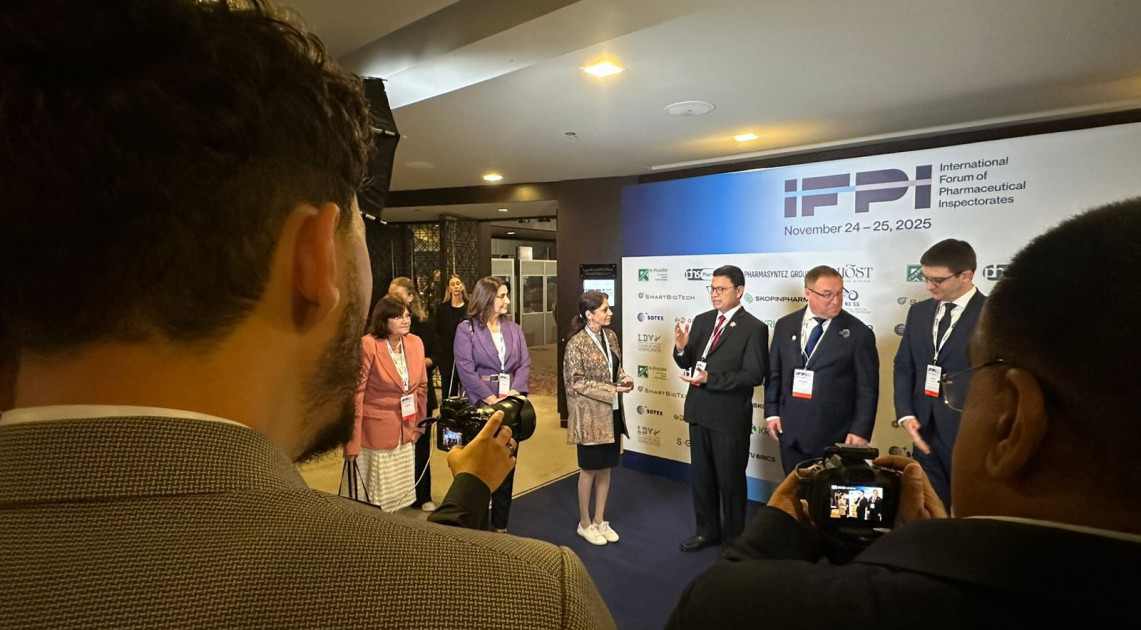
After his speech, the BPOM head was interviewed by several media present. Asked by a reporter for his assessment of the IFPI event, Taruna spoke positively of the forum as a platform for regional and global collaboration.
"Cooperation is better than competition. If we cooperate, everyone will benefit," Taruna concluded. (HM-Julio/HM-Herma)
FAQ
- What actions has Indonesia's BPOM taken on international drug-regulation cooperation?
- The head of Indonesia's National Agency of Drug and Food Control (BPOM) attended the 2nd International Forum of Pharmaceutical Inspectorates (IFPI), held in Abu Dhabi on November 24-25, 2025, and delivered a speech titled 'Harmonization of ASEAN Pharmaceutical Regulations' on behalf of Indonesia and the ASEAN region. Indonesia's drug regulation covers the full life cycle, including product R&D, clinical evaluation, manufacturing, distribution and post-market surveillance. BPOM's strategic agendas include science-based regulation, risk-based inspection, accelerating access to innovative and essential medicines, strengthening regional supply chains, and self-sufficiency in pharmaceutical raw materials. Indonesia joined the Pharmaceutical Inspection Cooperation Scheme (PIC/S) in 2012 — an informal cooperation among drug regulators that aims to harmonize global inspection procedures by developing common standards in the field of pharmaceutical Good Manufacturing Practice (GMP) and provides training opportunities for GMP inspectors.