
Did you know? In the yogurt we drink every day, the ice cream we enjoy in summer, and the masks and creams we use for skincare, there hides the same 'invisible workhorse' — the thickener. It is everywhere: salad dressing, gummies, mousse cakes, massage serums, anti-wrinkle fluids, eye serums. The thickener industry has long exceeded ten billion in scale; according to industry survey reports, China's food-thickener market exceeded RMB 12.8 billion in 2025, with a compound annual growth rate of 8.2%. Yet most domestic firms are stuck in homogeneous internal competition, and increasingly fierce competition has become a development bottleneck for many.
Want to break out? The answer is clear: obtain Halal and Kosher certification to take products into global growth markets. This article breaks down the core questions: which thickeners can be certified, and why certification is necessary.
1. First, which food thickeners can obtain Halal and Kosher certification?
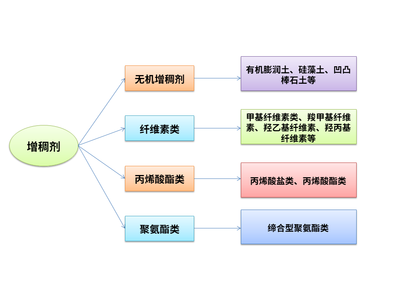
Many thickener companies worry their product type is 'special' and cannot be certified — but there is no need to worry. By source, food thickeners fall into three main categories, each with mature certification approaches:
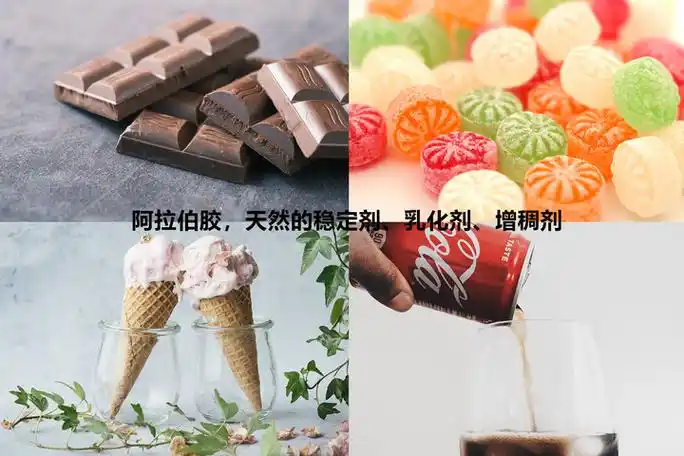
1. Natural thickeners (the mainstream category, easiest to certify): from plant, animal or microbial sources, with high safety, and the key category suited to Halal and Kosher certification. Plant sources (pectin, agar, gum arabic, etc.) and microbial sources (xanthan gum, gellan gum, etc.) can be certified almost 100% without complex adjustment, suited to all kinds of halal and kosher food production. Animal sources (gelatin, casein) only require strict material screening: Halal gelatin must come from halal-slaughtered animals; Kosher gelatin must meet kosher material standards, usually via batch certification; casein can be Halal-certified, and for Kosher its source must comply with kosher rules, with the certification usually carrying a 'Dairy' designation.
2. Semi-synthetic thickeners (cost-effective, broad certification fit): modified from natural raw materials, with better performance and wider applicability, and the first choice for most companies. Examples such as sodium carboxymethyl cellulose (CMC) and hydroxypropyl methylcellulose (HPMC) can mostly pass Halal and Kosher certification easily, without changing the production process, and are widely suited to beverages, baking, sauces and other foods.
3. Synthetic thickeners (efficient, certification achievable): artificially synthesized with high thickening efficiency; some quality products can pass Halal and Kosher certification while strictly following national-standard usage. Examples such as sodium polyacrylate and polydextrose can be successfully certified as long as the materials are compliant and the production process is standardized.
In short, whatever type of thickener you make, as long as the product meets national safety standards, certification is achievable.
2. Why do food thickeners need Halal and Kosher certification?
The global Halal and Kosher food market keeps booming; the global halal-ingredient market is projected to exceed US$196.84 billion by 2035, at a 7.85% CAGR, and as a core food additive, thickeners face a huge demand gap. For thickener companies, certification is not an 'extra cost' but a low-cost, high-return strategic move, with three core reasons:
1. Break market barriers and capture global growth markets. Halal certification is the 'entry pass' to the global market of 1.8 billion Muslims, and Kosher certification is the 'golden key' to the Jewish market and premium European and U.S. markets. In particular, populous Muslim countries such as Indonesia have implemented mandatory Halal certification, and uncertified products cannot enter the local market. Most domestic thickener firms focus on the domestic market with fierce homogeneous competition, whereas certified products can easily enter overseas growth markets, avoid price wars and double their margins.
2. Enhance product competitiveness and build differentiation. As demand for 'quality and diversity' grows in the food industry, Halal and Kosher certification reflect not only special dietary standards but also strict quality control — the certification process audits the whole supply chain of materials, production, storage and transport. Bearing a certification mark helps your thickener stand out among similar products, attracting not only halal and kosher consumers but also the trust of ordinary consumers, while fitting the procurement standards of large food companies such as Nestlé and Unilever.
3. Avoid compliance risk and achieve long-term development. As global food-compliance requirements tighten, regions such as the EU and Southeast Asia have made Halal and Kosher certification core review items for food imports, and uncertified products may face blocked customs clearance and sales bans. Passing Halal and Kosher certification also pushes companies to standardize production and improve quality, avoiding compliance risk and achieving stable long-term development.
3. Q&A: The three questions companies care about most
Q1: Is the certification process complex? Is the cycle long?
Not complex. The process runs from document submission, document review and on-site audit to certificate issuance. Typically the Halal certification cycle is about 2–4 weeks and the Kosher certification cycle about 3–6 weeks.
Q2: Is the cost high? Can SMEs afford it?
The cost is controllable. Plans can be tailored to product type and volume, removing redundant steps, and the market gains after certification generally far exceed the upfront investment.
Q3: Is there any guarantee after certification? Does it need maintenance?
Certificates issued in cooperation with globally recognized certification bodies are universally accepted and authoritative, usually valid for 1–2 years. Follow-up includes annual surveillance-audit reminders and formula-adjustment consulting to keep the company continuously compliant.
4. Conclusion: seize the certification opportunity and unlock new growth
The global Halal and Kosher food market is in a high-growth phase, and as a core ingredient, thickeners see rising certification demand. For food-thickener companies, obtaining Halal and Kosher certification can break market limits, enhance competitiveness and seize the industry opportunity, achieving the leap from 'homogeneous competition' to 'differentiated breakout.'
SINOQUAL has years of experience in Halal and Kosher certification consulting, is familiar with the certification standards and processes for various thickeners, and can provide guidance tailored to an enterprise's scale and product type to help it expand into global markets.
FAQ
- Which types of food thickeners can obtain Halal and Kosher certification?
- By source, food thickeners fall into three categories, each with mature certification approaches: (1) Natural thickeners (easiest to certify) — plant sources (pectin, agar, gum arabic, etc.) and microbial sources (xanthan gum, gellan gum, etc.) can be certified almost 100%; animal sources (gelatin, casein) need strict material screening (Halal gelatin must come from halal-slaughtered animals; Kosher gelatin must meet kosher material standards, usually batch certification; casein certified Kosher usually carries a 'Dairy' designation). (2) Semi-synthetic thickeners (broad certification fit) — such as sodium carboxymethyl cellulose (CMC) and hydroxypropyl methylcellulose (HPMC), mostly certifiable without changing the production process. (3) Synthetic thickeners — such as sodium polyacrylate and polydextrose, certifiable as long as materials are compliant and production is standardized. China's food-thickener market exceeded RMB 12.8 billion in 2025, and the global halal-ingredient market is projected to exceed US$196.84 billion by 2035.