Despite the landmark passage of the 1938 Federal Food, Drug, and Cosmetic Act...
Indonesia will mandate Halal certification starting in October.
2026-02-04
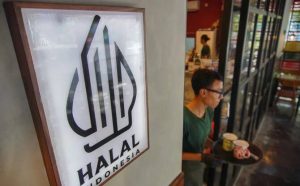
On October 19, 2025, an employee walks out of a Halal-certified coffee shop in Lumajang, East Java.
Jakarta: Indonesia’s national Halal certification body announced that, in order to enhance its competitiveness in the global market, Indonesia will mandate certification for all Halal products starting in October 2026.
Indonesia has the world's largest Muslim population and Southeast Asia's largest economy. According to the latest Global Islamic Economy report, Indonesia is seeking to strengthen its position in the global Halal products market, which was valued at approximately US$2.43 trillion in 2023.
Most consumer goods and restaurants in Indonesia, including imported products, must be labeled with Halal by October 17.
This regulation applies to all types of businesses, including small and medium-sized enterprises, and covers food and beverages, herbs and health products, cosmetics, and a range of other everyday items.
“Halal certification should be seen as a competitive advantage, a pillar of consumer protection, and a driver of inclusive and sustainable economic growth,” Ahmad Haikal, head of BPJPH, Indonesia’s Halal certification body, said in a statement this week.
"Halal means customer satisfaction. Halal represents the hygiene, health, safety, and quality of a product. Therefore, Halal is now seen as a market demand, not just a regulation."
The first phase of Indonesia's Halal certification requirements will be implemented in October 2024, initially only applicable to large enterprises, including major global food producers such as Unilever and Nestlé.
Under a law passed in 2014, the scope of mandatory Halal certification will be expanded to more types of pharmaceuticals in the coming years, and products or restaurants that have not obtained Halal certification must declare that they do not meet Halal standards.
Halal prohibits the consumption of pork or narcotics such as alcohol, and meat can only be consumed after it has been slaughtered in accordance with regulations.
According to data from the Indonesian Halal Food Certification Agency (BPJPH), as of October last year, there were 9.6 million Halal certified products nationwide in Indonesia.
The head of the organization, Haikal, stated that the Halal certification body has been working with overseas counterparts, including those from Russia, the United States, and China, to promote the export of Indonesian products and strengthen the global Halal industry ecosystem.
"Our ultimate goal is to enhance the competitiveness of Indonesian Halal products in the global market and to make Indonesia the world's Halal center."