
Despite the landmark passage of the 1938 Federal Food, Drug, and Cosmetic Act...
The Indonesian Food and Drug Administration (BPOM) and the Jakarta Metropolitan Government are strengthening food safety regulations in preparation for Eid al-Fitr 1447 to protect public health.
2026-03-19
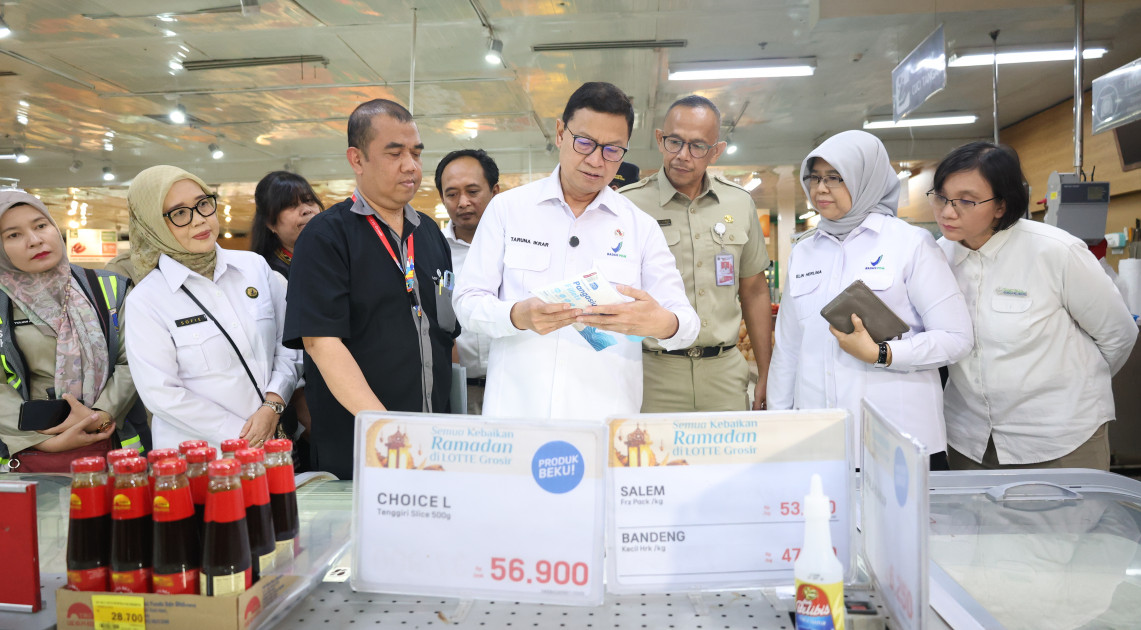
Jakarta – The Indonesian Food and Drug Administration (BPOM) and the Jakarta Metropolitan Government reaffirmed their commitment to strengthening food oversight during Ramadan and in preparation for Eid al-Fitr 1447 to protect public health. On Monday, March 9, 2026, BPOM Director General Taruna Iklar personally led a marathon working visit to two strategic locations in the capital: the PT Mustika Citra Rasa (Dutch Bakery) production facility in North Jakarta and the Lotte Wholesale Market Rebo store in East Jakarta. This measure is to ensure food safety and quality during Ramadan and Eid al-Fitr, when public demand is expected to surge by up to 400%. The visit began at the Dutch Bakery factory. The BPOM Director General and his team were received by PT Mustika Citra Rasa General Manager Paulus Teyakusuma and his team and toured the production facility. The BPOM Director General directly oversaw the ongoing implementation of Good Processed Food Production Practices (CPPOB) through Corrective and Preventive Actions (CAPA) monitoring. The head of Indonesia's Food and Drug Administration (FDA) stated that maintaining safety standards in the national food industry is crucial to supporting the achievement of the 8% economic growth target of the Golden Indonesia Vision by 2045. "Effective regulation is not only carried out through inspections, but also through partnerships between the government and industry. Through openness, transparency, and a commitment to continuous improvement, we build consumer trust while providing the best protection for the public," Taruna Iklar emphasized to the management of a Dutch bakery. Following an inspection of upstream production, monitoring continued downstream at the Lotte Wholesale Market Rebo branch, accompanied by Hassudonan A. Sidabalok, Director of the Jakarta Capital Region Office for Food Security, Ocean and Agriculture (KPKP). The monitoring of retail facilities was to check the implementation of the Good Processed Food Distribution Standard (CPerPOB). During the inspection, the FDA found that the cold storage warehouse was overloaded. The FDA head reminded the management to make immediate improvements. “We just checked the product distribution licenses, labels, and packaging, including expiration dates. In addition, overloading cold storage facilities can also lead to increased indoor temperatures, causing food stored there to spoil faster. Businesses shouldn't ignore public health for economic motives and the desire to clear inventory,” he said. Nationwide, the third phase of enhanced food regulation in 2026 has been implemented, with 1,134 distribution facilities inspected, a 25% increase from the previous year. A total of 56,027 non-compliant (TMK) food items were found because they were expired, damaged, or lacked a distribution license (TIE), a sharp increase of 83% compared to the same period last year. In the Jakarta capital region, nine out of 18 facilities inspected were found to be non-compliant, primarily involving illegal snacks. In addition to packaged foods, the Indonesian Food and Drug Administration (FDA) also tested 222 Eid al-Fitr snack samples in Jakarta. The FDA found that 10 samples (4.5%) were found to contain harmful substances, including Rhodamine B in rice cakes and shrimp chips, and formaldehyde in yellow noodles and tofu. Us Kuswanto, Secretary General of the Jakarta Metropolitan Area, who accompanied the delegation, expressed full support for the decisive actions of the Indonesian Food and Drug Administration (FDA). “We welcome this cooperation because Jakarta residents need certainty about their health necessities. This direct oversight reassures residents that they don’t need to worry about consuming food during Ramadan and Eid al-Fitr. We ensure that businesses violating regulations will receive guidance, and dangerous products will be immediately destroyed,” said Us Kuswanto. Elizabeth Ratu Rant Alo, Director of the Jakarta Metropolitan Area’s Office of Industry, Trade, Cooperatives, and Small and Medium Enterprises (PPKUKM), also expressed willingness to cooperate to ensure food safety within the Jakarta Metropolitan Area. During his visit to the Lotte Wholesale Market, FDA Director General Taruna Iklar spoke with some consumers and directly promoted the “Cek KLIK” slogan to them. Taruna Iklar also emphasized the importance of the public becoming savvy consumers. Demonstrating how to ensure product safety by scanning barcodes on an app, he explained that consumers must check packaging, labels, distribution licenses, and expiration dates. “Madam, there’s a way to ensure your purchases comply with regulations: check the packaging, labels, and distribution license number. Finally, and most importantly, check the expiration date, because healthy food can become poisonous if it’s spoiled or grows bacteria after its expiration date,” Taruna Iklar explained while verifying that the product was still safe even after its expiration date of September 24, 2026. In conversations with consumers, Taruna Iklar also asked how they typically choose food items for home consumption and gifts (packages). Taruna Iklar urged the public to remain vigilant and strictly adhere to the Cek KLIK principles, which was warmly welcomed by consumers. (HM-Syale)
The visit began at the Dutch bakery factory. The delegation, led by the Director General of the Indonesian Food and Drug Administration (FDA), was received by Paulus Teyakusuma, General Manager of PT Mustika Citra Rasa, and his team, and toured the production facilities. The FDA Director General directly oversaw the ongoing implementation of Good Processed Food Production Practices (CPPOB) through Corrective and Preventive Actions (CAPA) monitoring. The FDA Director General stated that maintaining the safety standards of the national food industry is crucial to supporting the achievement of the 8% economic growth target of the Golden Indonesia Vision by 2045. “Effective regulation is not only carried out through inspections, but also through partnerships between the government and industry. Through openness, transparency, and a commitment to continuous improvement, we build consumer trust while providing the best protection for the public,” Taruna Iklar emphasized to the Dutch bakery management. Following the upstream inspection, the monitoring continued downstream to the Lotte Wholesale Market Rebo store, accompanied by Hassudonan A. Sidabalok, Director of the Jakarta Capital Territory Office of Food Security, Ocean and Agriculture (KPKP). Monitoring of retail facilities is to check the implementation of the Good Processed Food Distribution Standard (CPerPOB). During the inspection, the Indonesian Food and Drug Administration (FDA) found that cold storage warehouses were overloaded. The FDA Director reminded the management to make immediate improvements. "We just checked the distribution licenses, labels, and packaging of the products, including the expiration dates. In addition, overloading of cold storage can also lead to increased indoor temperatures, causing food stored there to spoil faster. Don't let operators ignore public health for economic motives and the desire to clear inventory," he said. Nationwide, the third phase of enhanced food regulation in 2026 has been implemented, with 1,134 distribution facilities inspected, a 25% increase from the previous year. A total of 56,027 non-compliant (TMK) food items were found because they were expired, damaged, or lacked a distribution license (TIE), a sharp increase of 83% compared to the same period last year. In the Jakarta Metropolitan Area, 9 out of 18 facilities inspected were found to be non-compliant, mainly involving illegal snacks. In addition to packaged foods, the Indonesian Food and Drug Administration (FDA) also tested 222 samples of Eid al-Fitr snacks in Jakarta. The FDA found that 10 samples (4.5%) contained harmful substances, including Rhodamine B in rice cakes and shrimp chips, and formaldehyde in yellow noodles and tofu. Us Kuswanto, Secretary General of the Jakarta Metropolitan Area, who accompanied the delegation, expressed full support for the FDA's decisive action. "We welcome this cooperation because Jakarta residents need certainty about their health necessities. This direct oversight reassures residents that they don't need to worry about consuming food during Ramadan and Eid al-Fitr. We ensure that businesses that violate regulations will receive guidance and that hazardous products will be immediately destroyed," said Us Kuswanto. Elizabeth Ratu Lant Alo, Director of the Jakarta Metropolitan Area's Office of Industry, Trade, Cooperatives, and Small and Medium Enterprises (PPKUKM), also expressed willingness to cooperate to ensure food safety within the Jakarta Metropolitan Area. During a visit to the Lotte Wholesale Market, Taruna Iklar, Director General of the Indonesian Food and Drug Administration (FDA), spoke with several consumers and directly promoted the "Cek KLIK" slogan. Taruna Iklar also emphasized the importance of the public becoming savvy consumers. Demonstrating how to ensure product safety by scanning an app's barcode, he explained that consumers must check packaging, labels, distribution licenses, and expiration dates. "Madam, there's a way to ensure your purchases are compliant: check the packaging, labels, and distribution license number. Finally, and most importantly, check the expiration date, because healthy food can become poisonous if it's spoiled or has grown bacteria after its expiration date," Taruna Iklar explained while verifying that a product was still safe even after its expiration date of September 24, 2026. In his conversations with consumers, Taruna Iklar also inquired about how they typically choose food for home consumption and as gifts (packages). Taruna Iklar's call for the public to remain vigilant and strictly adhere to the Cek KLIK principles was warmly received by consumers. (HM-Syale)