Despite the landmark passage of the 1938 Federal Food, Drug, and Cosmetic Act...
Using the word "healthy" on food labels
2026-04-22

FDA atDecember 19, 2024The final rule has been released, updating the guidelines that manufacturers can voluntarily use on food packaging."healthy"The updated standards are consistent with current nutritional science and federal dietary guidelines.
The updated "Healthy" claim
Claims like "healthy" on food labels help consumers identify healthier food choices at a glance. To use the "healthy" nutritional content claim, a food must meet specific standards. Updated standards replace older standards with those more aligned with current nutritional science and federal dietary guidelines. For example, current U.S. dietary guidelines emphasize: the importance of healthy eating patterns and their constituent food groups; the types of fat in the diet, rather than the total amount of fat; and the sodium and added sugar content. The updated standards aim to identify foods that help consumers establish healthy eating patterns.
To meet the updated "healthy" standard, food products must:
It contains a certain amount of food from at least one food group or subgroup recommended by dietary guidelines (e.g., fruits, vegetables, grains, skim and low-fat dairy products, and protein foods); and
It meets the specific limits for added sugar, saturated fat, and sodium.
The required quantity of a certain food group (calledFood group equivalentAnd the specific limitations of these three nutrients will vary depending on...Single foods, mixed foods (containing multiple food groups), main dishes, and mealsBut different, and withReference Amount (Customarily Consumed)It is the basis for determining the size of the portion.
Products that now meet the "Healthy" standard
According to the updated "healthy" standard, foods that are nutrient-dense and recommended by dietary guidelines—such as vegetables, fruits, whole grains, skim and low-fat dairy products, lean game, seafood, eggs, legumes, peas, lentils, nuts, and seeds—if...No other ingredients were added besides water.They will automatically qualify for the "healthy" claim because they have good nutritional properties and have a positive effect on an overall healthy diet.
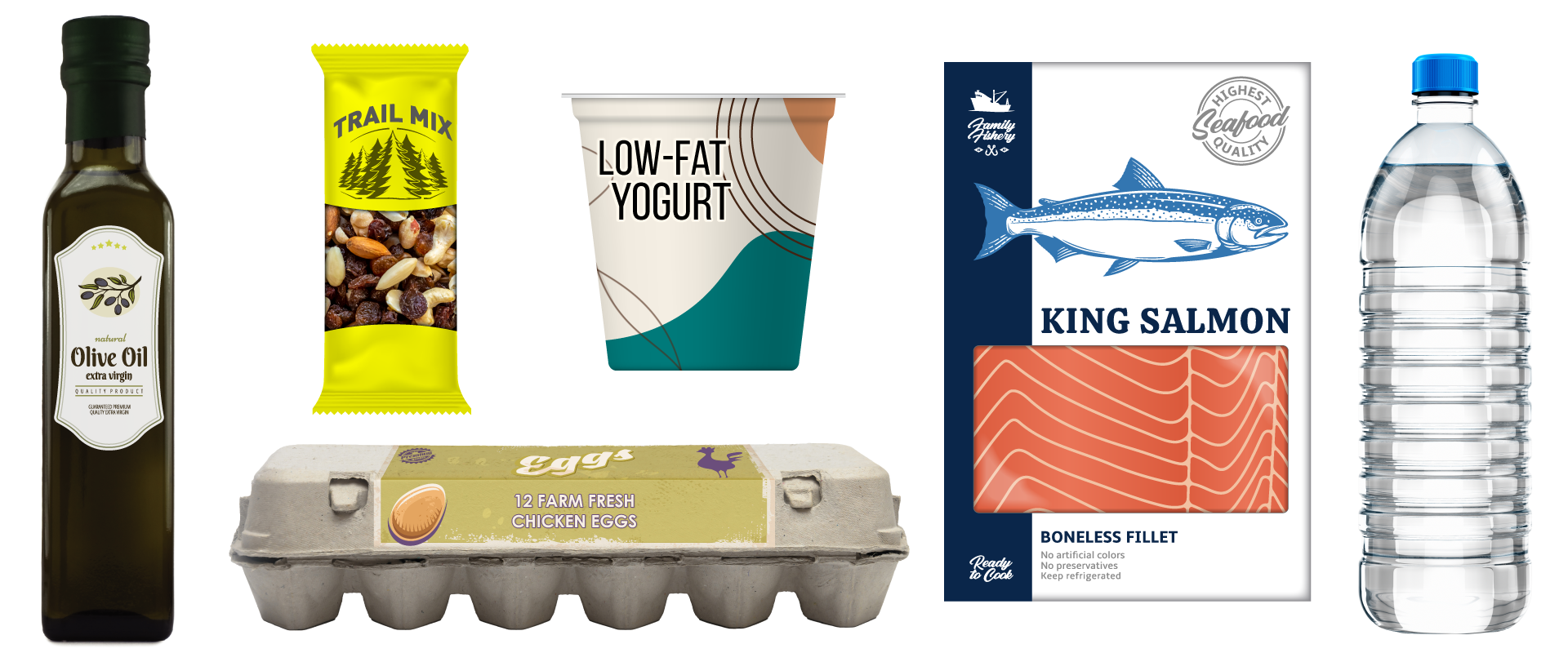
Under the updated standards, water, avocados, nuts and seeds, fatty fish (such as salmon), and olive oil can now also use the "healthy" claim. These foods include many varieties suitable for different budgets, such as fresh, frozen, or canned fruits, vegetables, and fish.
Products that previously met the "healthy" standard but no longer meet the new standard include:Fortified white bread, high-sugar yogurt, and high-sugar cereals。
Updated standards for certain food groups and example foods
Based on regular consumption reference volume
oz = ounce
g = grams
mg = milligram
DV = Daily intake percentage
| Food Groups Food categories | Food Group Equivalent Minimum Minimum quantity of food categories | Added Sugar Limit Add sugar limit | Sodium Limit sodium limit | Saturated Fat Limit Upper limit of saturated fat |
| Grains product Grain products | 3/4 oz whole-grain equivalent 3/4 ounce whole grain equivalent | 10% DV (5 g) 10% DV (5 grams) | 10% DV (230 mg) 10% DV (230 mg) | 5% DV (1 g) 5% DV (1 gram) |
| Dairy product dairy | 2/3 cup equivalent 2/3 cup equivalent | 5% DV (2.5 g) 5% DV (2.5 g) | 10% DV (230 mg) 10% DV (230 mg) | 10% DV (2 g) 10% DV (2 grams) |
| Vegetable product Vegetable products | 1/2 cup equivalent 1/2 cup equivalent | 2% DV (1 g) 2% DV (1 gram) | 10% DV (230 mg) 10% DV (230 mg) | 5% DV (1 g) 5% DV (1 gram) |
| Fruit product Fruit products | 1/2 cup equivalent 1/2 cup equivalent | 2% DV (1 g) 2% DV (1 gram) | 10% DV (230 mg) 10% DV (230 mg) | 5% DV (1 g) 5% DV (1 gram) |
| Protein Foods Protein foods | ||||
| Game meat Wild game meat | 1 ½ oz equivalent 1 1/2 ounce equivalent | 2% DV (1 g) 2% DV (1 gram) | 10% DV (230 mg) 10% DV (230 mg) | 10% DV (2 g) |
| Seafood seafood | 1 oz equivalent 1 ounce equivalent | 2% DV (1 g) 2% DV (1 gram) | 10% DV (230 mg) 10% DV (230 mg) | 5% DV (1 g)* 5% DV (1 gram)* |
| Egg egg | 1 egg 1 egg | 2% DV (1 g) 2% DV (1 gram) | 10% DV (230 mg) 10% DV (230 mg) | 10% DV (2 g) |
| Beans, peas, and Beans, peas and | 1 oz equivalent 1 ounce equivalent | 2% DV (1 g) 2% DV (1 gram) | 10% DV (230 mg) 10% DV (230 mg) | 5% DV (1 g) 5% DV (1 gram) |
| lentils Lentils | ||||
| Nuts, seeds, and soy products Nuts, seeds and soy products | 1 oz equivalent 1 ounce equivalent | 2% DV (1 g) 2% DV (1 gram) | 10% DV (230 mg) 10% DV (230 mg) | 5% DV (1 g)* 5% DV (1 gram)* |
| Oils oils | ||||
| 100% Oil 100% oil | N/A not applicable | 0% DV | 0% DV | 20% of total fat 20% of total fat |
| Oil-based Oil-based | N/A not applicable | 0% DV | 10% DV (230 mg) 10% DV (230 mg) | 20% of total fat 20% of total fat |
| Spreads Topical products | ||||
| Oil-based Oil-based | N/A not applicable | 2% DV (1 g) 2% DV (1 gram) | 10% DV (230 mg) 10% DV (230 mg) | 20% of total fat 20% of total fat |
| Dressing** seasoning | ||||
| * Excluding saturated fat inherent in nuts, seeds, soy products, and seafood * Free of saturated fats found in nuts, seeds, soy products, and seafood. ** Must contain at least 30% oil It must contain at least 30% oil. | ||||
| Sample Foods Example food | ||||
 Individual food Individual foodsingle serving | Mixed product Mixed products | Meal meal | ||
| Amount of food groups required Number of food groups required | 1 food group equivalent* 1 food group equivalent* | 1 total food group equivalent with at least 1/4 food group equivalent from 2 or more food groups One total food group equivalent, of which at least one-quarter of the food group equivalent comes from two or more food groups. | 3 total food group equivalents with at least 1/2 food group equivalent from 3 or more food groups Three total food group equivalents, of which at least half of the food group equivalents come from three or more food groups. | |
| 2/3 cup yogurt 2/3 cup yogurt | For example, 1/8 cup dried fruit and 1/4 oz nuts For example, 1/8 cup dried fruit and 1/4 ounce nuts | For example, 1 oz salmon, 1/2 cup green beans, 3/4 oz brown rice For example, 1 ounce of salmon, 1/2 cup of green beans, and 3/4 ounce of brown rice. | ||
| Nutrients to Limit (no more than)** Limit nutrients (not exceeding)** | 2 g saturated fat 2 grams of saturated fat | 2 g saturated fat*** 2 grams of saturated fat*** | 4 g saturated fat*** 4 grams of saturated fat*** | |
| 230 mg sodium 230 mg sodium | 345 mg sodium 345 mg sodium | 690 mg sodium 690 mg sodium | ||
| 2.5 g added sugar 2.5 grams of added sugar | 5 g added sugar 5 grams of added sugar | 10 g added sugar 10 grams of added sugar | ||
| * A food group equivalent is the minimum amount of a food group required *Food group equivalent is the minimum amount of the required food group. ** Amounts based on percentage of the Daily Value for that nutrient **The quantity is based on a percentage of the daily intake of this nutrient. *** Saturated fat inherent in nuts, seeds, soy products, and seafood does not contribute to limit ***Saturated fats inherent in nuts, seeds, soy products, and seafood are not included in the limit. | ||||