Despite the landmark passage of the 1938 Federal Food, Drug, and Cosmetic Act...
The relationship between drug registration and patent protection
2026-05-12
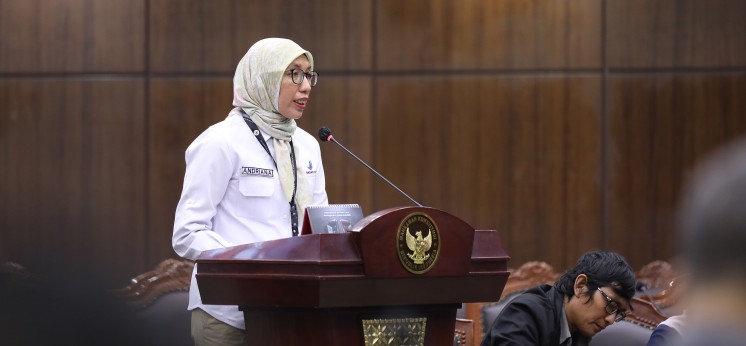
Jakarta– The Constitutional Court on Wednesday, May 6, 2026Patent Law No. 65 of 2024The use of the term "interested party" in Article 4 and Article 70(1) was subject to a substantive review hearing, during which testimonies were heard from the relevant parties—the Indonesian Food and Drug Regulatory Agency (BPOM) and the Indonesian Consumers Association Foundation (YLKI). BPOM explained the relationship between drug registration and intellectual property rights.
BPOM emphasizedBolar Terms and ConditionsThis concept serves as an important tool within Indonesia's health and pharmaceutical legal framework. The policy is an exception to the patent holder's exclusive rights, allowing generic drug manufacturers to use pharmaceutical inventions still under patent protection before the patent expires, for research, development, and registration preparation (bioequivalence testing).
"The aim is to accelerate the launch of affordable generic drugs after the expiration of innovative patents," said Andriana Krisnawati, Director of the Legal and Organizational Bureau of BPOM, at the Jakarta Court.
From a regulatory perspective, Article 167b of the Patent Law allows for exceptions to patent use for research, testing, and analysis conducted for the purpose of obtaining marketing authorization for pharmaceuticals. This clause provides a legal basis for implementing the Bolar Clause in Indonesia, enabling pharmaceutical companies, especially generic drug manufacturers, to prepare for registration before their patents expire.
Consistent with this, within the framework of technical regulations, BPOM throughBPOM Regulation No. 24 of 2017, "Standards and Procedures for Drug Registration"Article 21 stipulates the mechanism and transition stage from patented drugs to generic drugs, including arrangements related to the preparation of marketing authorization applications. Specifically, it stipulates that for the first generic drug whose active ingredient is still protected by patent, the marketing authorization application may be submitted by an applicant who is not the patent holder before the patent protection period expires.Five yearsThe submission is conditional upon the fact that marketing authorization can only be granted after the patent protection period has expired. This demonstrates that the regulatory framework in the patent field and drug registration policies are complementary.
This regulation ensures that generic drugs can immediately obtain market access and be available to the public without legal obstacles after patent expiration, thus guaranteeing the principles of public accessibility and affordability. The BPOM's provisions on drug registration embody the Bolar concept in principle, which is reflected in the technical regulations for drug registration, making it possible to prepare market access applications before patent expiration.
This regulation complies with the provisions of the Patent Law, particularly Article 167b, which provides an exception to the patentee's exercise of exclusive rights for research, testing, and analysis conducted for the purpose of obtaining market access. Although the specific five-year time limit before patent expiration is no longer explicitly stated, the substantive content of the exception remains valid. Therefore, at the regulatory level, BPOM's drug registration policy remains consistent with the Bolar principle under Indonesian patent law.
Andriana further stated that drug registration regulations are closely related to the patent protection system, particularly regarding the exercise of the Bolar provisions, which are reflected in Law No. 65 of 2024 and BPOM Regulation No. 24 of 2017. Although technical details—such as time limits—are no longer explicitly specified, the exceptions embodied in Section 167b provide companies with the opportunity to prepare drug registrations before patents expire.
"At the same time, BPOM's drug registration policy, particularly Article 21 of BPOM Regulation No. 24 of 2017, also stipulates a transition mechanism from patented drugs to generic drugs, so that the two systems can ultimately work together to support the accelerated market launch of safe, high-quality and affordable generic drugs without compromising patent protection," Andriana said.
Drug accessibility
Sudaryanto, representing YLKI as an expert, stated that there are at least two important issues related to intellectual property and consumer rights. First, copyright and access to knowledge. Copyright often hinders access to knowledge, especially in developing countries. Therefore, exceptions to copyright provisions are crucial for education, research, and libraries.
Second, patent law and drug accessibility. Patent law, especially in the pharmaceutical industry, significantly restricts drug accessibility by establishing temporary monopolies, resulting in high prices and limited availability. On the other hand, consumers have the right to basic goods and services, including medicines.
Access to medicines is a core component of the right to health. However, Sudaryanto states that one-third of the world's population faces problems with poor accessibility, high prices, and inaccurate and poor-quality healthcare services.
"Patients in impoverished countries often receive very little or no healthcare benefits," Sudaryanto said.
He emphasized that essential medicines must be accessible to everyone, which requires a fully functional healthcare system and sound infrastructure. The pharmaceutical industry also bears responsibility for limited drug accessibility.
Patent regulations originated from the World Trade Organization (WTO) legislation adopted in 1994.The Agreement on Trade-Related Aspects of Intellectual Property Rights (TRIPS)The agreement stipulated that the medicine itself (not just its manufacturing process) should be protected by patents. This granted patent holders the exclusive right to produce the medicine for 20 years, during which time drug prices skyrocketed, making it inaccessible to poorer groups.
2001Doha DeclarationThis ensures that governments can issue compulsory licenses for patented medicines or take measures to protect public health. However, parallel imports from other countries often result in severe trade sanctions, making this tool less effective.