
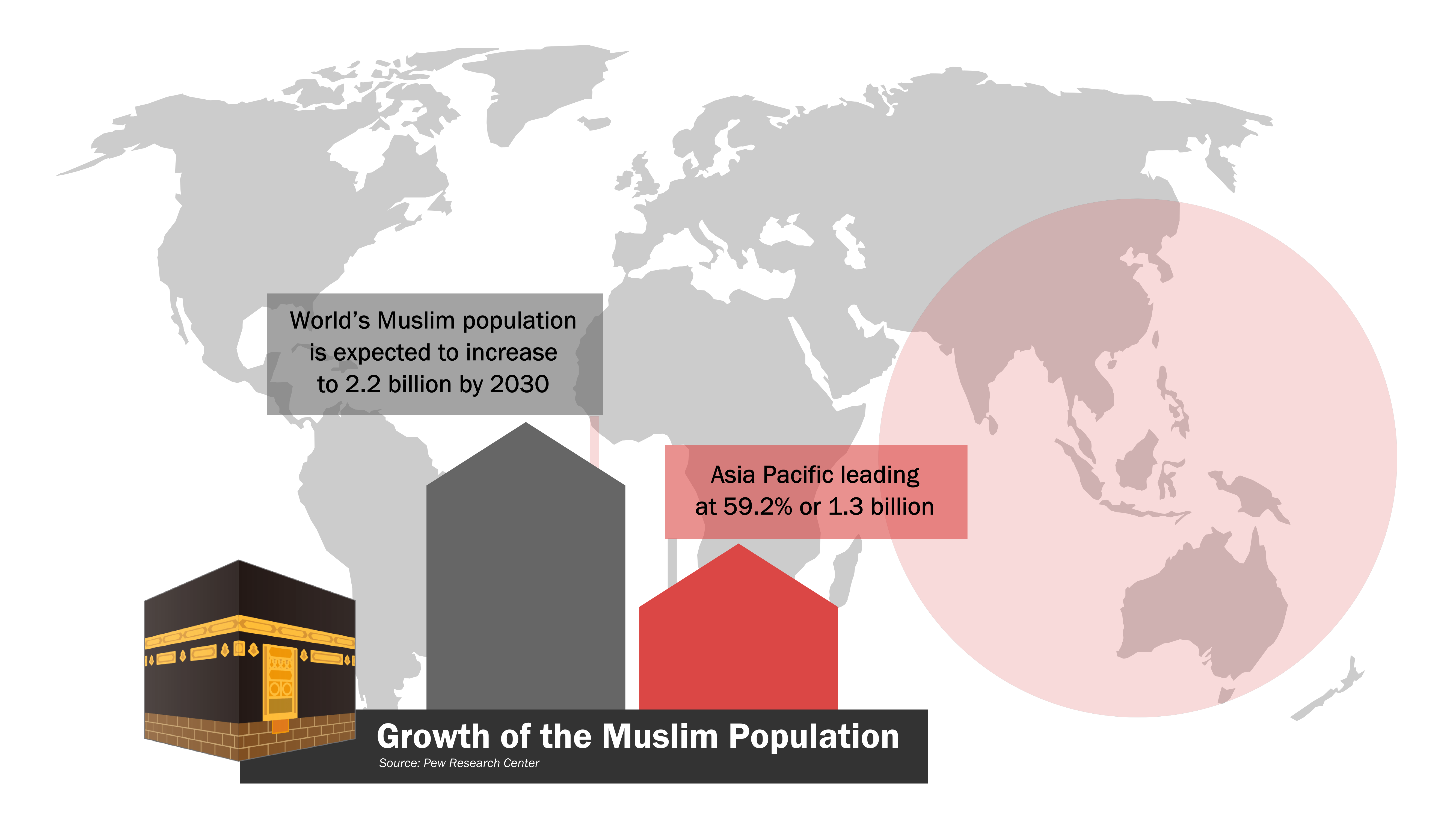
According to population projections by the Pew Research Center, the world's Muslim population is expected to grow to 2.2 billion by 2030, of which the Asia-Pacific region will account for 59.2%, or 1.3 billion.
As the population grows, the global halal industry is expanding exponentially. As awareness and acceptance of the Halal concept increases among both Muslims and non-Muslims, this is good news for industries such as food and beverages, apparel and clothing, cosmetics and pharmaceuticals, media and entertainment, tourism, and finance.
The State of the Global Islamic Economy Report 2018/19, published by the Dubai Islamic Economy Development Centre in cooperation with Reuters, projects that global Muslim spending on food and beverages alone will reach US$1.9 trillion by 2023.

Bright prospects for Halal certification
Entering the global Halal market not only marks a solid step forward in an enterprise's globalization strategy, but also means the enterprise is developing in depth into overseas markets worldwide with an international vision. At the same time, Halal certification allows enterprises to obtain larger returns with smaller investments. In countries surrounding China, more than 800 million Halal consumers need to seek Halal-certified products every day. As the purchasing power of Halal consumers grows by the day and economic globalization and international interdependence continue to increase, China's Halal certification market is growing steadily year by year, and Halal certification has now become one of the essential certifications in the food and beverage industry.