
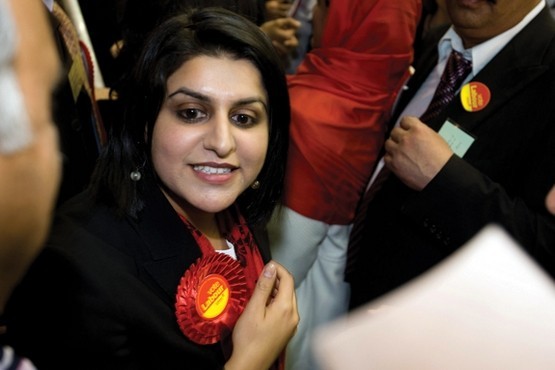
Shabana Mahmood, a prominent Muslim politician from Birmingham's Ladywood constituency, spoke with the ANSA news agency, saying she would write to the Prime Minister and the Secretary of State to report the urgent situation that the incident of pork protein found in beef burgers imported from Ireland had still received no statement.
Prime Minister David Cameron said in a statement to the House of Commons that 'retailers have a responsibility to inform customers of the detailed status of their products.'
The product adulteration incident drew widespread attention, and the UK Food Standards Agency had to investigate whether retailers knew in advance about the product adulteration. Further investigation was also needed into the fact that the merchants all claimed their products came from factories certified by the British Retail Consortium, yet these factories had now violated the standards and therefore had to be re-inspected and re-audited, because the products seriously failed to meet requirements. The UK Food Standards Agency had a responsibility to find out whether the fault lay with the producers, the retailers, or both, bearing in mind that although the Food Safety Authority of Ireland was fully aware of the situation as early as November 2012, it did not inform the public until the second week of January this year.
This act violated secular law; regardless of whether the products were Halal, the authorities had a responsibility to investigate and remove this batch of products.
If a producer that produces strictly according to Halal slaughter methods and is certified by the Food Safety Authority of Ireland does not inform consumers of the actual situation or make a label, then such behavior is unacceptable.
Such behavior is unacceptable because some communities are unwilling to buy and consume Halal meat and unwilling to be forced to consume Halal food without their knowledge.
The Muslim community will, through MP Shabana's intervention, raise this issue as an urgent matter in writing to the Prime Minister and the Secretary of State. Voters in the Ladywood district also specifically emphasized that an investigation should be made and the public informed of when and how this counterfeiting incident occurred.
The ANSA news agency had previously spoken with Birmingham's environmental health department about the embarrassment and panic caused by the pork-in-beef-burger incident, only to be told that the department had no authority to investigate the incident, because the headquarters of the slaughterhouse producing these products was not in the Birmingham area—even though the frozen finished products containing pork might be consumed by residents of Birmingham's Muslim community.
The head of environmental services told the association that although a large amount of Halal beef products imported from Ireland (possibly containing pork) were used in Birmingham's Halal fast-food shops, DNA testing had not been carried out on these products due to financial constraints.
As the relevant consumer group, we demand that the Food Standards Agency officially notify all communities of the suspect products, inform consumers of their brands, so that they can identify them and remove these products from their own refrigerators. Because the products involved this time are frozen food, and frozen food has a shelf life of 12 months.
We the Muslim community hope that, with the intervention of MP Shabana Mahmood, the frozen meat incident will be concluded as soon as possible. Because those frozen products can easily enter places such as secondary schools, universities and hospitals. Therefore all brands should be re-identified and renamed to meet consumers' Halal dietary needs.
We look forward to the ANSA news agency's investigation results on how horse meat and pork were mixed into beef burgers and other frozen food, because only in this way can we ensure that the same thing does not happen again. We hope the government can conduct random DNA testing on all Halal products to ensure their quality. ANSA also focuses on co-produced products, in whose production process British and imported Halal and non-Halal meat may be mixed. Therefore we demand a public discussion of this process and clearer labeling to inform all communities of whether the products' slaughter is Halal. UK consumers have the right to know how the meat they consume is slaughtered and processed.
'A consensus has been reached on the labeling issue; all meat must be clearly labeled, indicating, in addition to whether the slaughter method complies with Halal requirements, whether electric stunning, head striking or anesthesia was used.'
We hope the Food Standards Agency conducts a thorough investigation, removes the products that are certified non-compliant, and notifies Muslims to remove contaminated products from their refrigerators and no longer consume them.