
At this year's Global Islamic Economy Summit (GIES), the International Halal Accreditation Forum (IHAF) will set out to advance the agenda of unified Halal standardization.
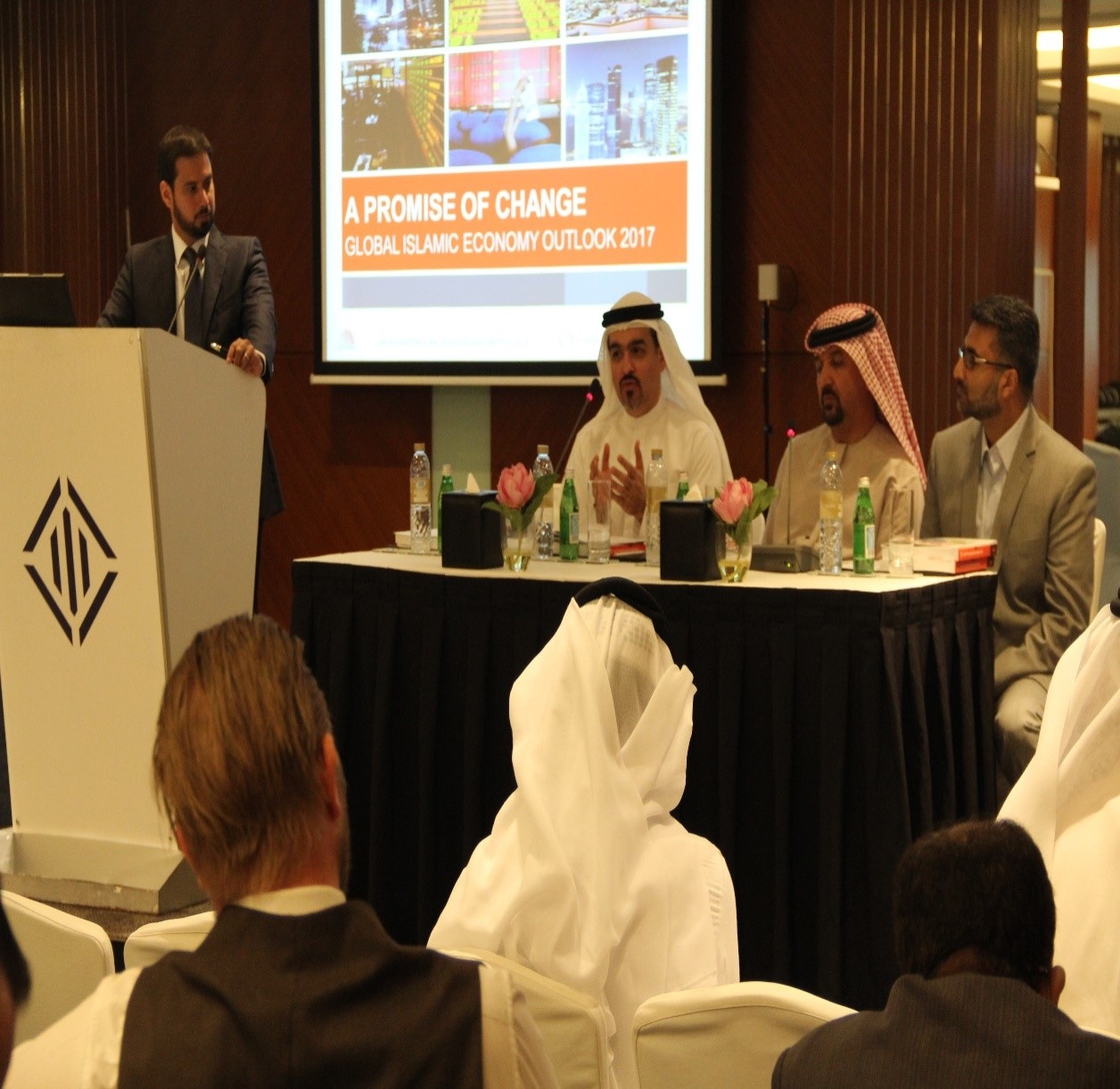
IHAF Secretary-General Mr. Mohamed Saleh Badri said: 'The Global Islamic Economy Summit provides an ideal opportunity for IHAF to let key stakeholders discuss the importance of unifying the global Halal food industry, because for a long time in the past the standards were not unified. Now this is possible, and IHAF will make it happen.'
Badri is one of the speakers at the Global Islamic Economy Summit, to be held on 11 and 12 October at the Jumeirah Hotel in Dubai. His goal is to highlight the challenges facing the halal industry and how IHAF has made unprecedented progress in creating an integrated Halal market. The Global Islamic Economy Summit is the region's premier forum on the Islamic economy, bringing together world-class experts in key industry fields across geographic and cultural boundaries to directly address the biggest challenges and opportunities in the Islamic economy.
Badri added: 'Different countries have different acceptable standards for certifying Halal products, thus inadvertently forming trade barriers among them. Standardization is the key to the Halal value chain. For the industry, it is crucial to have a unified program to ensure the development of proper specifications, requirements and the implementation of appropriate verification systems.'
The Global Islamic Economy Summit is headquartered in Dubai and led by the Dubai Islamic Economy Development Centre (DIEDC) and the Emirates Authority for Standardization and Metrology (ESMA). It is a network of independent non-governmental accreditation bodies, all authorized to enforce Halal standards in their countries and regions.
'We want to create a global Halal market that consumers can trust. With the establishment and guidance of international humanitarian law, Halal standardization can be done systematically. We strive to familiarize the international community with how IHAF plays a role in the global Halal industry,' Badri added.
IHAF aims to protect the growing number of Halal consumers and to promote international trade by establishing partnerships and multilateral agreements among countries that import and export Halal products.
Badri explained that differences in faith and culture often hinder efforts to establish a set of global standards for the industry, but with IHAF's strategy and commitment, more and more countries are interested in the initiative.
Currently, IHAF has 10 members, including the UAE, the United States, the United Kingdom, the Kingdom of Saudi Arabia, Spain, Australia, New Zealand, Pakistan, Egypt and the rest of the Gulf Cooperation Council.