
HALAL
The word 'HALAL' literally means permitted, and is usually used as 'lawful' in translation.
HALAL certification bodies' rules for HALAL food are based on Halal regulations or Halal standards. The antonym of HALAL is HARAM, meaning unlawful or forbidden.
It is well known that Muslims eat HALAL meat in the meat trade. However, people sometimes ask, what is HALAL? In Arabic, it simply means permitted or allowed. The opposite is HARAM, meaning forbidden or not allowed. The word HALAL is derived from Arabic, the language of the Quran, which Muslims follow completely.
Now, to make meat HALAL or permitted, the animal or poultry must be slaughtered in a ritual manner known as Zibah or Zabihah. To make it easy to understand, HALAL is somewhat like Jewish KOSHER, and Zibah has some exceptions similar to Shechita. The Halal regulations give the following underlined prohibitions:
Zabihah requires the animal to be alive and healthy at the time of slaughter, because carrion is forbidden; the jugular vein, carotid artery and windpipe must be cut at once with a sharp knife to minimize pain as much as possible. The only difference here is that a rabbi will read what his faith requires, while a Muslim is required to begin all his actions in the name of Allah.
All flowing blood must be drained from the meat, because blood is forbidden.
Pork is also forbidden.
Forbidden animals are those strangled or killed by a violent blow or fall.
HALAL certification
HALAL certification refers to the inspection of food during preparation, slaughter, cleaning, processing, handling, disinfection, storage, transport and management.
The farm-to-table concept of Halal eating.
HALAL certification is becoming increasingly important in today's market, mainly because people have more awareness of the concept of HALAL.
It not only involves matters related to customs, but also products or services considered safe for consumption and beneficial to health. This is what we call Halalan Thoyiban, which means quality and health.
Why HALAL certification
Promotes global trade of Halal products;
Maintains Halal integrity from farm to table;
Prevents fraud against consumers during the preparation, distribution and sale of Halal food;
Very important in countries where Halal food consumers are the majority;
Quality assurance brought by the authenticity of Halal food.
HALAL certification process
Consultation
Consult a HALAL certification expert
Brief introduction to international HALAL certification based on the HALMQ system
Submission
Submit the application form
Assess the application
Brief introduction to the HALAL certification project & quotation
Implementation
Carry out and implement the HALAL certification audit plan
Audit documentation and physical key points
Certification
Issue the HALAL certificate after a successful audit (2-year validity)
Mail the certificate
Regular surveillance audits
Processing of additional application procedures
Renewal
Issue a HALAL certificate renewal reminder letter
Process the renewal application
Issue the renewed HALAL certificate (2-year validity)
HALAL certification fees
Apart from the recognition of the certificate, the HALAL certification fee is one of the applicants' main concerns. The HALAL certification fee is determined by various factors, including the product's risk level, production control methods, the complexity of raw and auxiliary materials, and the cost required for supervision. For some products that are easily contaminated and have a high risk level, we usually adopt the method of multiple flight inspections within a year to ensure that the product's HALAL quality is guaranteed, which will increase the certification cost.
Because the HALAL certification fee is constrained by various factors, to learn the specific fee, applicants should ask the China HALAL Certification Office. National unified certification hotline: 400-001-7706
Please note that HALAL certification has no strict limit on the number of names of the products applied for, and the fee for an enterprise applying for a single product and multiple products is almost the same. Therefore, the wiser choice is to apply for HALAL certification for as many of your products as possible, which also promotes your other products in the HALAL market. Many potential buyers can find your products through the HALAL certificate you provide and platforms such as the HALAL product recommendation directory published by the HALAL certification body.
HALAL certification cycle
The HALAL certification process takes about 15 working days. Of course, if you need expedited processing, you can seek an expedited procedure.
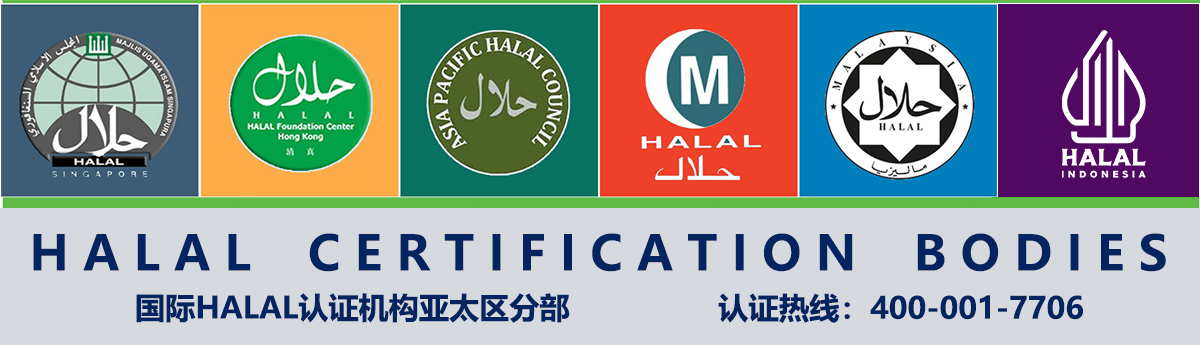
HALAL certification mark
For more HALAL certification information, please contact the China HALAL Certification Office. National unified certification hotline: 400-001-7706