
Introduction:
What kind of organization is a Kosher certification body? Why is Kosher certification so important? How do I obtain Kosher certification? What are the Kosher certification fees? Is Kosher certification universal? The following will address these questions for you:
What kind of organization is a Kosher certification body?
A Kosher certification body is a series of certification standards covering the entire industry chain of food, pharmaceuticals and cosmetics—procurement/transportation/processing/packaging/storage and even sales—according to Kosher regulations. Kosher certification bodies are formed by organizations such as Jewish rabbinical courts, rabbinical councils or the Jewish community (Chabad).
The earliest documented certificate of authorization from a Kosher certification body was found in the Cairo Geniza—cheese being sold, certified by a Jewish rabbinical court in the 11th century according to rabbinical law. The document explains that the rabbi-supervised cheese was produced by a factory located on the Mount of Olives. The certificate read: 'The cheeses are kosher and it is appropriate for Rabbanite Jews to purchase them. We grant this permission only after having made a formal purchase from him and having witnessed an oath he took on the holy Torah.' There are more than 1,400 Kosher certification bodies worldwide! For a complete list of Kosher certification bodies (including recommended and non-recommended bodies), see 'Kashrus Magazine Online' (or call us). Recommended Kosher certification bodies all follow the same rules, with almost no difference in certification policies and audit standards. It is worth mentioning that international certification bodies and some more authoritative national Kosher certification bodies have all joined the Association of Kashrus Organizations (AKO), an effective umbrella organization that connects different Kosher certification bodies and Jewish organizations around the world to improve and maintain the highest level of Kashrus. AKO plays a very important role in establishing universal standards.
Why is Kosher certification so important?
There is no doubt that when your peers choose Kosher certification to expand their sales, there is no reason for you to refuse. In the United States, more than 40% of prepackaged food has passed Kosher certification; over the past twenty-five years, Kosher certification sales have risen from an initial US$250 million to US$150 billion, and this figure is increasing at a compound annual growth rate of 13%.
Kosher-certified food is increasingly exported to Europe, the Americas, the Middle East, Russia, Australia, Japan and Southeast Asian markets. Research shows that obtaining a Kosher mark for food is a very favorable measure to gain more market share. Currently, in the US alone, 9,200 enterprises produce Kosher food. Today, more than 65,000 different Kosher products are sold in US supermarkets.
More and more consumers consider the Kosher mark a very important reference standard when buying food. This has led many supermarkets to follow this trend and invest more shelf space in Jewish goods. When faced with a choice between two competing products, the product with a Kosher certification mark is highly favored by consumers. To improve the quality of their supermarket products, supermarkets are also very willing to introduce more Kosher goods.
How do I obtain Kosher certification?
Step 1: Fill out the blank Kosher application form
You can call 400-001-7706 to request a free application form.
Step 2: Document review
We will carefully review the application form and relevant qualification documents you submit; this process takes about 2-3 working days.
Step 3: On-site inspection
After passing the document review, we will arrange for a Jewish rabbi to visit the factory location and inspect your site's Kosher compliance on the spot. If there are compliance issues, we will provide a solution.
Step 4: Sign the contract
Once it is confirmed that your application meets all Kosher certification standards and the Kosher certificate and logo can be authorized, you will receive a Kosher certification contract; after countersigning this contract, pay the certification fee.
Step 5: Issuance
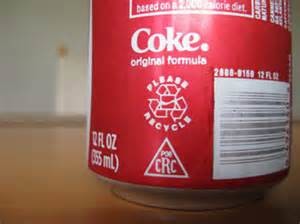
Upon receiving your countersigned contract page and payment, the Kosher certificate and logo will be issued to you. The Kosher logo can be affixed to the outer packaging of your applied products, and the Kosher certificate can be placed on your official website for promotional use.
Step 6: Renewal review
To ensure your certificate remains continuously valid, within 2 months before expiration, our professional Kosher certification customer service staff will contact you in a timely manner about renewal matters.
What are the Kosher certification fees?
The Kosher certification fee structure is based on multiple factors, including the nature of production, location, and the effort necessary to maintain your Kosher program. The simplicity and complexity of products will play an important role in the cost and requirements of Kosher certification. SINOQUAL's International Kosher Certification Department offers fast, effective service at highly competitive prices. Normally, our quote includes travel expenses.
We do not charge an application fee, but because the product processes of some factories are relatively complex and require multiple on-site audits, before the formal agreement is signed, we generally submit a detailed quotation to the customer for approval.
Please feel free to call us to calculate your certification fee.
Is Kosher certification universal?
The world's most authoritative list of Kosher certification marks and Kosher certification bodies, the 'Kosher Supervision Guide,' shows that the number of Kosher certification bodies worldwide has reached an astonishing 1,427 Kosher certification marks and bodies. These include recommended bodies, non-recommended bodies, and bodies requiring attention to detail.
Thanks to the surge in the Jewish population and the booming Kosher sales market, Kosher certification bodies have experienced explosive growth over the decades. According to the 'Kosher Supervision Guide,' the number of Kosher certification and supervision bodies worldwide has rapidly grown from a few hundred to an astonishing 1,427, and this number continues to grow. From the United States to Belgium, these Kosher bodies are spread throughout Europe, the Americas and the Middle East, and even the Jewish community in the distant ancient land of China can grant Kosher certificates. Although there are so many astonishing Kosher certification bodies, the problem that must be faced is that not all Kosher bodies are recommended—some are even non-recommended (non-compliant). Whether a Kosher certification and supervision body is listed as recommended requires examining many factors, including the body's supervisory capacity, the knowledge it possesses, its interpretation of Jewish dietary law, whether it is an Orthodox rabbi, whether it has been involved in a Kosher supervision scandal, and so on.
For food processing plants unfamiliar with Kosher certification bodies, it is rather difficult to judge whether a Kosher certification body is recommended. In the United States there is an international non-profit organization, 'AKO,' whose main purpose is to unite different kashrus bodies around the world, improve service to the Jewish community and maintain the highest level of kashrus service. To this end, the world's major Kashrus bodies today can use AKO as a medium to discuss, amid the increasingly rapid development of the kashrus industry, the establishment of plans for emergency kashrus situations based on standards and basic principles acceptable to both parties. AKO itself does not provide any Kosher certification recommendations; its members work together to provide Kosher certification and conduct Kosher supervision to the greatest extent. Therefore, when you choose a Kosher certification body, whether it is an AKO member is also the best standard for choosing a Kosher body.
----Quoted from www.KosherSTAR.org
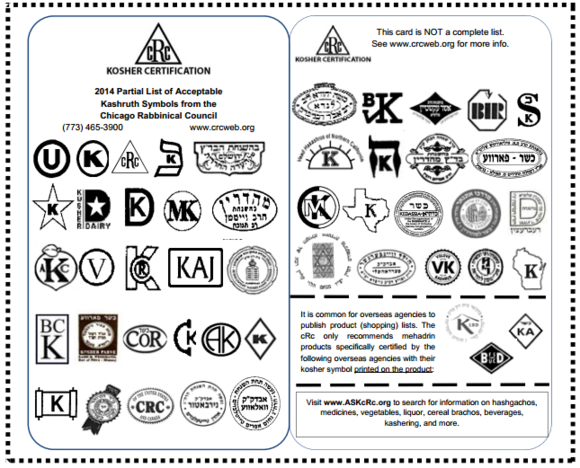
The cRc-Kosher certification body has listed a Kosher certification mark identification card to help customers choose a Kosher certification body through this card; the image above is the Kosher body identification card listed by cRc-Kosher. Please note that Kosher marks not included on this card are not necessarily non-recommended; recommending certain bodies is one of the cRc committee's most deliberate and difficult decisions, and we invest a great deal of time and research solely to help Kosher consumers, without any monetary or other compensation. Because we take this task so seriously, our Kosher certification supervision executive Rabbi Sholem Fishbane wrote an article titled 'Understanding the Reliability of Kosher Agencies' (https://www.kosherstar.org/kosher-news/Understanding-the-Reliability-of-Kosher-Agencies.html), explaining how cRc determines recommendation status to help Kosher consumers make informed decisions. The cRc committee strictly adheres to Jewish law and Kosher certification standards when making these recommendations, consistent with our adherence to Torah values. A body not appearing on the list does not mean the cRc committee has determined it to be unqualified.
For a complete list of Kosher certification bodies (including cRc-recommended and non-recommended bodies), please visit Kashrus Magazine Online (or call the cRc China office at +86 400 001 7706).