
The HFC Halal certification body (HALAL FOUNDATION CENTER), full name Halal Food Research Center, is headquartered in Hong Kong. It focuses on providing systematic and comprehensive Halal certification consulting, Halal internal auditor system training, Halal production system training and Halal factory audit, and international Halal industry chain construction services for food, pharmaceutical, daily-necessity and deep-processing enterprises, as well as enterprises producing complex meat-derived products. The HFC Halal certification system is durable and stable; its Shariah professional audit team is led by Halal regulation authority experts (Mufti) and composed of experts with rich experience in Halal certification of food, nutrition, Halal dietary law and more, providing guidance throughout the entire operation - application materials, raw material analysis and identification, production and processing, laboratory testing, warehousing, product packaging, logistics and transportation, distribution and consumer feedback - to safeguard enterprises' successful entry into domestic and international Halal markets. HFC-certified Halal products have strong universality and high recognition, and can be used in Africa, the Middle East, Europe and America, Asia, as well as mainland China, Hong Kong, Macao, Taiwan and other regions.
The Mufti Personally Handles Halal Qualification Review
Mufti, from Arabic, means 'expounder of regulations.' It is a clerical title, i.e. a regulation explanation officer, whose duties are consultation and admonition. They provide formal legal opinions on litigation of all kinds of new problems and new cases, serving as the basis for judgment. In the case-trial procedure, whenever a major case of complex circumstances is encountered, the case is reported to the Mufti and their opinion sought before adjudication. Therefore, the Mufti holds a lofty status in social life. A Mufti must be a 'Mujtahid' with the capacity for Islamic-law 'Ijtihad' and must meet the following conditions:
1. A deep understanding of Muslim regulations, and the ability to use Hadith to deduce complex legal issues;
2. A deep understanding of the meaning, interpretation and revelation background of no fewer than 500 verses of law;
3. Deep knowledge of the science of Hadith
4. Deep knowledge of Arabic
5. Deep knowledge of the 'Naskh' (abrogating) and 'Mansukh' (abrogated) scriptures
6. Practical experience in Muslim law
7. Familiarity with previous fatwas on the issues explained
All client application materials of the HFC Halal certification body must undergo the Mufti's high-standard professional Halal review to ensure that the products reach a solid Halal standard that can withstand market scrutiny at any time. The HFC Halal certification body committee has two very senior and prestigious Muftis who review and gatekeep all products.
Mufti Hammad Khursheed
A Mufti authority expert and core member of the Shariah committee of the Halal Food Center body, who holds a master's degree in Muslim law and a bachelor's degree in commerce from the University of Karachi, and is pursuing a master's degree in economics.
He has a solid foundation in Muslim law, has participated many times in professional theoretical and practical training on Muslim law and Halal system rules, majored in the Mufti curriculum, and obtained the honorary qualification of Mufti. He has served for many years as a Shariah executive manager and consultant, once worked on the SGS Halal certification project decision-making committee, and was responsible for supervising fatwa adjudication.
Mufti Muhammad Adil Ayub
A Mufti and core member of the Shariah committee of the Halal Food Center body, who studied at Federal Urdu University and obtained a master's degree in Arabic.
He has a solid foundation, completed professional training in the full Tajweed recitation and intensive-reading rules of the Quranic commentary at Wifaqul Madaris, and obtained the honorary qualification of Hafiz (full-memorization commentary expert). He has participated many times in professional theoretical and practical training on jurisprudence and Halal system rules, majored in the Mufti curriculum of Fiqh & Fatwa, and obtained the honorary qualification of Mufti. Passionate about Halal education, he has taught jurisprudence courses at schools for many years, and is responsible for supervising fatwa adjudication at Mahad bin Usman.
The World's First 'QR Code Full Traceability System'
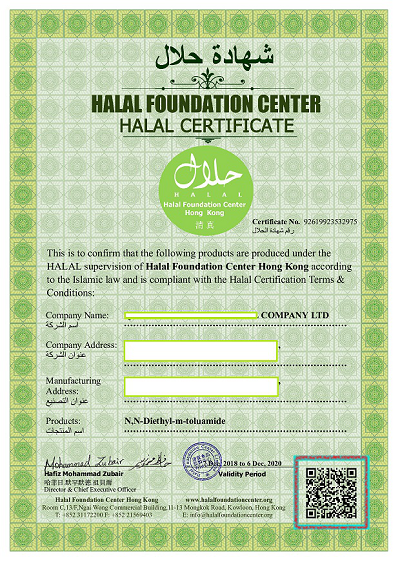
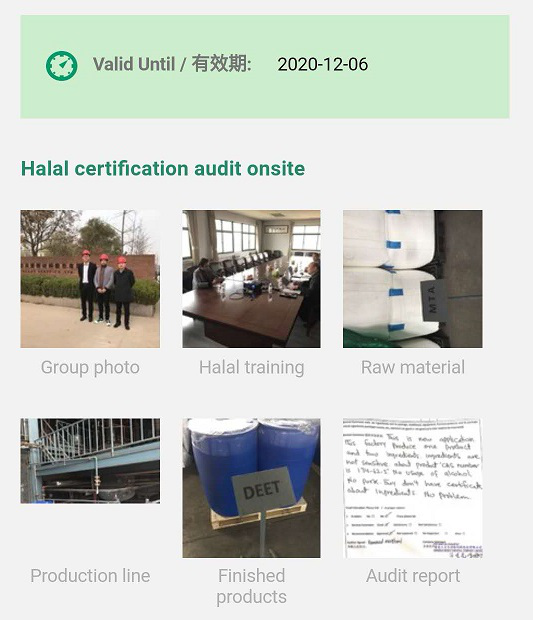
The HFC Halal certification body pioneered the world's first 'QR code full traceability system,' providing 24-hour mobile self-service inquiry for enterprises and their customers. By scanning the exclusive QR code on the certificate, users can instantly view the enterprise's certified product information, basic enterprise information, as well as image information of key links in the Halal production system such as raw material warehouses, production workshops, finished product warehouses, Halal internal auditor training and factory audit reports.
The transparent and open inquiry and traceability system ensures that the rules are transparent and unified across all links - certification consulting, document review, training guidance, factory audit and report evaluation - helping consumers better identify Halal authenticity, eliminating economic losses caused by pre-audit assessment errors due to subjective human judgment and ambiguous rules. At the same time, it greatly reduces the trust cost between enterprises and the market, eliminates at the source the wishful thinking of certain enterprises forging certificates, improves enterprises' integrity and reputation in consumers' minds, and builds a healthy, sustainable, mutually trusting and win-win market ecosystem for the Halal industry.

High Cost-Effectiveness
As a passionate and diversified Halal certification body, the HFC Halal certification body's mission is to promote all our global stakeholders' adherence to Halal standards. Its vision is to become a Halal certification body with high-standard Halal awareness, committed to growing into a symbol of complete enterprise trust, and to promote the diversified development of the Halal industry in line with the 'Belt and Road' policy.
Based on its lofty mission and vision, HFC is not a fully for-profit organization. Unlike other Halal certification bodies that charge by the number of certified products, it encourages that as long as a factory's products fully meet the Halal standards prescribed by Islamic law, they can all be certified uniformly regardless of whether there is currently a need to certify for export Halal markets. Certifying one product and a hundred products costs the same price, avoiding the subsequent cost incurred when an enterprise needs to add product certifications due to market expansion, which makes HFC Halal certification more cost-effective.
The core purpose of the HFC Halal certification body is to define and establish Halal standards based on jurisprudential authority, share and promote knowledge of Halal food and products to consumers and inspire Halal awareness, provide professional certification consulting services covering global Halal standards for enterprise exports, and facilitate the smooth expansion of cooperation between enterprises and Halal-product importing countries. At the same time, in response to the nation's 'Belt and Road' policy, it rapidly and sensitively absorbs cutting-edge international Halal solutions and establishes resource sharing covering feedback channels on major global Halal certification issues.