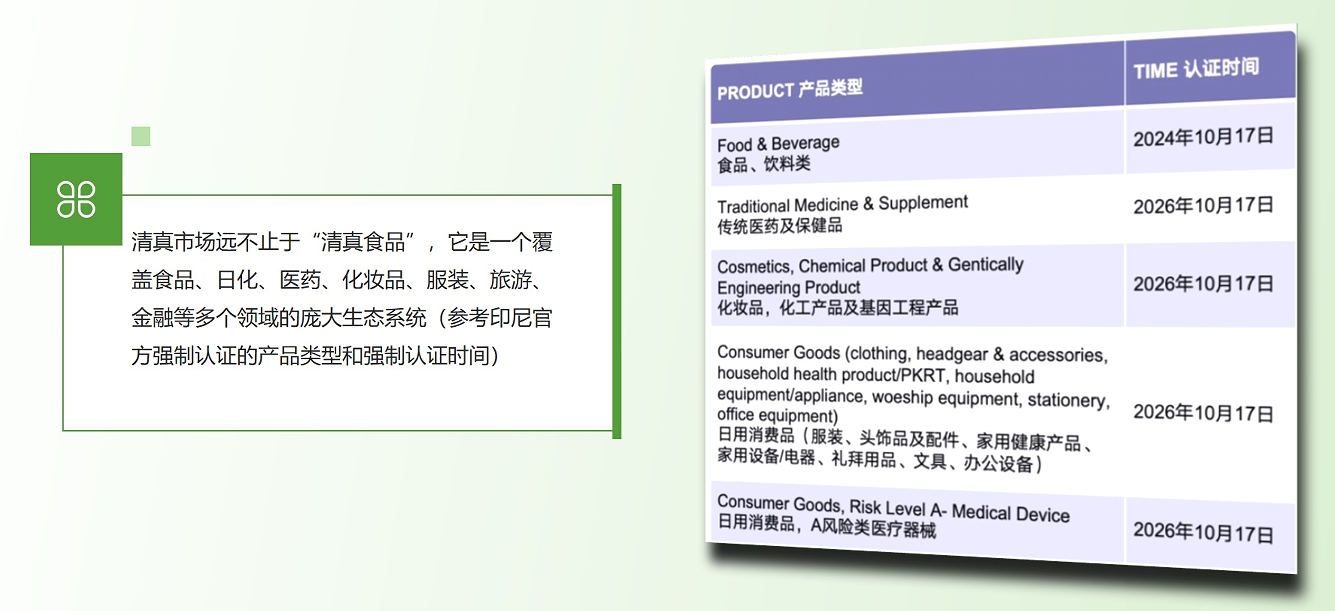
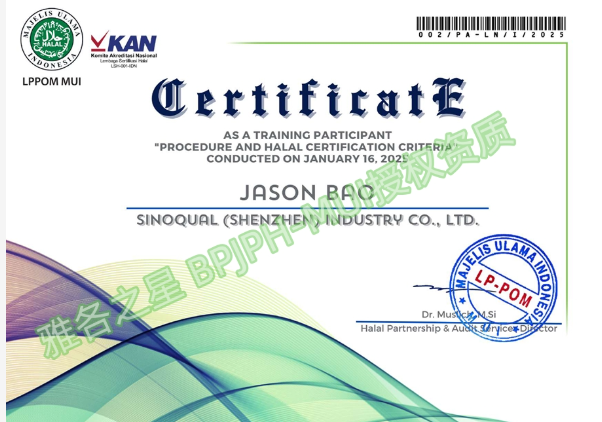
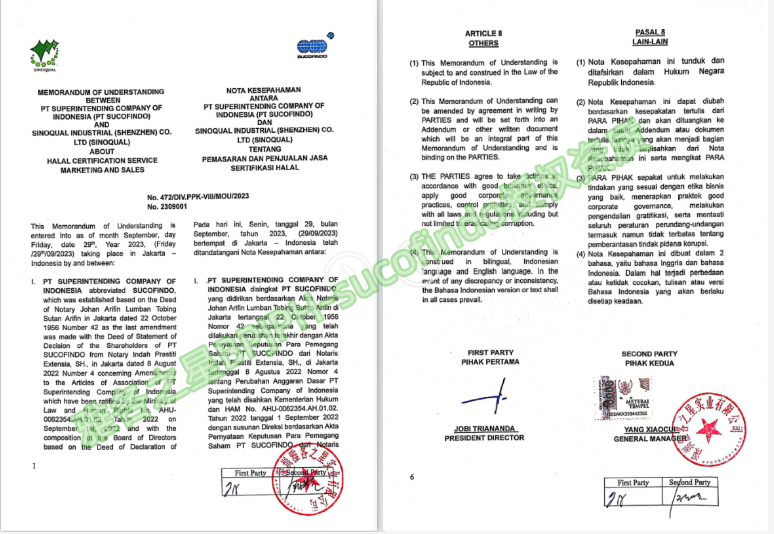
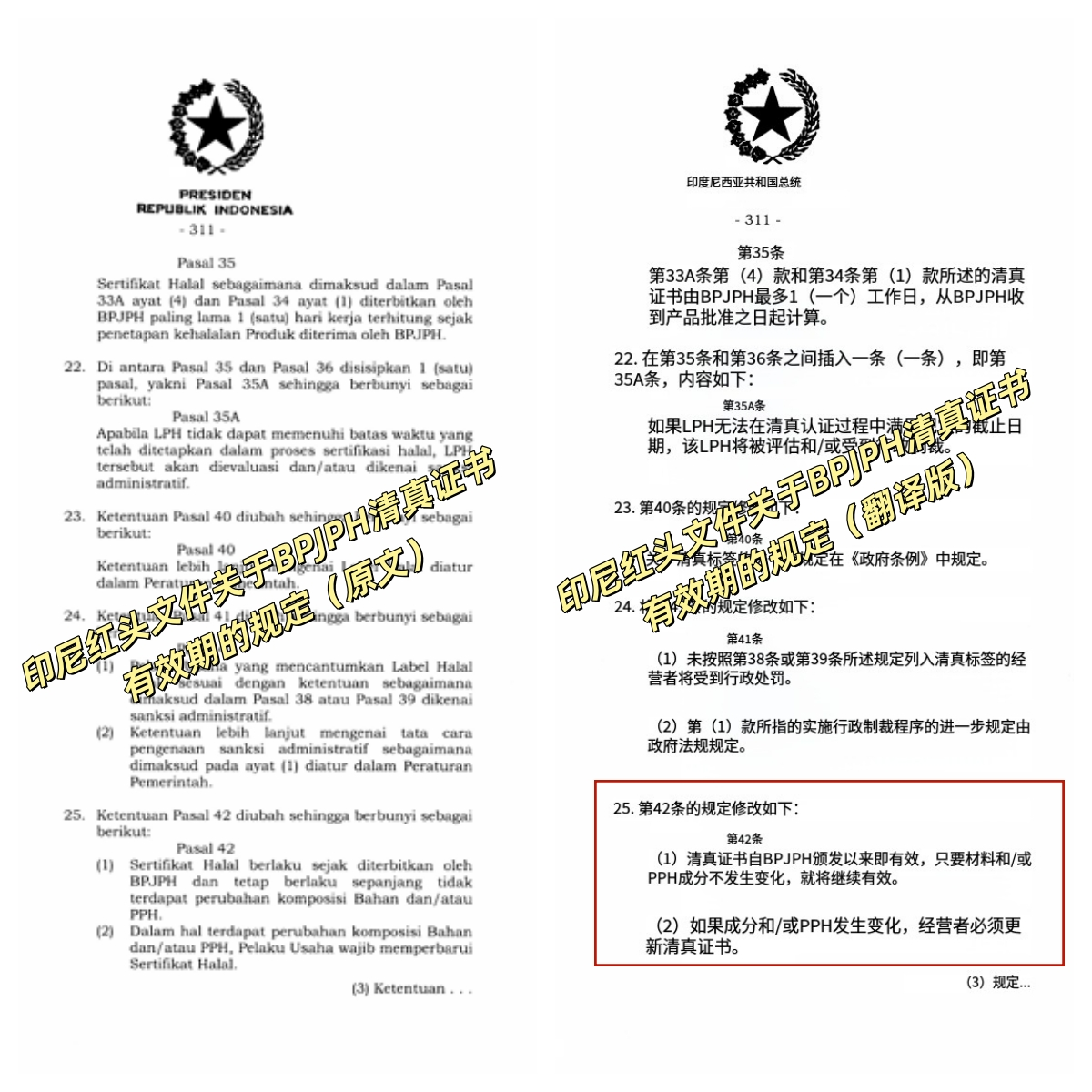
Let's imagine: the Indonesian market, with around 230 million Muslims, is backed by a super halal market growing at more than 10% a year and exceeding US$200 billion. Do you also want a share of this pie? Then you need to ask yourself first: is my product equipped with a BPJPH (Indonesian Halal Product Assurance Agency) certificate — that is, the “entry pass” to the Indonesian market, BPJPH Halal certification? Under Indonesia's Government Regulation No. 39 of 2021 (the “Halal Certification Regulation”), from October 17 of last year, food and beverages without this certificate could not enter the Indonesian market. However, under Indonesia's Government Regulation No. 42 of 2024 on the implementation of halal product assurance (GR 42/2024), the halal certification deadline for three categories — food and beverage products; food additives and raw materials for food and beverages; and slaughter products and slaughter services — has been extended from the original October 17, 2024 to October 17, 2026. For non-food-and-beverage product categories that require halal certification, the deadline remains as set out in GR 39/2021. Indonesia's customs and market authorities have scanners connected directly to the certification database; once “uncertified products” and companies that do not comply with the halal certification regulation are found, they may face administrative sanctions such as written warnings, administrative fines, revocation of the halal certificate, and withdrawal of goods or services from the market. Is BPJPH certification too expensive and the process too cumbersome? Halal certification standards are indeed strict: from filling in and reviewing preliminary documents, to an auditor going deep into the factory for an on-site inspection, from raw materials (no pork or alcohol) to the entire production line (strict prevention of cross-contamination). Authorised bodies are limited — BPJPH has a high threshold, and there are few qualified service providers. Product classification is complex: the finer the grouping, the higher the cost; the wrong grouping may not comply with certification rules. Four-year validity or permanent validity: there are two versions — which one is credible? The way forward: choose the right body, certify early, and save wisely SINOQUAL began carrying out the Indonesian BPJPH halal certification project in 2022, helping Chinese companies enter the world's largest halal market. Between 2022 and 2025, it has assisted hundreds of companies in obtaining Indonesian BPJPH halal certificates. From a professional standpoint, SINOQUAL provides a thorough interpretation of Indonesian BPJPH halal certification policy and assists throughout the whole process. Under Indonesia's Law No. 6 of 2023, the halal certificate issued by BPJPH now has permanent validity, provided that the material ingredients or the halal product process (PPH) do not change. Therefore, unless the product changes, there is no need to renew the process. If any change is made to the material ingredients, the PPH or product development, the company must update its halal certificate by submitting an application to BPJPH along with supporting documents. So companies should note: do not be misled by claims of a four-year validity period with a separate renewal fee. In Indonesia, halal certification is not a multiple-choice question but a matter of survival. Behind this certificate is the guarantee of compliance, and the key to opening the hearts of 230 million consumers.
FAQ
- Why is BPJPH halal certification required to enter the Indonesian market, and what is the deadline?
- Under Indonesia's Government Regulation No. 39 of 2021, from October 17 of last year food and beverages without a BPJPH certificate could not enter the Indonesian market. Under Government Regulation No. 42 of 2024 (GR 42/2024), the halal certification deadline for three categories — food and beverage products; food additives and raw materials for food and beverages; and slaughter products and slaughter services — has been extended from October 17, 2024 to October 17, 2026; non-food-and-beverage categories requiring certification keep the deadline set in GR 39/2021. Indonesia's customs and market authorities have scanners connected directly to the certification database, and “uncertified products” may face written warnings, administrative fines, revocation of the halal certificate, and withdrawal of goods from the market.
- Why are Indonesia's BPJPH halal certification standards strict, and how should companies choose the right body?
- Halal certification standards are strict: from preliminary document review to an auditor's on-site factory inspection, with requirements on raw materials (no pork or alcohol) and the entire production line (strict prevention of cross-contamination); BPJPH also has a high threshold with few qualified service providers, and product classification is complex (finer grouping costs more, while incorrect grouping may not comply). SINOQUAL began carrying out the Indonesian BPJPH halal certification project in 2022 and, between 2022 and 2025, has assisted hundreds of companies in obtaining Indonesian BPJPH halal certificates. Note that under Law No. 6 of 2023 the BPJPH halal certificate now has permanent validity (provided ingredients and the halal product process do not change), so do not be misled by claims of a four-year validity with a separate renewal fee.