
1. What Is Halal?
Halal is an Arabic word meaning 'lawful' or 'permitted'. Its opposite is haram, meaning 'unlawful' or 'forbidden'. Halal applies to every aspect of life, including but not limited to food, meat products, cosmetics, personal-care products, pharmaceuticals, food ingredients and food-contact materials. While many things are clearly Halal or haram, some require further information before they can be classified; such items are often called mashbooh, meaning doubtful or questionable. All foods are considered Halal except those from the following sources:
- Pigs / pork and their by-products
- Animals not slaughtered properly according to the Islamic method, or that died before slaughter
- Alcoholic beverages and intoxicants
- Carnivorous animals and birds of prey
- Blood and blood by-products
- Foods contaminated by any of the substances in the categories above
Foods containing ingredients such as gelatin, enzymes, emulsifiers and flavourings are considered questionable (mashbooh), because the source of these ingredients, or of components within them, may be non-Halal. Meat and poultry should be processed according to Islamic requirements. This is commonly referred to as Zabiha or Dhabiha. Zabiha refers to the slaughter of animals or birds in accordance with Islamic requirements. In the United States and Canada, Halal meat must also comply with all federal and/or state meat-inspection laws before it can be sold. To learn more about Halal certification, contact SINOQUAL, one-stop compliance certification for Chinese companies going global.
2. What Is Halal Certification?
Halal certification is a process in which a specialised body examines the entire production process of a product to confirm that it meets Halal ingredient standards and related requirements. Once a company has successfully adopted and implemented Halal production procedures, the certification body issues a Halal certificate confirming that each product complies with Halal standards.
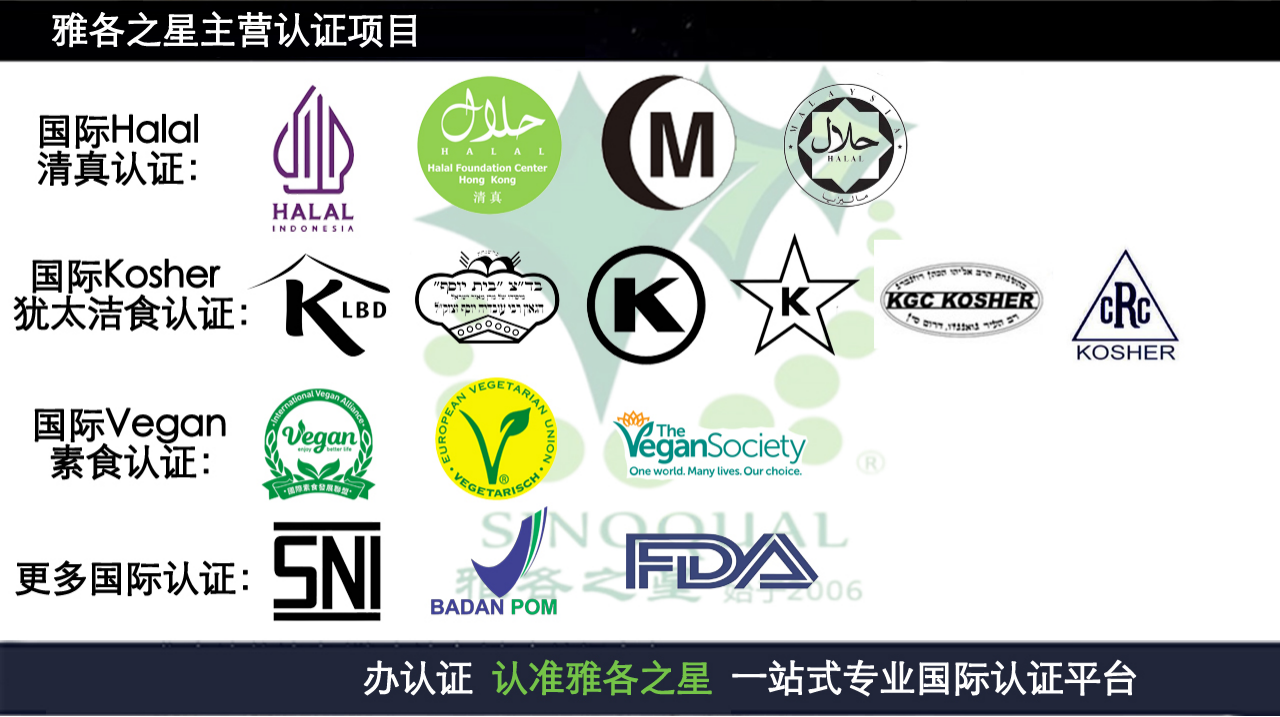
3. Why Do Companies Need Halal Certification?
More than one billion people worldwide follow Halal dietary standards, making up about a quarter of the global population. Today, Halal certification is a consideration not only in Halal-majority regions but also in Western countries such as Canada and East Asian countries such as South Korea, which have begun to apply Halal standards in their pharmaceutical and food industries. This reflects a growing awareness of, and respect for, Halal standards, spanning issues from religious belief to clean and ethical business practices. Halal certification plays a vital role in the global Halal industry.
To learn more about Halal certification, please contact SINOQUAL, one-stop compliance certification for Chinese companies going global.
FAQ
- What is Halal, and which foods are considered non-Halal (haram)?
- Halal is an Arabic word meaning 'lawful' or 'permitted'; its opposite is haram ('unlawful' or 'forbidden'). Halal applies to food, meat products, cosmetics, personal-care products, pharmaceuticals, food ingredients and food-contact materials. All foods are considered Halal except those from the following sources: pigs/pork and their by-products; animals not slaughtered properly according to the Islamic method or that died before slaughter; alcoholic beverages and intoxicants; carnivorous animals and birds of prey; blood and blood by-products; and foods contaminated by any of these. Foods containing ingredients such as gelatin, enzymes, emulsifiers and flavourings are questionable (mashbooh) because their sources may be non-Halal.
- What is Halal certification, and why do companies need it?
- Halal certification is a process in which a specialised body examines the entire production process of a product to confirm that it meets Halal ingredient standards and related requirements; the body issues a Halal certificate once the company has successfully implemented Halal production procedures. Companies need it because more than one billion people worldwide follow Halal dietary standards, about a quarter of the global population. Halal certification is now considered not only in Halal-majority regions but also in Western countries such as Canada and East Asian countries such as South Korea, reflecting growing global awareness of and respect for Halal standards.