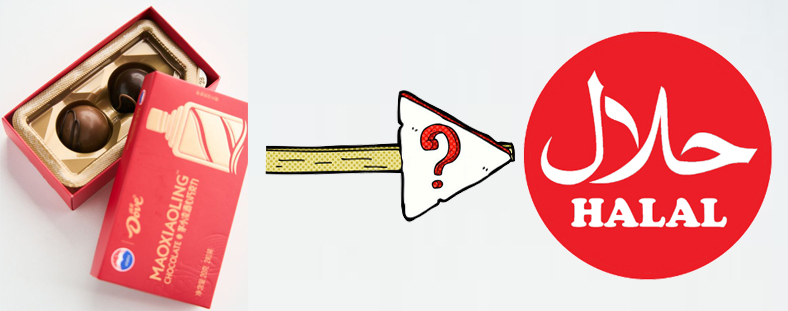
In the world of Islamic dietary law, the word “Halal” represents what is clean, lawful and divinely permitted. The classic example of “Haram” (the unlawful) is alcoholic drinks — such as wine, beer and spirits. Since alcoholic drinks are clearly forbidden, does that mean everything related to “alcohol” is shut out of the Halal door? This is precisely a worry for many companies: if my product is connected to “alcohol” during production or sale, can it still pass Halal certification? The answer is not an outright no. Islamic law does not crudely reject a single chemical substance; rather, with the spirit of divine law at its core, it carefully distinguishes a substance's source, use and symbolic meaning, aiming to protect the purity of faith and the health of body and mind. Below, let us explore this delicate balance and clarify the conditions under which “alcohol” may be permitted in Halal certification. 1. Core principle: “Alcohol” is not a forbidden substance per se — what is forbidden is the unlawful use and culture First, it must be made clear: what Islamic law forbids is “khamr” — that is, an intoxicating drink and its culture. For “ethanol,” a component widely present in modern chemical, pharmaceutical and food industries, the judgment criteria are far more complex, with two key points: whether the source is compliant, and whether the use is legitimate. 1. Compliant source — a pure starting point: Under Islamic law, the basis of all lawfulness begins at the root. Any alcohol derived from alcoholic drinks — such as wine, baijiu, beer, yellow rice wine and their derivatives — is strictly prohibited. This means that even if Moutai is used to extract flavour, it is by nature non-Halal. Industrial ethanol produced through chemical synthesis (such as petroleum cracking), or specially fermented for industrial purposes from non-alcoholic-beverage raw materials (such as corn, sugarcane or cassava), is permitted — but its production chain must be entirely independent of the alcoholic-beverage industry. 2. Rules of use — legitimate purpose and trace limits: Even if the source is compliant, its manner of use must strictly observe Halal norms. (1) Prohibited as a direct ingredient: ethanol must not be added to food and beverages as a main ingredient for the purpose of producing an intoxicating effect. (2) Permitted as a processing aid: in modern production, ethanol may serve as a solvent, extractant or reaction medium. The key is that it should be removed to the greatest extent in the final product, with only an extremely small, technically unavoidable residue permitted (international standards generally require below 0.5%, some stricter). (3) Permitted for cleaning and disinfection: using ethanol to disinfect production equipment is widely accepted, provided it has fully evaporated before contact with the product. (4) Tolerant of natural fermentation: for products such as soy sauce, vinegar, fruit juice and tea that may produce trace alcohol through natural fermentation, as long as it is not artificially added and the content is within the permitted range, it may be accepted. (5) Different treatment for external-use products: in external-use products such as perfumes, skincare and disinfectants, ethanol mainly functions to evaporate, sterilise or promote penetration, and restrictions on its use are usually more relaxed — some bodies do not even scrutinise residue levels. 2. Beyond chemistry: beware of imitating cultural symbolism Islamic jurisprudence has two important concepts — tasyabbuh (imitating forbidden products) and syubhat (ambiguity). These take Halal standards beyond purely physical-chemical analysis and into the moral and symbolic dimension. Therefore, borrowing alcohol-culture vocabulary in product naming or marketing — such as “champagne gold,” “rum-flavoured ice cream” or “red-wine face mask” — or launching “non-alcoholic beer/wine” intended to mimic the drinking experience (where the packaging or manner of consumption deliberately imitates real alcohol) — should be avoided. This is not a prohibition on colour, but a removal of the cultural connotations associated with forbidden things, aiming to preserve the distinctiveness and purity of a Halal lifestyle. 3. A faith practice integrated into daily life These detailed norms are not mere theory; they are deeply rooted in daily life and business ethics. Therefore, in on-site audits for Halal certification, we usually advise the factory hosting the inspection to dine with the auditor at a Halal restaurant and to avoid certain social behaviours typical of everyday business banquets — such as toasting, tasting alcohol or giving alcoholic drinks as gifts.
FAQ
- Can products containing “alcohol” (ethanol) still pass Halal certification?
- The answer is not an outright no. What Islamic law forbids is khamr — an intoxicating drink and its culture. For ethanol, a component widely present in the chemical, pharmaceutical and food industries, the judgment hinges on two points: whether the source is compliant and whether the use is legitimate. Compliant source — any alcohol derived from alcoholic drinks (wine, baijiu, beer, yellow rice wine and their derivatives) is strictly prohibited, but industrial ethanol produced through chemical synthesis or specially fermented for industrial purposes from non-alcoholic-beverage raw materials (corn, sugarcane, cassava) — with a production chain independent of the alcoholic-beverage industry — is permitted.
- What are the specific rules for permitting ethanol in Halal products?
- Even with a compliant source, the manner of use must strictly observe Halal norms: 1) ethanol must not be added as a main ingredient to produce an intoxicating effect; 2) it may serve as a processing aid (solvent, extractant, reaction medium) but should be removed to the greatest extent in the final product, with only a trace, technically unavoidable residue permitted (international standards generally require below 0.5%); 3) it may be used for cleaning and disinfecting equipment, provided it fully evaporates before contact with the product; 4) trace alcohol from natural fermentation in soy sauce, vinegar, fruit juice and tea is tolerated if not artificially added and within the permitted range; 5) restrictions are more relaxed for external-use products such as perfumes, skincare and disinfectants. One must also beware of tasyabbuh (imitating forbidden products), avoiding alcohol-culture vocabulary in naming or marketing (such as “champagne gold” or “red-wine face mask”) or mimicking the drinking experience.