
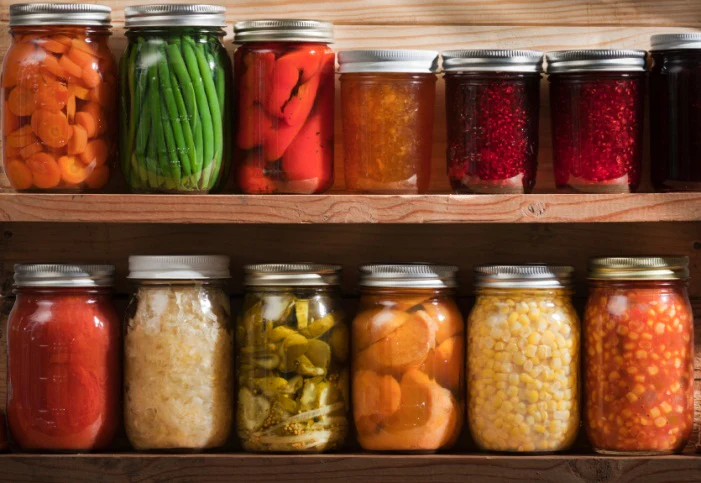
Fruits and vegetables are two categories of produce vital to health, as they contain abundant vitamins and minerals beneficial to the body. For this reason, both are processed into a wide range of products — from processed foods and pharmaceuticals to cosmetics.
Among the methods of processing fruits and vegetables, fermentation is fairly common and is often carried out even at the household level. Fermented fruit and vegetable products are believed to enhance the benefits they originally possess.
Dr. Ir. Budiatman Satiawihardja, M.Sc., a member of the LPPOM MUI expert team and a lecturer in the Department of Food Science and Technology at the Faculty of Agricultural Technology of Bogor Agricultural University, explains that the fermentation process is a life process of growth or reproduction of living cells.
During this process, substances in the medium change or are transformed, generating metabolites (intracellular or extracellular) accompanied by cell proliferation or growth.
"Although the metabolites produced are not the main product (i.e., by-products), they may include substances that cause intoxication (khamr), and can therefore be regarded as a critical risk point," Budiatman explains.
The substance referred to here is alcohol or ethanol (C2H5OH). In its natural state, ethanol is present in ripe fruits such as durian, pineapple and orange. Commercially, ethanol comes mainly from synthesis and from fermentation.
Synthetic ethanol is made from petrochemical feedstock through the hydration of ethylene; fermentation ethanol is produced from starch- or sugar-containing plant materials under the action of yeast (Saccharomyces cerevisiae).
Heryani, S.Si., laboratory technical manager at LPPOM MUI, says: "Fermentation of plant materials produces not only ethanol but also other alcohol compounds, so the ethanol needs to be separated out by distillation."
So which type of ethanol may be used in products that pass halal certification?
Fundamentally, any food containing carbohydrates may contain ethanol. However, ethanol naturally present in food does not fall within the prohibited category of khamr.
It should be noted that fermentation raises the alcohol content of fruits and vegetables, which may harm those who consume them; if this occurs, the fruits and vegetables become non-halal (haram).
This is consistent with the hadith of the Prophet, which further became a legal maxim (qawāʽid fiqhiyyah): "Laa dhoror wa laa dhiroor," meaning "there should be no harming, nor reciprocating harm." (narrated by al-Bayhaqi, al-Hakim and others)
MUI Fatwa No. 10 of 2018 (on food and beverage products containing alcohol/ethanol) states that only ethanol derived from khamr may not be used in halal products, because it is non-halal and impure (najis).
If the ethanol does not come from the khamr industry, other types of ethanol — such as synthetic ethanol, or ethanol obtained from fermentation not used to produce khamr — may be used within the limits agreed in that fatwa.
When applying for halal certification, fermented and ethanol-containing products must be systematically evaluated across raw-material sources, production process controls, cross-contamination risk, ethanol source and content testing, and cleaning, sanitization and traceability records, to ensure the entire process complies with the relevant halal standards and fatwa requirements. To learn more about the halal certification essentials and compliance pathway for fermented and ethanol-containing products, contact the SINOQUAL certification experts for professional consultation and technical support.
FAQ
- Are fermented fruits and vegetables halal?
- Fundamentally, any food containing carbohydrates may contain ethanol, and the ethanol that occurs naturally in food (such as in ripe durian, pineapple or orange) does not fall within the prohibited category of khamr. However, fermentation raises the alcohol content of fruits and vegetables, which may be harmful to consumers; if that occurs, the fruits and vegetables become non-halal (haram), consistent with the legal maxim "there should be no harming nor reciprocating harm." Under MUI Fatwa No. 10 of 2018, only ethanol derived from khamr may not be used in halal products (because it is non-halal and impure), whereas ethanol not originating from the khamr industry (such as synthetic ethanol or ethanol from fermentation not used to produce khamr) may be used within the agreed limits. When applying for halal certification, fermented and ethanol-containing products must be systematically assessed for raw-material sources, process controls, cross-contamination risk, ethanol source and content testing, and cleaning and traceability records.