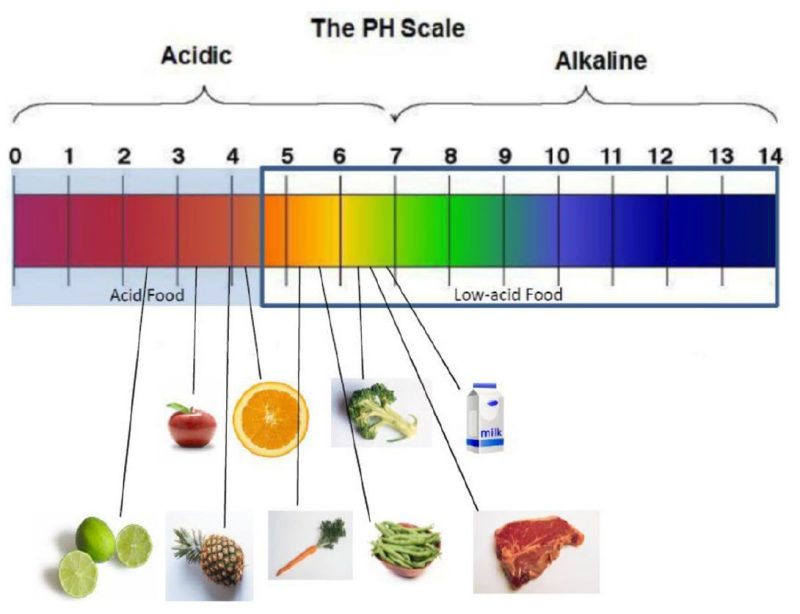
These questions are intended to help you determine whether a product is subject to 21 CFR Part 113 (low-acid canned foods), 21 CFR Part 114 (acidified foods), or neither. Note that products subject to 21 CFR Part 113 or 114 must also comply with the relevant requirements of 21 CFR Part 108. Please note that these questions may not cover all products and all situations. 21 CFR Parts 108, 113 and 114 set out the parameters of FDA's regulation of low-acid canned foods and acidified foods. If you are uncertain about the regulatory status of a specific product, you may consult FDA. Preliminary questions Is the product stored, distributed and retailed under refrigerated or frozen conditions? If yes, go to 1(a). If no, go to 2. 1(a). The product is not subject to 21 CFR Part 113 or Part 114. 2. Is the product processed under continuous inspection by the U.S. Department of Agriculture's Food Safety and Inspection Service (FSIS) under the Federal Meat Inspection Act or the Poultry Products Inspection Act? (Such foods carry a USDA-inspected statement on the label.) If yes, go to 2(a). If no, go to 3. 2(a). The product is not subject to 21 CFR Part 113 or Part 114. 3. Is the water activity of the finished product less than or equal to 0.85? If yes, go to 3(a). If no, go to 4. 3(a). The product is not subject to 21 CFR Part 113 or Part 114. 4. Is the final equilibrium pH of the product 4.6 or lower? If yes, go to 5. If no, go to 4(a). 4(a). Is the product an alcoholic beverage? If yes, the product is not subject to 21 CFR Part 113 or Part 114. 4(b). Is the product a tomato or tomato product with a final equilibrium pH below 4.7? If yes, the product is not subject to 21 CFR Part 113 or Part 114. 4(c). If you answered “no” to Question 4, and also “no” to 4(a) and 4(b), then your product is a low-acid food subject to 21 CFR Part 113. 5. Without the addition of any acid, is the natural pH of the product 4.6 or lower? If yes, go to 5(a). If no, the product is an acidified food subject to 21 CFR Part 114. 5(a). Does the product contain a low-acid ingredient? If yes, go to 5(b). If no, the product is an acid food but is not subject to 21 CFR Part 113 or Part 114. 5(b). Is the product predominantly an acid or acid food, and (1) contains only a small amount of low-acid food ingredients, and (2) the final equilibrium pH does not differ significantly from the pH of the predominant acid or acid food? You may consult FDA for help with the assessment. If yes, go to 5(b)-(i). If no, go to 5(b)-(ii). 5(b)-(i). The product is not subject to 21 CFR Part 113 or Part 114. However, you may voluntarily submit the process filing shown in Figure 1. 5(b)-(ii). The product is an acidified food subject to 21 CFR Part 114. If the product is a fermented food with a final equilibrium pH of 4.6 or lower, the product is not subject to 21 CFR Part 113 or Part 114. However, you may voluntarily submit the process filing shown in Figure 1. If the product is a fermented food with a final equilibrium pH greater than 4.6 and a water activity greater than 0.85, the product is a low-acid food subject to 21 CFR Part 113.
FAQ
- How do you determine whether a food product is subject to 21 CFR Part 113 (low-acid canned foods) or Part 114 (acidified foods)?
- FDA determines this through a series of preliminary questions: if the product is stored and distributed refrigerated or frozen, or processed under continuous USDA inspection, or has a finished-product water activity of 0.85 or less, it is not subject to Part 113 or 114; if the final equilibrium pH is 4.6 or lower, further judgment is needed (an alcoholic beverage, or a tomato product with pH below 4.7, is not subject to these parts); if the natural pH without added acid is above 4.6, it is a low-acid food subject to Part 113; if the natural pH without added acid is 4.6 or lower and it contains a low-acid ingredient, it may be an acidified food subject to Part 114. 21 CFR Parts 108, 113 and 114 set out FDA's regulatory parameters for low-acid canned and acidified foods, and you may consult FDA if uncertain.