
Many companies assume that having a halal certificate and sticking on a mark is all it takes. In reality, misusing the mark equals an invalid certification—and can mean seizure, delisting, or fines. Below are the six most common misuse cases, all drawn from real company experiences. Read them to avoid 90% of the risk.
Case 1: Still using the old green MUI mark for the Indonesian market
× Wrong: exporting to Indonesia while continuing to print the old green MUI HALAL mark on packaging.
Consequence: from October 2026, halal certification is mandatory for food, beverages, medicines and health products, genetically engineered products, cosmetics, chemical products, and more. The old mark is no longer officially recognized; customs inspection fails outright and products cannot be sold on shelves.
√ Correct: use the new purple Indonesian national HALAL mark issued by BPJPH.
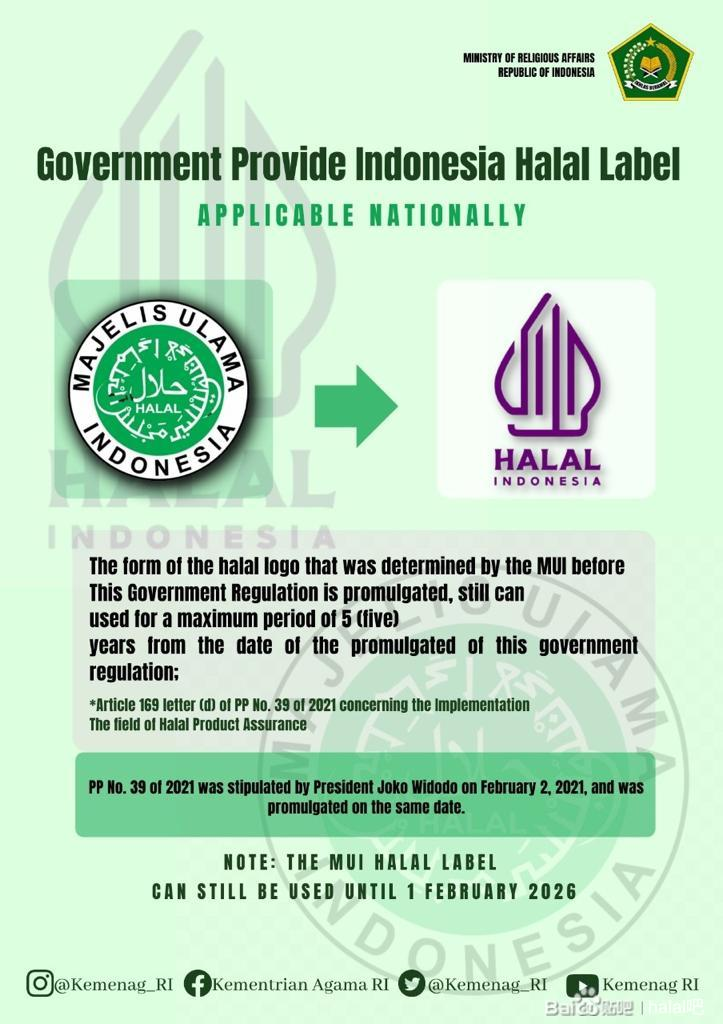
Case 2: Using a non-JAKIM mark for the Malaysian market
× Wrong: getting halal certification from any random body and applying a non-JAKIM-recognized mark for export to Malaysia.
Consequence: Malaysia recognizes JAKIM-system certificates for certain products; not confirming this in advance can render the certificate invalid.
√ Correct: for export to Malaysia, use the customer-approved JAKIM-recognized mark per the customer's requirements (always confirm the certificate and mark with the customer).
Case 3: Generic use of a halal mark under domestic policy
× Wrong: downloading an unknown logo online and using it privately, or using the word “halal” beyond the permitted scope.
Consequence: market-regulator inspection, delisting, or even destruction.
√ Correct: domestically, only specific markets permit specific products (the three categories of meat, dairy, and oil) to carry the word “halal.” No certification-body mark is allowed, nor is out-of-scope use of the word (always confirm clearly with your certification body).
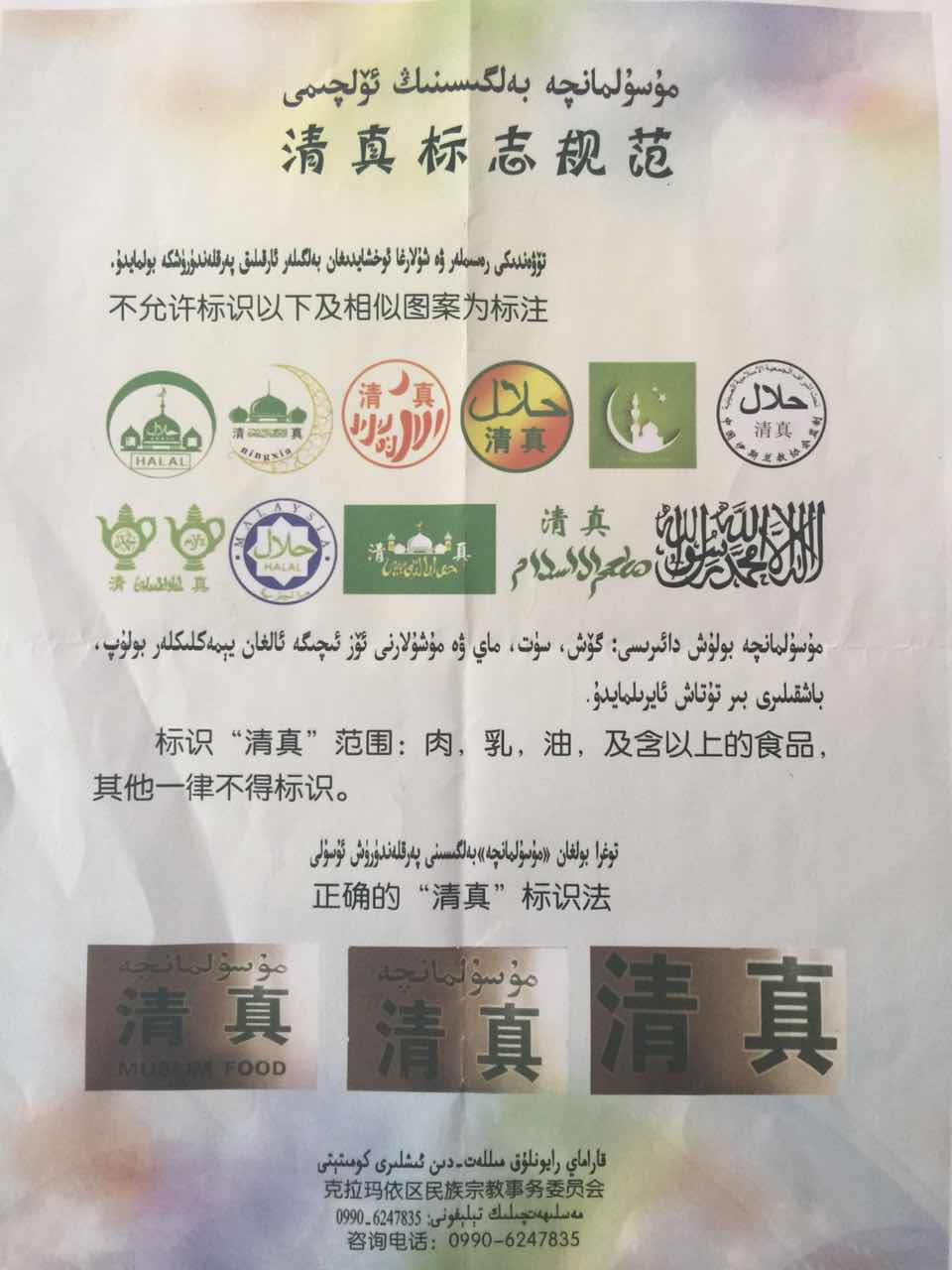
Case 4: Certified by body A but using body B's mark
× Wrong: the certificate is issued by body A, but the packaging prints body B's mark, or a well-known body's mark is used without authorization.
Consequence: the mark does not match the certificate; customs inspection means 100% seizure, with high risk of being treated as false certification.
√ Correct: use the mark of whichever body issued the certificate—one-to-one correspondence.
Case 5: Certificate expired but old mark still in use
× Wrong: the certificate has expired without renewal, but the mark on the packaging is not removed or withdrawn, and sales continue.
Consequence: treated as invalid certification and false labeling; a regulator spot-check can order delisting and fines.
√ Correct: renew 3–4 months before the certificate expires; stop using the mark immediately once the certificate lapses.
Case 6: Only some products certified, but the whole range carries the HALAL mark
× Wrong: certifying only one product but applying the same mark across the entire product range.
Consequence: this is out-of-scope use of the HALAL mark; the audit fails and heavy penalties may follow.
√ Correct: only a certified product may carry the mark; new products must be added to the certification.
Summary: three iron rules every company must remember
1. Use the officially recognized mark of the country you export to—not interchangeable, not substitutable.
2. The mark must match the certificate: body, number, and validity must be verifiable.
3. Expired or out-of-scope → stop using the mark immediately.
FAQ
- What are the common misuse cases of the HALAL certification mark?
- Six common misuse cases: (1) still using the old green MUI mark for Indonesia (from October 2026 certification is mandatory and the new purple BPJPH national HALAL mark must be used); (2) using a non-JAKIM mark for Malaysia (use the customer-approved JAKIM-recognized mark); (3) generic use of a halal mark domestically (only specific markets permit the three categories of meat, dairy, and oil to carry the word "halal," with no certification-body mark or out-of-scope use); (4) certified by body A but using body B's mark (use the issuing body's mark, one-to-one); (5) certificate expired but old mark still in use (stop immediately once it lapses; renew 3-4 months early); (6) only some products certified but the whole range labeled (only certified products may carry the mark). Three iron rules: use the export country's officially recognized mark; the mark must match the certificate; stop using it immediately if expired or out of scope.