

On 19 December 2024, the FDA issued a final rule updating the “healthy” claim that manufacturers can voluntarily use on food packaging. The updated standard aligns with current nutrition science and federal dietary guidance.
The updated “healthy” claim
Claims such as “healthy” on food labels can help consumers identify healthier food choices at a glance. To use “healthy” as a nutrient-content claim, a food must meet specific criteria. The updated standard replaces the old one with conditions that better reflect current nutrition science and federal dietary guidance. For example, the current Dietary Guidelines for Americans emphasize: the importance of a healthy dietary pattern and its component food groups; the type of fat in the diet, rather than total fat; and the amount of sodium and added sugars in the diet. The updated standard is intended to identify foods that help consumers build a healthy dietary pattern.
To meet the updated “healthy” standard, a food product needs to:
- contain a certain amount of food from at least one food group or subgroup recommended by the Dietary Guidelines (for example, fruits, vegetables, grains, fat-free and low-fat dairy, and protein foods); and
- meet specific limits for added sugars, saturated fat and sodium.
The amount of a given food group required (called a food group equivalent) and the specific limits for these three nutrients vary by individual food, mixed product (containing multiple food groups), main dish and meal, and are based on the Reference Amount Customarily Consumed (RACC), which is the basis for determining serving size.
Products that will now qualify as “healthy”
Under the updated “healthy” standard, nutrient-dense foods recommended by the Dietary Guidelines — such as vegetables, fruits, whole grains, fat-free and low-fat dairy, lean game meat, seafood, eggs, beans, peas, lentils, nuts and seeds — will automatically qualify for the “healthy” claim if they have no added ingredients other than water, because of their good nutritional profile and positive contribution to an overall healthy diet.
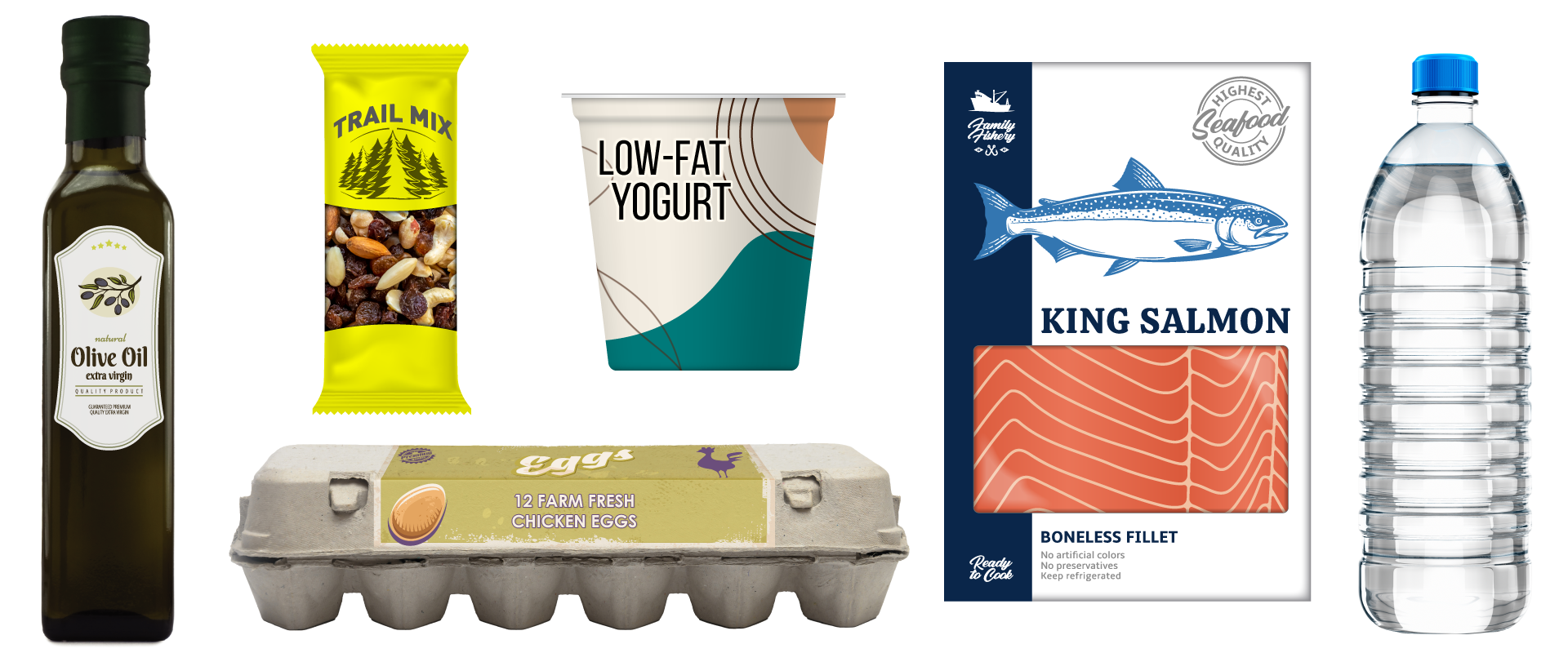
Under the updated standard, water, avocados, nuts and seeds, higher-fat fish (such as salmon) and olive oil can now also use the “healthy” claim. These foods include many varieties suited to different budgets, such as fresh, frozen or canned fruits, vegetables and fish.
Products that qualified as “healthy” under the old standard but no longer qualify under the new one include: fortified white bread, very high-sugar yogurt, and very high-sugar cereal.
Updated standards for certain food groups and example foods
Per Reference Amount Customarily Consumed. oz = ounce; g = gram; mg = milligram; DV = percent Daily Value.
| Food Groups | Food Group Equivalent Minimum | Added Sugar Limit | Sodium Limit | Saturated Fat Limit |
|---|---|---|---|---|
| Grains product | 3/4 oz whole-grain equivalent | 10% DV (5 g) | 10% DV (230 mg) | 5% DV (1 g) |
| Dairy product | 2/3 cup equivalent | 5% DV (2.5 g) | 10% DV (230 mg) | 10% DV (2 g) |
| Vegetable product | 1/2 cup equivalent | 2% DV (1 g) | 10% DV (230 mg) | 5% DV (1 g) |
| Fruit product | 1/2 cup equivalent | 2% DV (1 g) | 10% DV (230 mg) | 5% DV (1 g) |
| Protein — Game meat | 1½ oz equivalent | 2% DV (1 g) | 10% DV (230 mg) | 10% DV (2 g) |
| Protein — Seafood | 1 oz equivalent | 2% DV (1 g) | 10% DV (230 mg) | 5% DV (1 g)* |
| Protein — Egg | 1 egg | 2% DV (1 g) | 10% DV (230 mg) | 10% DV (2 g) |
| Protein — Beans, peas, lentils | 1 oz equivalent | 2% DV (1 g) | 10% DV (230 mg) | 5% DV (1 g) |
| Protein — Nuts, seeds, soy products | 1 oz equivalent | 2% DV (1 g) | 10% DV (230 mg) | 5% DV (1 g)* |
| Oils — 100% Oil | N/A | 0% DV | 0% DV | 20% of total fat |
| Oils — Oil-based spreads | N/A | 0% DV | 10% DV (230 mg) | 20% of total fat |
| Oils — Oil-based dressing** | N/A | 2% DV (1 g) | 10% DV (230 mg) | 20% of total fat |
* Excluding saturated fat inherent in nuts, seeds, soy products and seafood. ** Must contain at least 30% oil.
Example foods
| Individual food | Mixed product | Meal | |
|---|---|---|---|
| Amount of food groups required | 1 food group equivalent* | 1 total food group equivalent, with at least 1/4 food group equivalent from 2 or more food groups | 3 total food group equivalents, with at least 1/2 food group equivalent from 3 or more food groups |
| Example | 2/3 cup yogurt | For example, 1/8 cup dried fruit and 1/4 oz nuts | For example, 1 oz salmon, 1/2 cup green beans, 3/4 oz brown rice |
| Nutrients to limit (no more than) | 2 g saturated fat; 230 mg sodium; 2.5 g added sugar | 2 g saturated fat*; 345 mg sodium; 5 g added sugar | 4 g saturated fat***; 690 mg sodium; 10 g added sugar |
* A food group equivalent is the minimum amount of a food group required. Amounts based on percentage of the Daily Value for that nutrient. * Saturated fat inherent in nuts, seeds, soy products and seafood does not count toward the limit.
FAQ
- What are the FDA's updated criteria for using the “healthy” claim on food labels?
- On 19 December 2024, the FDA issued a final rule updating the “healthy” claim that manufacturers can voluntarily use on food packaging, aligning it with current nutrition science and federal dietary guidance. The updated standard requires a food product to: contain a certain amount of food from at least one food group or subgroup recommended by the Dietary Guidelines (such as fruits, vegetables, grains, fat-free and low-fat dairy, and protein foods); and meet specific limits for added sugars, saturated fat and sodium. Under the new standard, nutrient-dense foods (vegetables, fruits, whole grains, fat-free and low-fat dairy, lean game meat, seafood, eggs, beans, nuts and seeds, etc.) automatically qualify if they have no added ingredients other than water; water, avocados, nuts and seeds, higher-fat fish (such as salmon) and olive oil can now also use it. Products that qualified under the old standard but no longer do include fortified white bread, very high-sugar yogurt and very high-sugar cereal.