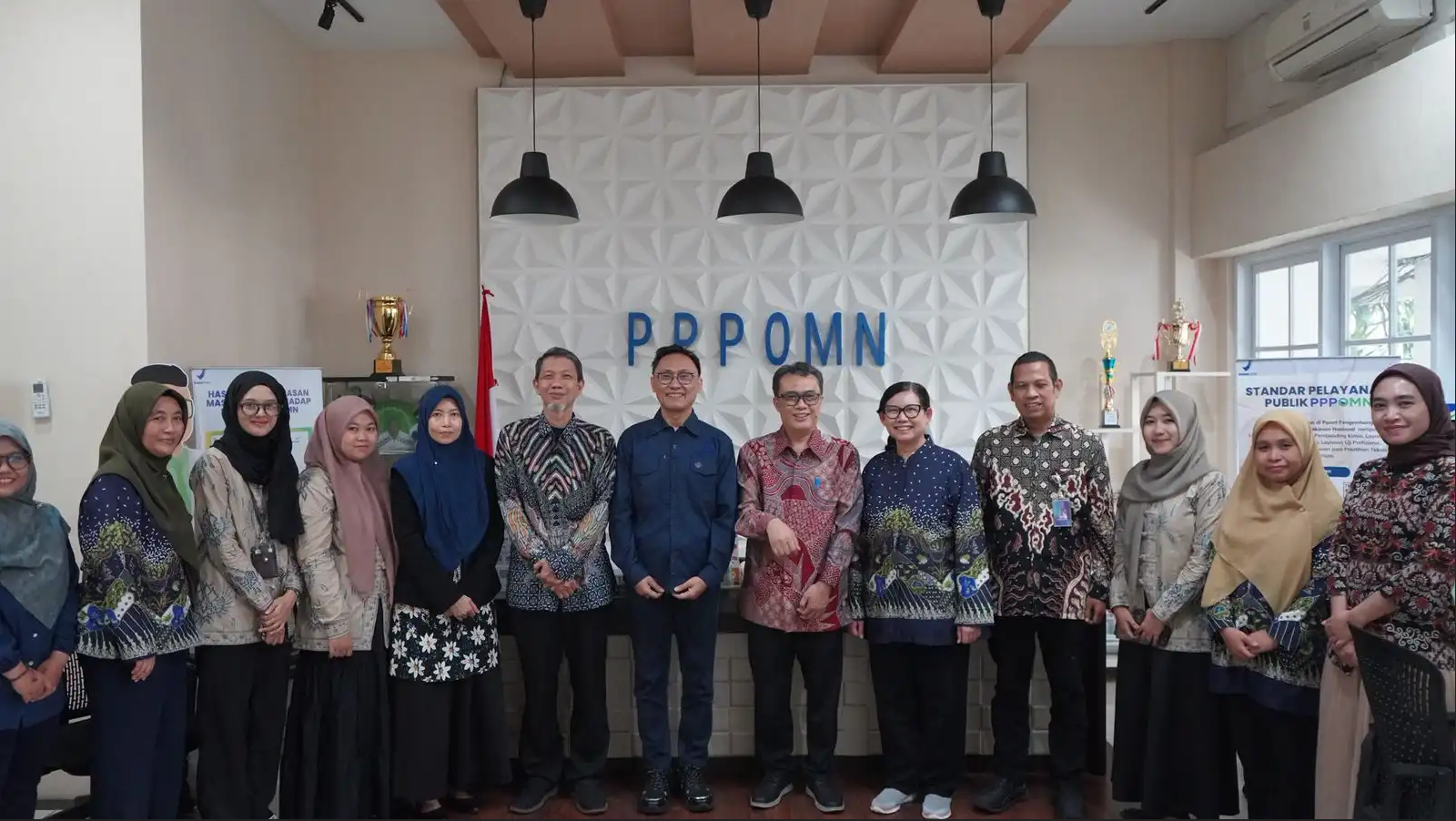
JAKARTA – Indonesia's Halal Product Assurance Agency (BPJPH) conducted a benchmarking visit to the National Center for Drug and Food Testing Development (PPPOMN, under Indonesia's food and drug authority BPOM) as a strategic move to strengthen the standardization of national halal testing laboratories and expand its regional service network. Attending the working visit were BPJPH Executive Secretary Muhammad Aqil Irham, Deputy for Halal Product Assurance Supervision and Guidance Chuzaemi Abidin, JPH Supervision Director Budi Setyo Hartoto, BPJPH Halal Laboratory head Giri Cahyono, and other BPJPH officials. The BPOM side was hosted by PPPOMN Director Mimin Jiwo Winanti and her team. BPJPH Executive Secretary Muhammad Aqil Irham said the benchmarking visit is an important part of strengthening the national halal service ecosystem, especially by developing standardized, reliable laboratories capable of adapting to the needs of society and businesses. On Thursday, 16 April 2026, he said in Jakarta: “This benchmarking is an important step in enhancing the capacity of national halal laboratories by learning best practices, standardizing testing methods and improving the quality of halal certification services.” He added that strong laboratories are the foundation for providing credible, fast and reliable halal certification services. During the talks, BPJPH also drew on BPOM's experience in national laboratory management, personnel capacity building and strengthening the regional laboratory network, as a reference for building an integrated halal laboratory system. Deputy for Halal Product Assurance Supervision and Guidance Chuzaemi Abidin stressed that one important strategic priority is to establish a porcine-derived marker peptide as a national standard for identifying pork content in products. He said: “Determining the porcine-derived marker peptide is very important, so that all laboratories can adopt the same standard. This way, test results will be more consistent and effective, and will provide certainty for the halal certification process.” The two sides also discussed the technical details of detecting porcine-derived components, as this is an important parameter for determining a product's halal status, and emphasized the importance of harmonizing testing methods across different laboratories. For BPJPH, strengthening laboratory capacity is an ongoing effort, including improving personnel expertise, developing testing methods and expanding the halal laboratory network across regions. This benchmarking activity is part of BPJPH's work to strengthen the standardization of testing methods, improve personnel capacity and develop regional halal laboratory networks. The move is expected to support the delivery of more consistent and more quantifiable testing services within the halal certification process.
FAQ
- How is BPJPH advancing the standardization of national halal testing laboratories?
- Indonesia's Halal Product Assurance Agency (BPJPH) conducted a benchmarking visit to the National Center for Drug and Food Testing Development (PPPOMN, under BPOM) as a strategic move to strengthen the standardization of national halal testing laboratories and expand its regional service network. BPJPH drew on BPOM's experience in national laboratory management, personnel capacity building and regional laboratory network strengthening, in order to build an integrated halal laboratory system. One important strategic priority is to establish a porcine-derived marker peptide as a national standard for identifying pork content in products, so that all laboratories adopt the same standard, making test results more consistent and effective and providing certainty for the halal certification process.