
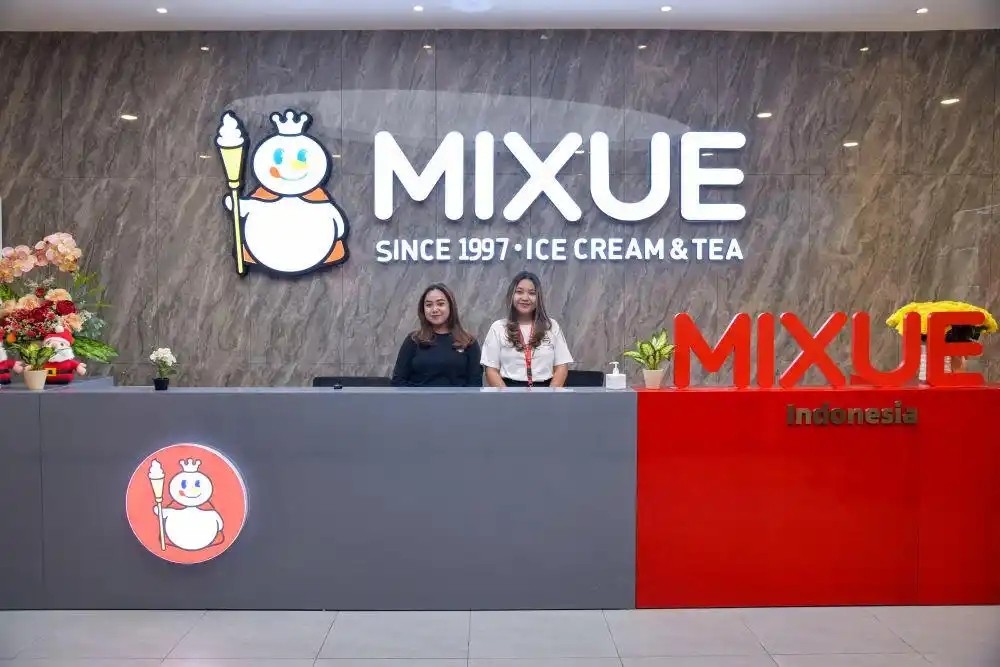
When the crowned, red-robed 'Snow King' appears on the streets and alleys of Jakarta, Indonesia, and local children hum the Chinese theme song 'You love me, I love you, Mixue is sweet,' this tea-drink brand from Henan, China has long transcended a mere commercial symbol to become a microcosm of China-Indonesia cultural fusion.
Indonesia, the world's most populous Muslim country, where 87% of people follow Islam — 'halal' is not only a faith engraved in life but also an iron law of market access. For Chinese brands, how can one cross the barriers of religion and culture to take root and grow on this land?
Mixue gave its answer over four years — by the end of 2025, its store count in Indonesia had reached over 2,600, overtaking local coffee chain Kopi Kenangan to become Indonesia's largest freshly-made drinks chain. Behind this achievement is the utmost practice of halal compliance, and even deeper awe of and integration with local culture, providing a textbook template for Chinese brands going global.
1. The 'life-and-death line' of market access: halal certification is not a choice, but a baseline
In Indonesia, 'halal' has never been optional but an unbreakable market red line — it is both the faith of Muslim people and a mandatory legal requirement, and the 'only key' for a brand to open the Indonesian market.
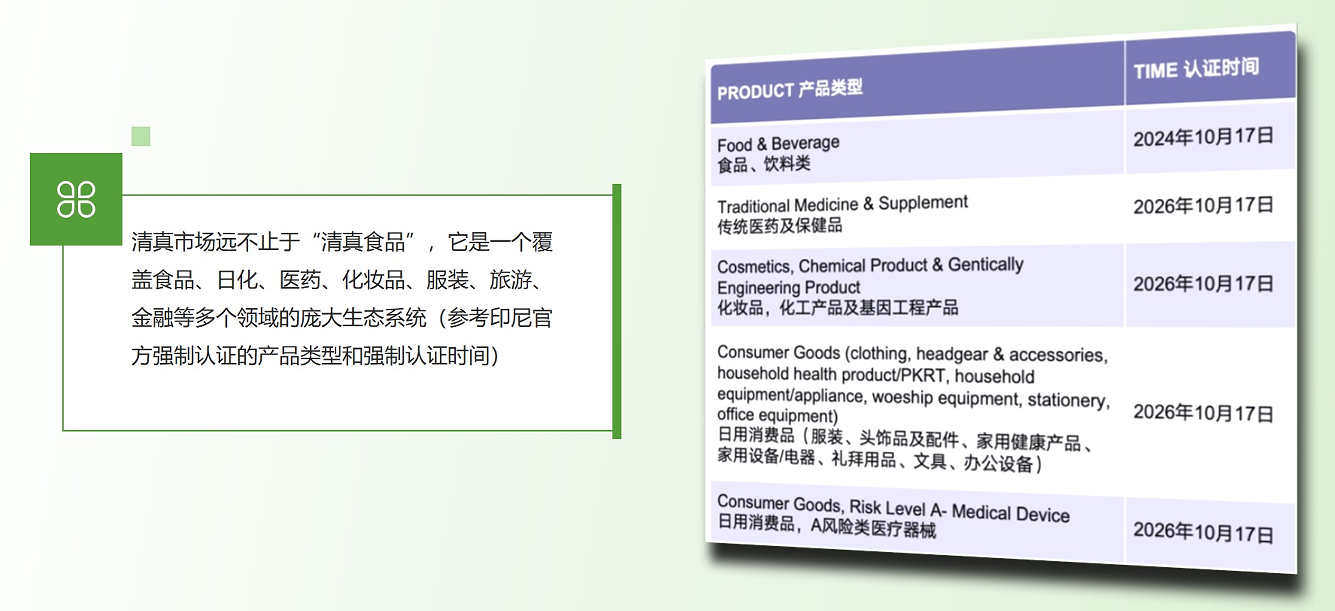
Unlike the 'label-style certification' of other markets, Indonesia's halal certification has extremely strict standards, audited end-to-end by the local authority BPJPH — from raw-material procurement and production to storage, transport and retail, every link must comply with Islamic law, with no room for luck or perfunctoriness. Applying for this certification often takes months or longer, testing an enterprise's patience and resolve, and filtering for brands truly willing to take root locally.
For any food-and-beverage brand wanting to deepen its presence in Indonesia, halal certification has never been a 'bonus' but an 'entry pass' — without it, even the best product cannot be legally shelved, and even the most precise marketing is in vain. Mixue had a clear understanding of this from its very first day in the Indonesian market.
2. Whole-chain compliance: engraving the halal concept into the operating DNA
True compliance has never been 'surface-level compliance' but blind-spot-free practice from source to end. Mixue did not treat halal certification as a 'stepping stone' but integrated it into every operational detail, achieving a whole-chain halal closed loop from supply chain to store, embodying a going-global attitude of 'reverence for the rules.'
The supply chain's halal revolution: building the foundation of trust from the source
The supply chain is the first line of defense for halal compliance and the link most prone to risk. Mixue adopted a strategy of 'deep local cultivation + strict screening' to eliminate compliance loopholes at the root: investing in and building core factories locally in Indonesia, including coconut-milk plants and crispy-cone plants — the crispy-cone plant with an annual capacity of 300 million units, able to support the needs of 20,000 stores — ensuring the production of core raw materials fully meets halal standards. At the same time, it established a strict supplier-admission mechanism: whether raw-material suppliers or logistics providers, all must hold valid halal certification, without exception.
More critically, Mixue enforces strict physical isolation in production, storage and cold chain, setting up dedicated production lines, dedicated storage areas and dedicated cold-chain logistics, ensuring no cross-contact between halal and non-halal products and eliminating contamination risk at the process level. Mixue currently has two warehouses in Indonesia, enabling logistics-fee-free delivery across Java and ensuring adequate store stock within 5 days — striking a perfect balance between an efficient supply chain and halal compliance.
The halal reshaping of product formulas: respecting faith, leaving no hidden risk
Tea-drink product formulas are complex, with wide-ranging ingredient sources; the slightest oversight could touch a halal taboo. Mixue carried out a comprehensive 'halal reshaping' of all products entering the Indonesian market — resolutely removing any ingredient not meeting halal standards, checking and strictly screening even inconspicuous emulsifiers and additives one by one, to ensure every product 100% meets halal norms.
More sincerely, Mixue proactively disclosed all product formulas to the BPJPH certifying body, concealing nothing and evading nothing, calmly accepting the strictest scrutiny, and winning the dual trust of the certifying body and local consumers with a transparent attitude. At the same time, tailoring to Indonesian taste preferences, it developed drinks incorporating local specialty ingredients such as lemongrass and pineapple, perfectly blending compliance with localized taste.
Halal implementation in store operations: making compliance visible and tangible
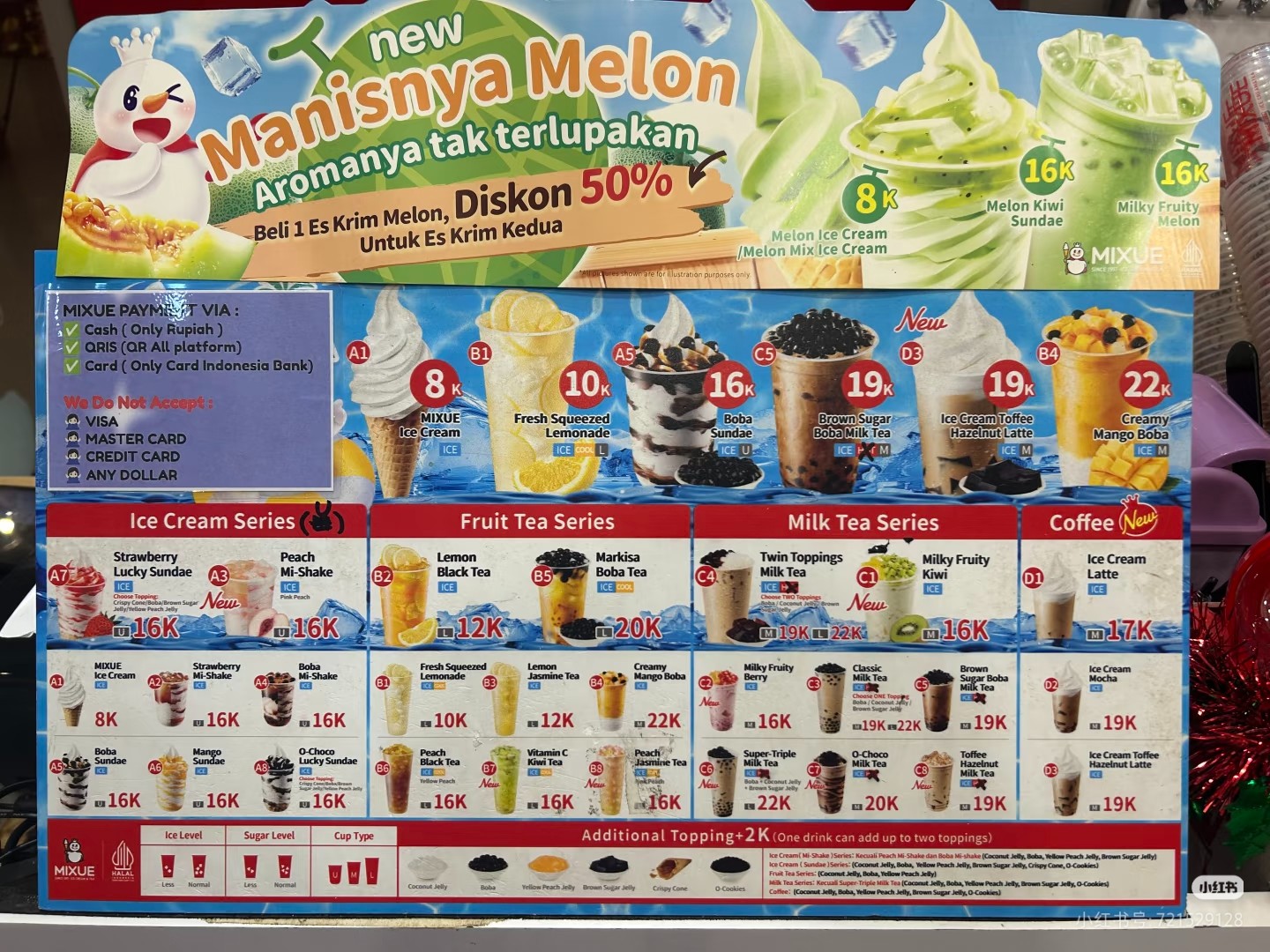
The end store is the first window where the brand meets consumers, and the 'last mile' of halal compliance. Every Mixue store in Indonesia puts the halal concept into practice: all staff must receive systematic training on halal operating procedures before starting work — from raw-material storage and drink preparation to utensil cleaning, every detail strictly follows the norms; stores display prominent HALAL marks inside and out, and the environment and staff attire respect Islamic culture, with no taboo elements, giving consumers an intuitive, clear signal of trust.
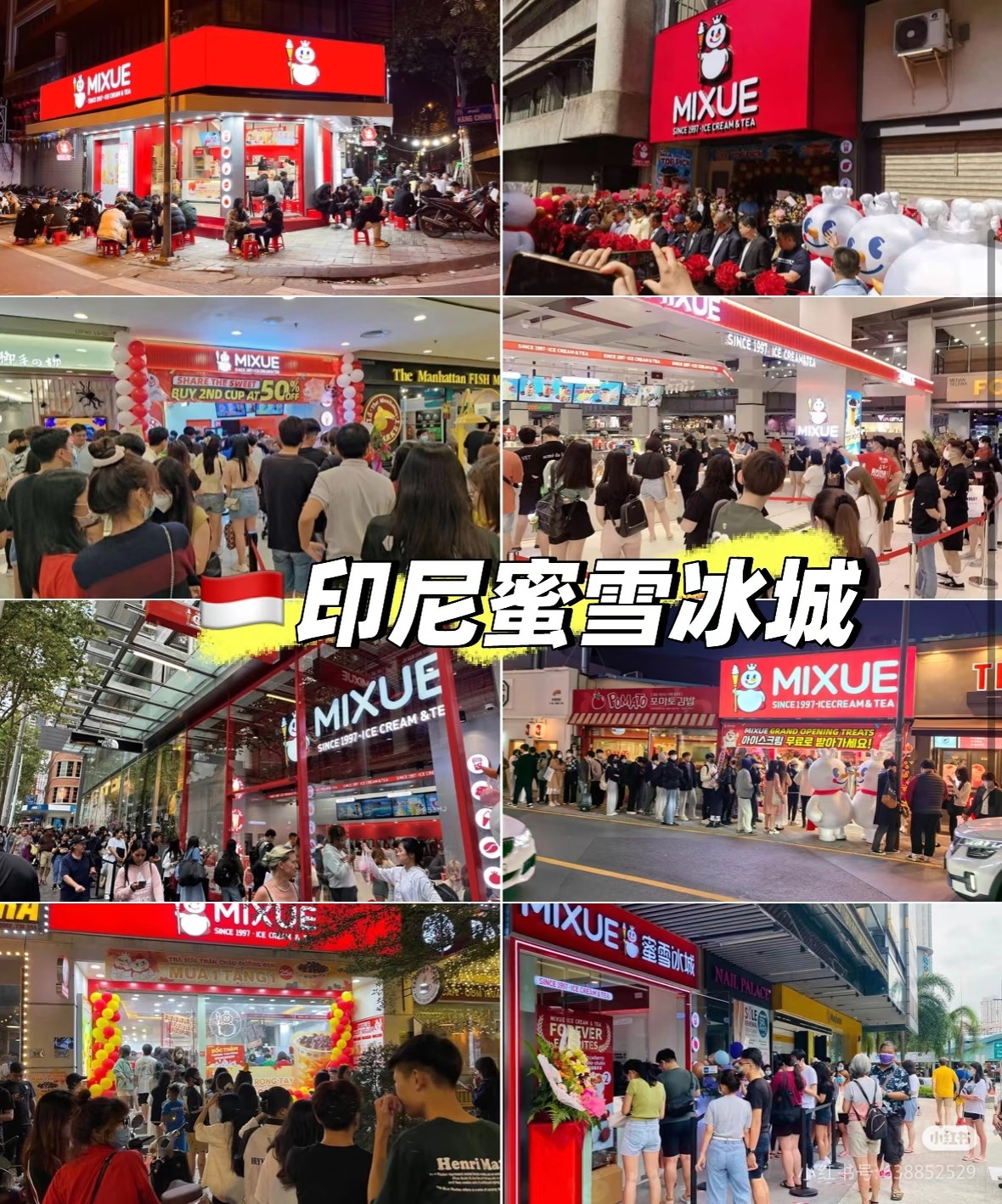
Today, on the streets of Indonesia, long queues often form in front of Mixue stores, and products such as the brown-sugar pearl sundae have become popular choices for local young people. 'MIXUE' has long become one of the local trendy brands — behind this is the reputation built up by whole-chain compliance.
3. Beyond compliance: winning hearts for the long term through cultural integration
If halal compliance is Mixue's 'stepping stone' into the Indonesian market, then cultural integration is the 'anchor' that lets it take root locally and win people's hearts. True globalization has never been about 'selling products out' but 'integrating the brand in' — Mixue understands this deeply, and while holding the compliance baseline, uses delicate humanistic care to build an emotional bridge with the Indonesian people.
Festival marketing: empathizing with faith, conveying warmth
Ramadan is the most important festival for Muslim people, and a key opportunity for a brand to integrate into local culture. Every Ramadan, Mixue launches Ramadan-limited drinks, adjusting flavors to local dietary customs, together with heart-warming promotions to bring care to people during Ramadan. This marketing, fitting the festival scene, is not deliberate flattery but stems from a deep understanding of local culture, conveying brand warmth and further closing the distance with consumers.
Community giving back: rooting locally, practicing responsibility
A brand's long-term development is inseparable from local community support. Mixue actively integrates into local communities in Indonesia, practicing social responsibility through concrete action: during the pandemic, donating supplies to frontline medical workers and helping those in need; in daily operations, driving local employment, helping over 1,400 Indonesian business partners start their own businesses, directly creating about 12,800 store jobs and driving over 20,000 instances of social employment overall, with local Indonesian employees making up over 96%.
This attitude of 'taken from the local, used for the local' means Mixue is no longer a foreign brand but has become part of the local community, winning wide acclaim from the Indonesian people and making the 'Snow King' image more deeply rooted in people's hearts. Even Gibran — eldest son of then-president Jokowi and then-mayor of Solo in Central Java — once appeared in public with a Mixue cup, indirectly attesting to the brand's local influence.
Conclusion: Mixue's Indonesia way is reverence, and even more, symbiosis
From entering the Indonesian market in 2020 to becoming the country's largest freshly-made drinks chain today, Mixue's Indonesian road has never been smooth sailing, but it proves through practice that Chinese brands going global is never 'the strong exporting' but 'equal symbiosis'; never 'copy-paste' but 'adapting to local conditions.' On the going-global road of Chinese tea, SINOQUAL, with its professional interpretation of foreign-market policies and years of service experience, has helped many tea enterprises smoothly enter target markets, contributing to bringing every drink with an Eastern flavor to life.
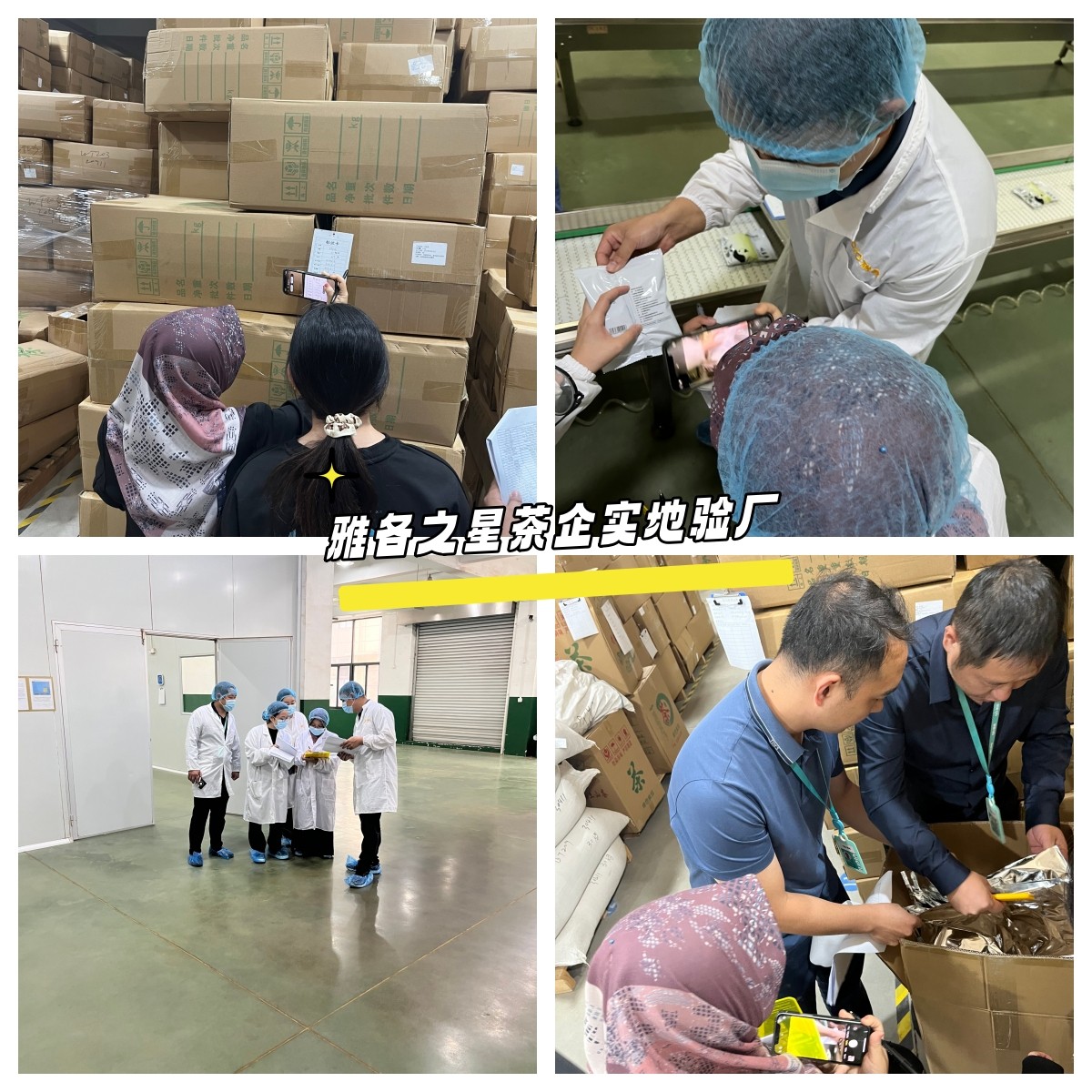
Mixue's success is essentially a victory of cultural respect and localization practice, and its experience is worth learning from for every Chinese brand wanting to open up the Muslim market:
Respect is the cornerstone — placing the target market's culture and religious faith at the strategic core, neither belittling nor perfunctory, revering every rule, is the way to win the most basic trust.
Compliance is the baseline — whole-chain, blind-spot-free halal compliance is the premise of surviving in the Muslim market; only by holding the baseline can one advance steadily.
Integration is the sublimation — going beyond simple commercial transactions, integrating into local life through festival empathy and community giving-back, and building emotional connection, is the way to achieve long-term win-win.
Today, Mixue's 'sweetness' has spread across the streets of Indonesia, bringing not only China's tea-drink culture but also the reverence and sincerity of Chinese brands. True globalization has never been about making the world adapt to us, but about us proactively integrating into the world — Mixue's Indonesia way is the best footnote to Chinese brands going global.
FAQ
- How did Mixue succeed in the Indonesian market through halal compliance?
- By the end of 2025, Mixue had over 2,600 stores in Indonesia, overtaking local coffee chain Kopi Kenangan to become the country's largest freshly-made drinks chain. In Indonesia, where 87% of people are Muslim, halal certification is a legally mandated market-access requirement, audited end-to-end by the local authority BPJPH across raw-material procurement, production, storage/transport and retail. Mixue embedded halal into its operating DNA, achieving a whole-chain halal closed loop from supply chain to store: investing in local core factories (such as a crispy-cone plant with 300-million-unit annual capacity), setting up strict supplier admission (raw-material suppliers and logistics providers must all hold valid halal certification), and enforcing strict physical isolation in production, storage and cold chain (dedicated lines, dedicated storage areas and dedicated cold-chain logistics) to ensure no cross-contact between halal and non-halal products.