
Halal Delicacies on the Tip of the Tongue
Chongqing Fuling Zhacai Group Co., Ltd. is an agricultural industrialization enterprise group rooted in zhacai (preserved mustard tuber) and positioned for rapid development in the appetizer and condiment sector. It is the first agricultural product listed enterprise in Chongqing, China largest zhacai producer and distributor, a nationally and municipally designated agricultural industrialization leading enterprise, and a nationally designated poverty alleviation enterprise.
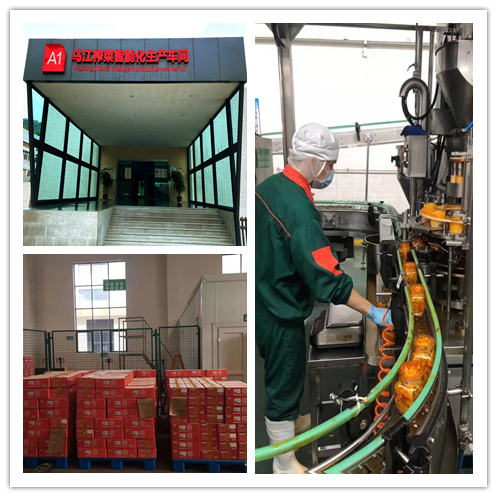
Chongqing Fuling Zhacai Group Co., Ltd. professionally produces and distributes Wujiang brand zhacai products, with 10 production plants, 4 raw material processing and storage bases, 13 zhacai production lines, 1 zhacai soy sauce line, 1 kelp shred line, and 2 zhacai emulsified auxiliary material lines. Annual production capacity includes 120,000 tons of zhacai, 5,000 tons of zhacai soy sauce, 5,000 tons of kelp shreds, 10,000 tons of zhacai emulsified auxiliaries, and 135,000 cubic meters of raw material processing and storage.
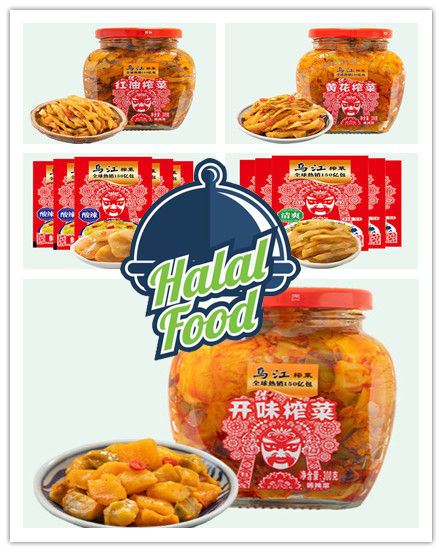
The fresh, fragrant, and crispy Fuling Zhacai has long played an important role on Chinese dining tables. As a national pride product, how to bring this delicacy to the world has been the direction Fuling Zhacai Group has been exploring, and also SINOQUAL driving force. To expand international markets and enter the Middle Eastern, Malaysian, and Indonesian HALAL markets, after thorough market evaluation, the company ultimately chose to partner with SINOQUAL, obtaining HALAL certification for 11 appetizer products including fresh shredded vegetables, fresh sliced vegetables, crunchy radish, and bottled zhacai series.
Food Halal Certification Tips:
1. Raw Material Warehouse
1. The Halal raw material warehouse must not contain any materials derived from pork, dog, donkey or their derivatives, nor any alcohol-based materials such as red wine, white spirits, cooking wine, or mirin;
2. Certified product raw materials and non-certified product raw materials should preferably be stored in separate warehouses. If separation is truly impossible, place them in separate zones with clear labels such as Halal Certified Product Raw Material Zone and Non-Halal Certified Product Raw Material Zone;
3. Ensure each Halal product raw material packaging has complete manufacturer information. If purchased from distributors or traders, include both trader and manufacturer names on the application form for auditor on-site verification;
4. Raw material packaging must comply with Halal requirements - no non-Halal images or text such as pigs, dogs, donkeys, snakes, etc.;
5. Keep warehouse environment clean and raw materials neatly organized;
6. Ensure raw materials in the warehouse correspond exactly with those declared on the application form - under-reporting or false reporting is strictly prohibited;
7. Ensure actual raw material manufacturer names match those declared on the application form.
2. Production Workshop
1. Ensure normal production on the day of on-site audit with all raw materials stored in the warehouse. If the factory cannot arrange production that day due to special reasons, explain the reason and ensure raw materials and finished products are available in the warehouse;
Also ensure explanation is provided and that raw materials and finished products are in the warehouse;
2. Equipment, tools, machines, floors, ceilings, and worker clothing in the Halal production workshop must be kept clean and regularly organized and cleaned;
3. Preferably use a dedicated workshop for Halal certified products, producing non-certified and certified products in separate workshops. If non-certified products contain sensitive materials (excluding pork, dog, donkey and derivatives) and workshops truly cannot be separated, use separate production lines with a dedicated Halal production line;
4. When raw materials in the Halal workshop and non-certified workshop are interchangeable, sensitive materials used in non-certified products must also have Halal certificates.
5. Animal-hair brushes such as feather dusters and pig-hair brushes must not be used in the Halal workshop;
6. Strict pest prevention must be enforced in production workshops, keeping them clean, tidy, and regularly ventilated to ensure fresh air;
7. The Halal production workshop must not produce any products derived from red wine, white spirits, cooking wine, mirin, or other alcoholic beverages. Alcohol may be used for disinfection, equipment cleaning, and as a solvent - disinfection can use 75% medical alcohol or food-grade alcohol from chemical factories; alcohol used as solvent must be food-grade from chemical factories.
3. Finished Product Warehouse
1. Halal certified finished products and non-certified products should preferably be stored in different warehouses. If only one warehouse is available, store them in separate zones with clear labels such as Halal Product Zone and Non-Certified Product Zone.
2. Packaging or labels of Halal certified finished products must include complete information: product name, manufacturer, ingredients list, production date, expiration date, and country of origin;
3. Brands and product names of Halal certified products in the warehouse must match those declared on the application form;
4. The factory must regularly inspect finished products in the warehouse to ensure they are not disturbed by rodents or cockroaches, not spoiled, and the warehouse has rodent barriers and pest prevention equipment.
FAQ
- Which products did Fuling Zhacai certify as Halal?
- Obtained HALAL certification for 11 appetizer products under its Wujiang brand including fresh shredded vegetables, fresh sliced vegetables, crunchy radish, and bottled zhacai series, targeting the Middle Eastern, Malaysian, and Indonesian Halal markets. Fuling Zhacai is China largest zhacai producer and the first listed agricultural product enterprise in Chongqing.
- What are the Halal certification requirements for raw material warehouses?
- The Halal raw material warehouse must not contain pork, dog, donkey or their derivatives, nor alcohol-based materials. Certified and non-certified raw materials should be stored in separate warehouses (or separate zones with clear labels if not possible). Each raw material packaging must have complete manufacturer information. Packaging must not contain non-Halal images. Warehouse must be clean and organized, with materials matching the application form exactly.
- What are the alcohol-related rules for Halal workshops?
- The Halal production workshop must not produce any products derived from alcoholic beverages. Alcohol may be used for disinfection, equipment cleaning, and as solvent: disinfection uses 75% medical alcohol or food-grade alcohol from chemical factories; solvents must use food-grade alcohol from chemical factories.