
From 5 to 8 September 2019, the World Halal Expo and 11th Halal Congress were held in Istanbul, Turkey. HFC Vice Chairman and Chief Halal Auditor Tahir Iqbal attended the expo and the conference. This conference was organized by Turkey's authoritative certification body GIMDES, which is also an important member of the WHC.
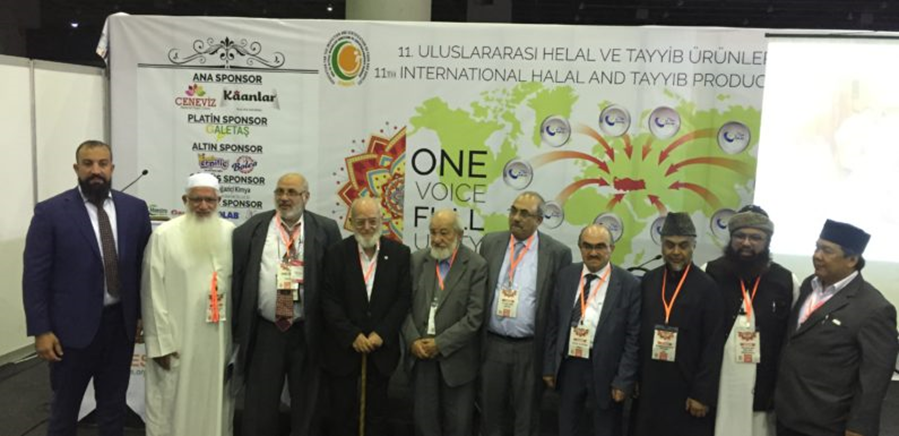
Several speakers from different halal certification bodies and halal research centers gave speeches. The following are the key points mentioned by the speakers at the conference.
Dr. Nadratuzzaman Hosen - Applying for halal certificates online
Indonesia has halal tourism, halal hospitals and halal spa centers, and they are developing very rapidly. In Indonesia, per capita income is high. After 17 October, Indonesia will make halal certification mandatory. The government will regulate it, and BPJPH will provide halal certification. But there are currently various difficulties yet to be resolved. A system is currently being developed and a database built. When the system is successfully developed, everything can be done here, and certificates can also be obtained online. If there is a problem, a complaint can be filed. But this system can only be effective when combined with a smart city application.
Muhammad Muhammedi - What will the halal market be like now and in the future?
The conference report showed: 'The halal market will grow.' This has led to the opening of many certification bodies. In some cases, halal standards differ. Some halal bodies want to be like a Mufti, with their own standards taking precedence. But there are still bodies like GIMDES that are open-minded and able to listen to the halal standards of different bodies. Most importantly, halal certification bodies should merge and unify halal standards.
Professor Hasan Yetim - The importance of digitalization in halal certification
Blockchain—can it be used to encrypt all batches of production? Document verification can be carried out on this system. Can artificial intelligence be used in animal slaughter? It can detect whether the process complies with halal regulations. Industry 4.0 production sites will be able to ensure continuous supervision. The most important issue for halal certificates is the digitalization of inspection and testing; halal status can be verified through barcodes.
Moulana Saeed Navlakhi - A halal quality management system should hire qualified personnel
It is not enough for a product to merely lack haram additives. Is there any adulteration, is there anything not complying with halal certification regulations? Continuous inspection and self-inquiry must be carried out. A single product error can cause a loss of US$10 million. In the West, products are immediately recalled; in third-world countries it is different. This is a financial loss, and the spiritual loss should also be considered. Organizations should understand critical control points. If you do not understand the industry, do not attempt it. In providing halal certification services, transparent, responsible and excellent accurate information is greatly needed. The process of providing halal assurance must be careful; if wine is non-halal, then its by-product tartaric acid is also non-halal.
Dr. Hani Mansour al Mazeedi - The pitfalls of halal certification standards.
There are many dangers in international certification. In the Malaysian standard, stunned animals are considered halal food. Stunning is troublesome, and the statements about it are contradictory. Synthetic ethanol also has some issues. We should provide new halal standards that accommodate all halal slaughter, and unify the standards without contradiction.
Dr. Huseyin Kami Buyukozer - Seeking halal food in the world and in Turkey
The certificates and accreditation of halal certification bodies should be carried out by a unified organization worldwide.
This is a very important milestone achievement for HFC, because through this conference, HFC Vice Chairman Tahir Iqbal was able to meet many heads of global halal certification and international halal certification bodies attending the conference, strengthening HFC's strategic cooperation platform with these bodies, including GIMDES Chairman Dr. Huseyin Kami Buyukozer, Moulana Saeed Navlakhi from South Africa's SANHA, and WHC Vice Chairman Habib A. Ghanim. HFC will also be invited to attend the WHC 20th anniversary celebration and 17th annual meeting held in Jakarta from 11 to 14 November 2019. GIMDES Chairman Dr. Huseyin Kami Buyukozer held a separate meeting with HFC Vice Chairman Tahir Iqbal; he greatly appreciated HFC's work and looks forward to establishing further cooperation with HFC.
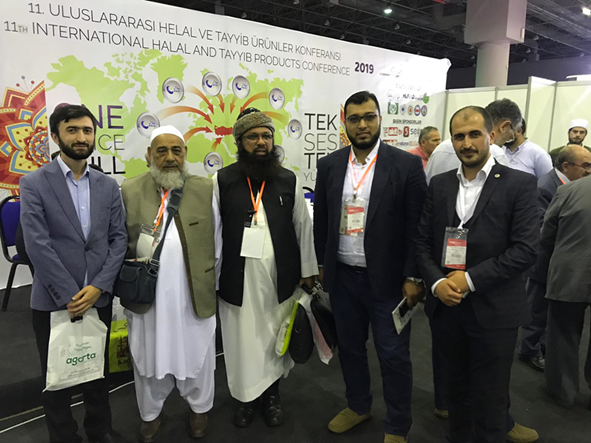
HFC Vice Chairman Tahir Iqbal meets GIMDES Chairman Huseyin Kami Buyukozer
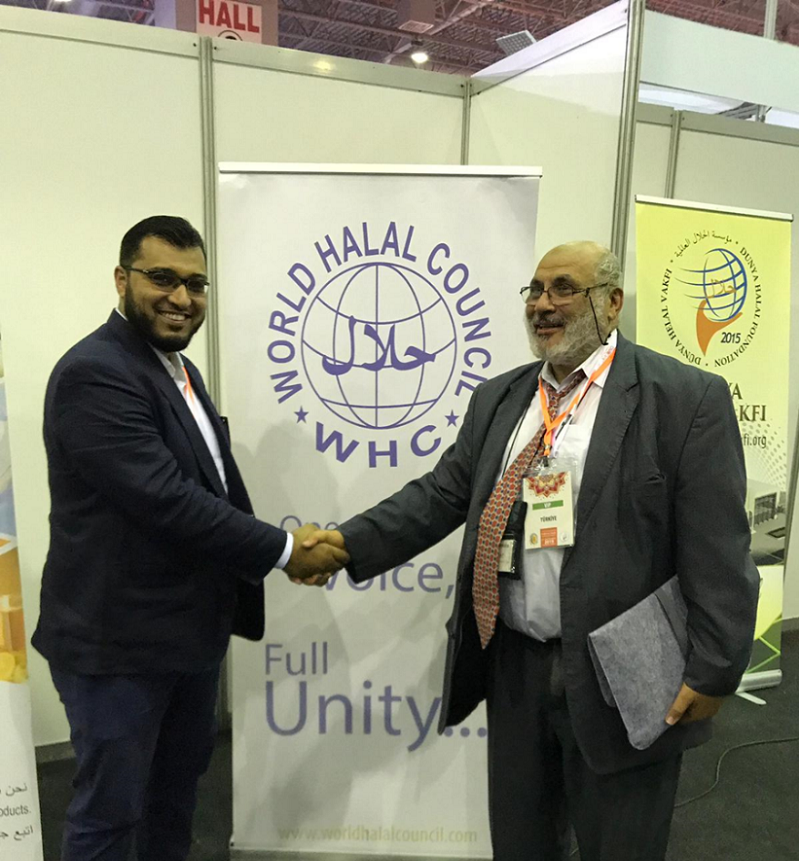
HFC Vice Chairman Tahir Iqbal with Moulana Saeed Navlakhi from South Africa's SANHA

HFC Vice Chairman Tahir Iqbal with WHC Vice Chairman Habib A. Ghanim