
An Indonesian minister said that Indonesia's existing MUI logo will eventually be declared invalid by the state-designated regulatory body.
President Joko 'Jokowi' Widodo has, since taking office in 2014, been building a new Halal system in a country with the world's largest Muslim population without disrupting trade and hindering investment.
'In the foreseeable future, MUI's Halal certification label will be declared invalid,' Minister of Religious Affairs Yaqut Cholil Qoumas wrote on his Instagram account.
'As the law says, Halal certification is organized by the government, not a community organization.'
The introduction of the new logo may be the most important step in a long and complex transition, because customers and producers will soon notice the change in the country's Halal system.
The Halal Product Assurance Agency (BPJPH), an organization under the Ministry of Religious Affairs responsible for taking over from MUI to identify and certify Halal products, actually launched the new logo last month, but it did not attract public attention until the minister went on social media.
BPJPH Chairman Muhammad Aqil Irham said the new logo took effect on March 1, and the MUI logo will gradually no longer be recognized.
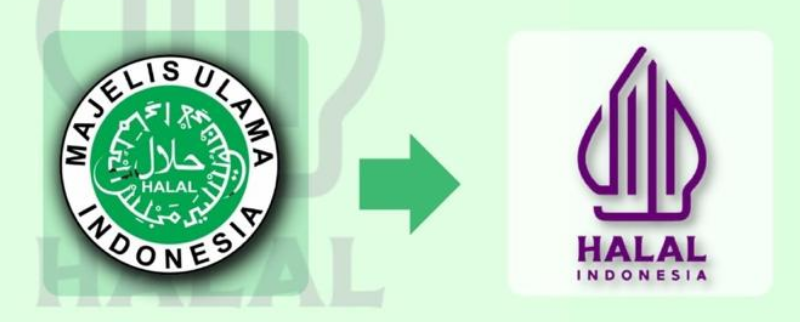
The purple logo depicts Arabic calligraphy reading 'Halal' and forms a Gunungan (Javanese: mountain), a figure used to open and close Javanese wayang shadow puppet performances.
The Jokowi government passed the Halal Product Assurance Law on October 17, 2014, providing the legal basis for a new Halal system fully controlled by the government.
But it was not until he won a second term in 2019 that the government began implementing a 5-year phased period for mandatory certification of food, beverage and animal slaughter processes.
After October 17, 2024, all sales of food, beverages, meat and poultry in Indonesia must comply with the 2014 law.
Last year, the government launched another 5-year phased period for mandatory certification of pharmaceuticals, cosmetics and 'worn and utilized' products.
The 'worn and utilized' goods attributed in the Halal product regulations are goods containing animal elements, which may include personal care products, clothing, headwear, accessories, household equipment, food and beverage packaging, stationery, office supplies, and medical devices.
Yaqut earlier said that a wide variety of products require Halal certification, and each phase takes five years to be fully implemented.
'The scope of Halal product assurance is very broad, covering food, beverages, pharmaceuticals, cosmetics, chemical products, biotechnology products, genetically modified products, and the utilized products commonly used by people,' Yaqut said.
'Therefore, the phased implementation of mandatory Halal certification is inevitable.'
Before the new system, Halal certification and labeling were conducted only by MUI, which sometimes led to overlapping powers between the council and the government's Food and Drug Supervisory Agency (BPOM).
Since 2019, BPJPH has been supervising the entire Halal certification system, but it still relies on MUI to appoint Halal auditors and Halal review bodies (LPH).
A key difference from the previous system is that the government now has the power to evaluate and sanction any violations by Halal reviewers.
The recent Halal Quality Product regulation is a supplement to the so-called Omnibus Law, which brings together about 80 related laws and aims to make major structural reforms to businesses and create more jobs for the people.
FAQ
- What changes are there to Indonesia's new Halal certification label?
- Indonesia's existing MUI Halal certification logo will gradually be declared invalid by the state-designated regulatory body. The Halal Product Assurance Agency (BPJPH) launched a new logo that took effect on March 1, with the MUI logo gradually no longer recognized. The new purple logo depicts Arabic calligraphy reading 'Halal' and forms a Gunungan (a Javanese 'mountain' figure used in wayang shadow puppet performances). According to the law, Halal certification is organized by the government, not a community organization.
- What is the timeline for Indonesia's mandatory Halal certification?
- After October 17, 2024, all sales of food, beverages, meat and poultry in Indonesia must comply with the 2014 Halal Product Assurance Law. The government also launched another 5-year phased period for mandatory certification of pharmaceuticals, cosmetics and 'worn and utilized' products. Since 2019, BPJPH has supervised the entire Halal certification system but still relies on MUI to appoint Halal auditors and review bodies (LPH); a key difference is that the government now has the power to evaluate and sanction violations by Halal reviewers.