
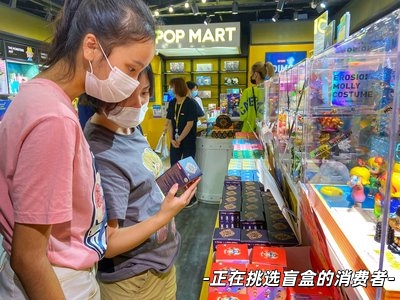
In recent years, blind boxes — with their randomness, fun and collectibility — have kept leading the trendy-toy consumption track, growing from a niche trend item into a core category of a hundred-billion consumer market. Indonesia, the world's fourth most populous country with over 280 million people (over 50% of them under 30), has become natural fertile ground for trendy-toy consumption. Blind boxes take random unknowns as their core appeal, while halal certification takes precise traceability as its access baseline — how should these seemingly contradictory two be balanced?
1. Indonesia's blue ocean under a hundred-billion boom: the market dividend in the data
As a signature format of modern trend consumption, the blind-box business model can be traced back to the fukubukuro ('lucky bags') of Japanese department stores in the late 19th-century Meiji era, combining product circulation with consumer fun through unknown combinations. In 2016, series-based trendy-toy IP blind boxes appeared, and the industry entered a stage of standardized, scaled development, sweeping global consumer markets within a few years.
According to industry estimates, the global blind-box market will reach US$38.6 billion (about RMB 270 billion) in 2026, with a compound annual growth rate steadily maintained at 5%-10% — combining market resilience with growth potential. The Indonesian market, as a core growth pole of the Southeast Asian blind-box market, holds many advantages.
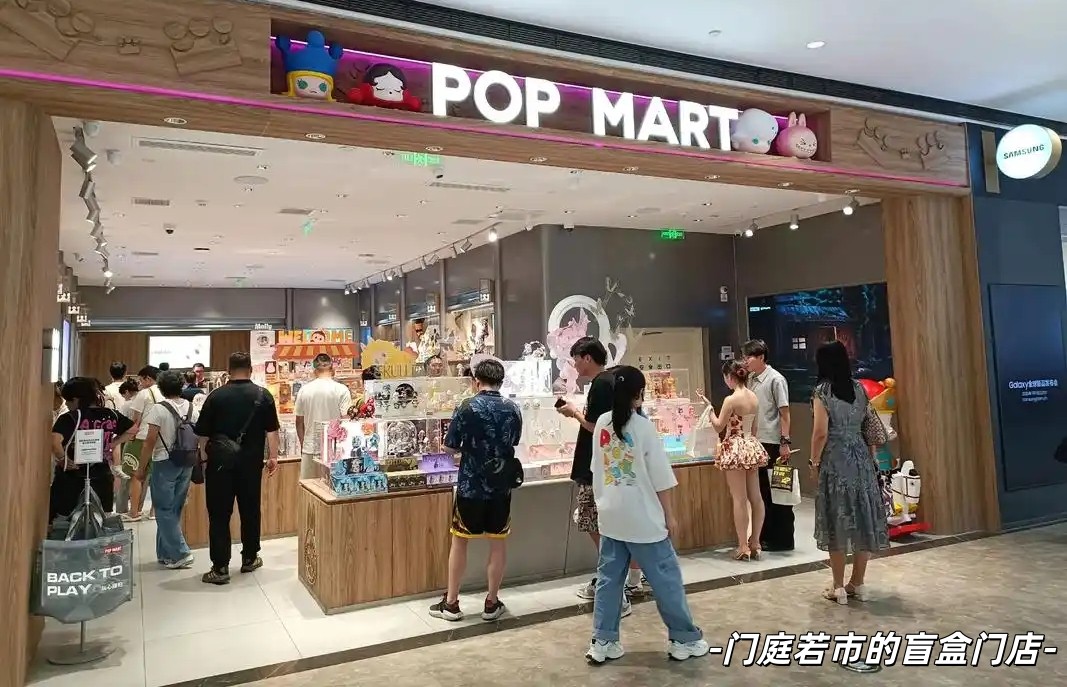
Market size: Indonesia's overall toy market reached US$1.37 billion in 2024, projected to grow to US$2.44 billion in 2025, with a 2024-2030 CAGR as high as 8%-13%.
Trendy-toy growth: the Southeast Asian trendy-toy market grows about 20% a year, with Indonesia as the regional core engine, its consumption heat comparable to China's 2018 blind-box boom.
Consumer base: the 15-34 core consumer group exceeds 112 million people; adult trendy-toy enthusiasts are rising fast, with single-box spending ranging from 50,000 to 500,000 rupiah (about RMB 23-230).
Import reliance: China is Indonesia's largest toy import source, with exports to Indonesia reaching US$524 million in 2024, 95.4% of total imports — giving domestic blind boxes a natural channel advantage.
The huge market dividend attracts domestic enterprises to compete for position, and BPJPH halal certification is the key access pass into this market.
2. The conflict and dilemma between the core selling point and halal certification rules
A blind box's commercial value is rooted in emotional consumption and the unknown experience. What consumers pursue is not the single product itself, but the anticipation before opening, the surprise at reveal, and the longing for scarce hidden editions. 'Random, unknown, unpredictable' is the soul of the blind-box product and its core competitiveness distinguishing it from ordinary goods. Once the mystery is lost, the blind box loses the foundation of the business model it depends on.
However, under Indonesia's BPJPH halal certification rules, halal certification of retail products must be implemented down to the specific single item, and does not accept declaration by vague concepts such as 'series' or 'combination.' The certification system requires clear product information, specific categories, and traceability and verifiability, to safeguard the rigor and standardization of the halal attribute.
On one side is the sense of surprise that sustains market vitality, which cannot be broken; on the other is the compliance red line for entering the target market, which cannot be crossed. 'Label it and spoil the secret, don't label it and can't certify' has become an obstacle many blind-box enterprises struggle to cross on the road to going global.
3. An inner/outer packaging compliance solution: balancing business logic and certification requirements
Over twenty years of deep involvement in going-global certification services, SINOQUAL has focused on the market rules of various countries and, combining extensive hands-on cases and policy interpretation, summarized a mature solution for the particularity of blind-box products that balances the commercial selling point with halal compliance, achieving 'no discount on surprise, no absence of compliance.'
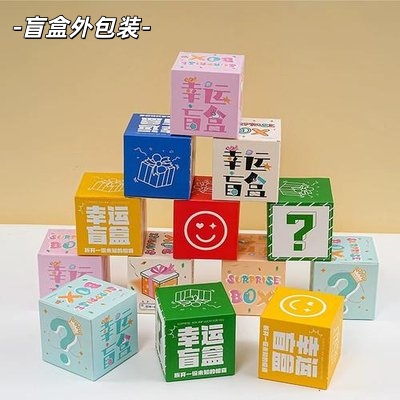
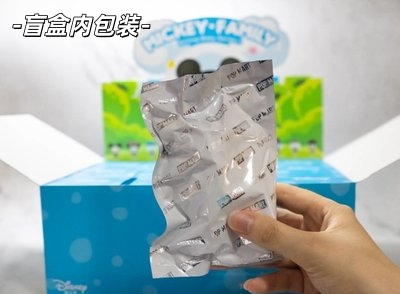
The core of the solution is differentiated inner/outer packaging management: At the outer-packaging level, the blind box's original design logic is continued, uniformly labeling the series name without showing the specific styles inside, fully preserving the random, unknown product feature and not harming consumers' shopping experience or the core selling point. At the inner-packaging level, each individually shrink-wrapped product is precisely registered — named and logged one by one, individually assigned certification information and entered into the system — achieving single-item-level traceability and verifiability, thus fully meeting Indonesia's halal-certification requirements for product itemization and standardization.
By dividing the functions of the inner and outer scenarios, the solution both safeguards the blind-box business model and strictly observes the target market's regulatory rules, giving the product complete compliant access qualifications while retaining market appeal — truly achieving a two-way unity of marketing value and compliance requirements.
4. Extension of the solution: applicable to many types of random products
This compliance logic applies not only to blind boxes but also to lucky bags, surprise bags, random combination packs, mixed-style packs and other products with an 'unknown attribute.' When declaring for overseas halal markets, all can refer to the approach of 'outer packaging preserves the experience, inner packaging keeps compliance,' avoiding rule conflicts, reducing certification difficulty and improving going-global efficiency.
In closing
As SINOQUAL's BPJPH project-team certifiers noted in analyzing this case, commercial innovation and market rules are not opposed — professional solution design and policy interpretation can let a good product retain its unique competitiveness while smoothly crossing the overseas-market threshold. The compliance puzzle of blind boxes going global has never been unsolvable; it has only lacked a precise, efficient solution path.
If you have questions about halal certification or overseas market access for blind boxes and similar products, professional experience can help safeguard enterprises going global and help quality products land smoothly in global markets.
FAQ
- When exporting blind boxes (trendy toys) to Indonesia, what is the conflict between their selling point and halal certification rules, and how is it solved?
- The conflict: a blind box's commercial value is rooted in the 'random, unknown, unpredictable' emotional consumption and surprise experience — lose the mystery and it loses the basis of its business model. But Indonesia's BPJPH halal certification requires retail products to be certified down to the specific single item, not accepting vague 'series' or 'combination' concepts, requiring clear, specific, traceable and verifiable product information. This creates a 'label it and spoil the surprise, don't label it and can't certify' dilemma. The solution is differentiated inner/outer packaging management: the outer packaging keeps the original design, labeling only the series name without showing the specific styles inside, fully preserving the random, unknown feature; while each individually sealed inner product is precisely registered — individually named, assigned its own certification information and entered into the system — achieving single-item-level traceability that fully meets Indonesia's halal-certification requirements. Indonesia is fertile ground for trendy toys: its total toy market reached US$1.37 billion in 2024 (projected US$2.44 billion in 2025), and China is Indonesia's largest toy import source (US$524 million in 2024, 95.4% of total imports).