
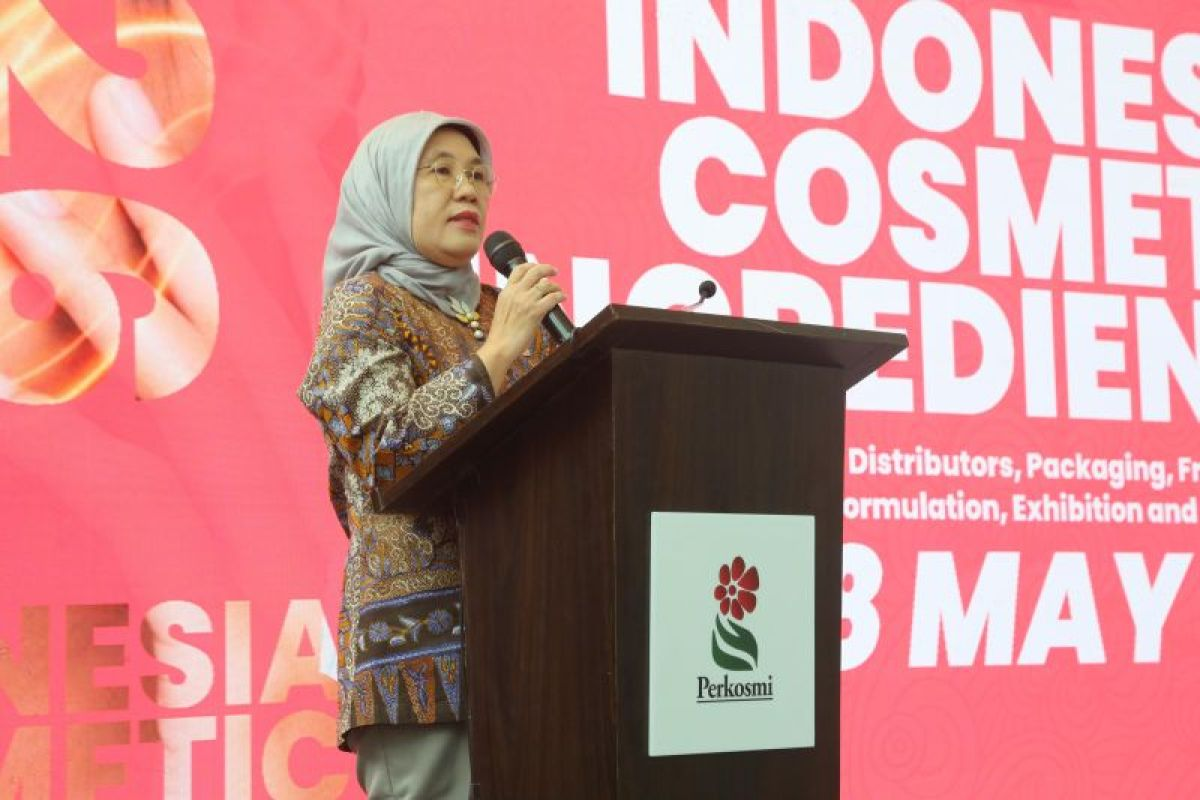
Reni Yanita, Director of SMEs and Diverse Industries at Indonesia's Ministry of Industry, spoke at the 16th Indonesia Cosmetic Ingredients (ICI) conference held in Jakarta on Wednesday, 6 May 2026.
JAKARTA (ANTARA) – Indonesia's Ministry of Industry said the surge in domestic cosmetics-industry players reflects Indonesia's competitiveness in the global cosmetics market and its ability to contribute to economic growth.
Indonesia's Food and Drug Authority (BPOM) has registered 1,684 cosmetics-industry players to date, most of them small and medium-sized enterprises.
Reni Yanita, Director of SMEs and Diverse Industries at the Ministry of Industry, said in a written statement on Friday: “Indonesia's cosmetics industry is showing positive growth, with nearly 85% of players being small and medium-sized enterprises.”
She noted that, according to forecasts from several research firms including Statista, Indonesia's cosmetics market is expected to exceed US$10 billion this year, with an average growth rate of more than 5.5% over the next five years.
However, efforts to drive the industry's growth face serious challenges, because nearly 80% of Indonesia's raw materials are imported.
“We need to work together to develop domestic raw materials by strengthening research, commercializing research results, and fostering cooperation among government, regulators, industry associations and businesses,” Yanita said.
Meanwhile, Saparuddin Halomoan Siregar, Director of Downstream Chemicals and Pharmaceuticals at the ministry, stressed the need to develop import substitutes to make Indonesia's cosmetics industry more self-reliant.
“Indonesia has more than 30,000 medicinal plants and natural resources, and rich biodiversity, which gives it enormous potential to develop cosmetic raw materials,” Siregar said.
Sancoyo Antarikso, Chairman of the Indonesian Cosmetics Association (Perkosmi), said on behalf of the association that Indonesia's cosmetics industry must transform on the basis of innovation, technology, safety and sustainability.
He noted that consumers are now paying more attention to cosmetics, wanting them to be harmless and produced in a sustainable way.
“When technology, safety and sustainability become the main factors in product development, the entire industry is moving toward higher standards. Cross-sector cooperation is the key to accelerating this transformation,” Antarikso said.
FAQ
- What are the growth trends and challenges of Indonesia's cosmetics industry?
- Indonesia's Food and Drug Authority (BPOM) has registered 1,684 cosmetics-industry players to date, nearly 85% of them small and medium-sized enterprises. According to forecasts from firms such as Statista, Indonesia's cosmetics market is expected to exceed US$10 billion this year, with an average growth rate of more than 5.5% over the next five years. However, driving the industry's growth faces serious challenges because nearly 80% of Indonesia's raw materials are imported, so domestic raw materials must be developed through stronger research, commercialization of research results, and cooperation among government, regulators, industry associations and businesses. Indonesia has more than 30,000 medicinal plants and rich biodiversity, giving it enormous potential to develop cosmetic raw materials. The Indonesian Cosmetics Association (Perkosmi) stresses that the industry must transform on the basis of innovation, technology, safety and sustainability.